I have to begin this piece with an acknowledgment: I am a political moderate. In today’s political marketplace, you will find me in the Deliberate/Reasonable section on the shelf with Daniel Patrick Moynihan. If you read my label carefully enough, you will find other ingredients from across the political and theological spectrum.
You may be inclined to conclude that I am either confused or a walking contradiction. I will accept that I am contradictory, but only if you accept that I believe in: 1) the synthesis of ideas. 2) At times, I disagree with those I often agree with. I have yet to meet anyone who agrees with everything someone else thinks or says. 3) I share the Daniel Patrick Moynihan disinterest in political orthodoxy and labels.
Political moderates have difficulty fitting in. People like myself tend to weigh domestic and foreign policy issues when voting. We tend to consider more than the economy, though economic issues do weigh on us. We are often dissatisfied with our candidate choices. Trump v. Clinton, Trump v. Biden, and Trump v. Harris were nightmares for me. Personally, I disdain hearing, “I will fight for you.” People tend to think of politics as a blood sport. I prefer it to be more like the Oxford Union Society rather than a boxing ring. Whether we like it or not, politics is about debate and compromise, not a boxing match to knock your opponent out. Today, in the States, we are, unfortunately, in a boxing match between extremes. In actuality, we are in a revolutionary period rooted in ideology, self-interest, and greed. This is a time of our discontent.
I am equally disdainful of the news media and politicians who constantly refer to a candidate’s “war chest” and a party’s fundraising efforts. Furthermore, I strongly disagree with the SCOTUS decisions in Citizens United v. Federal Election Commission and Federal Election Commission v. Colorado Republican Federal Campaign Committee. The Court’s decisions opened the door wide for private and corporate wealth to influence political power, allowing corruption on a scale beyond the 19th century. These decisions drown out citizens’ voices and their role in a functioning government.
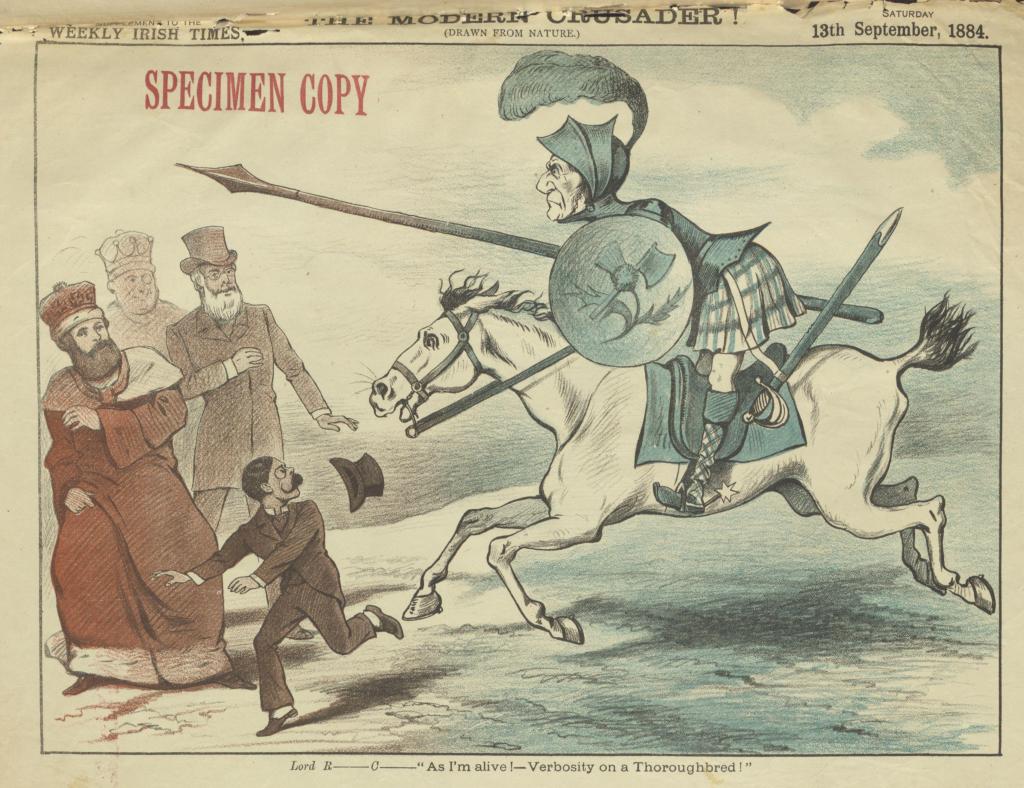
I mistrust charismatic personalities who ride white horses into the political arena. Political candidates, particularly revolutionary ones. offer visions that are often misleading. Their ideological language is typically filled with pompous phrases, solemn words, exuberant promises, and high-sounding slogans of freedom and equality to address the issues and concerns of the majority of citizens while ignoring minority rights.
Revolutions have a peculiarity about them. Ideologues feed off people’s anger. The people are less concerned about the philosophical arguments than achieving political and social justice. The leadership has a foundational ideology, but what policies insurgents will implement remains speculation until their leadership solidifies its power. Once in office, their expectations blur in the face of reality. Then, those policies typically undergo revision because of infighting (e.g., Bolsheviks v. Mensheviks, or Newt Gingrich v. George H.W. Bush). Policy adjustments usually tighten the grip on power. Self-preservation takes priority. In other words, you don’t always get what you have voted for. And often when you do, you find yourself regretting it.
The motivation behind revolutions varies. The sociologist James C. Davies observes that revolutions occur when the majority of citizens doubt the legitimacy of a government’s institutions because they fail to be inclusive and representative of their interests and to provide economic stability. This leads to anger. Angry people will resort to violence (e.g., January 6).
A tension exists between the confidence (faith) and suspicion (doubt) citizens have held since the founding of the United States. As historian Daniel Boorstein indicates, this reflects involvement rather than alienation. Dissent is the secret of democracy. Today, in the States, citizens’ alienation seems to find expression in two radically opposing ideologies. The anger (often rage), skepticism, and cynicism about the government have led some to think aloud about breaking up the nation. Rush Limbaugh and Marjorie Taylor Greene once articulated this proposition. The author Kurt Andersen quotes both in his opinion piece in The New York Times, titled “Has America Already Undergone a Soft Breakup?”
“‛I actually think,” Rush Limbaugh told his many millions of listeners during the weeks between Donald Trump losing the 2020 election and his supporters’ assault on the Capitol, “that we’re trending toward secession. It can’t go on this way. There cannot be a peaceful coexistence of two completely different theories of life, theories of government, theories of how we manage our affairs.’”
“‛I want a peaceful national divorce. Our country is too far gone and too far divided, and it’s no longer safe for any of us,’” Marjorie Taylor Greene has stated.
Current discontent and anger directed at elected officials centers on economic disenfranchisement, rapid technological change, and both domestic and foreign policy. The far left, including those who deny they are members of the Democratic Socialists of America but articulate the DSA policies, propose socialism as the solution to the crisis of confidence. Their keyword is affordability. They correctly question the motives of what many, myself included, refer to as the “Epstein Class.” This class, which includes elected officials, corporate executives, and celebrities, behaves with little or no moral integrity. They disassemble, misrepresent, and mislead for their own personal gain and power. Absent is respect for the dignity of the people they serve.
The far right, is what I refer to as the “Proud Boy Class.” Their keyword is “Nationalism.” They question globalism, academic institutions, the federal government, the electoral system, the news media, and immigration. Their solution is nativism, white supremacy, traditional family, and Christian values. From their perspective, modern progressive culture undermines “time-honored” values that “made America great.”
The irony is that the far right and the far left share a burn-it-all-down attitude. The demolition of the White House East Wing is the perfect allegory for this time. Both contribute to the societal polarization, manipulating it for their own political ends. Neither side can acknowledge the diversity of nationalities and political views within every community, neighborhood, and home across the nation. Neither side of the spectrum offers a unifying vision that would put the “United” back into “States.” The political middle, the moderates, where the majority resides, are compelled to flip a coin when voting for candidates that may best shield their interests.
These political tensions have taken an uncomfortable and ugly turn. Antisemitism. Blame the Jews. There are those who either claim to be Christian Zionists or others who say they are concerned with anti-discrimination protections for Jews. The truth is, Christian Zionists support Israel because they recognize that God has chosen Israel as His unique people and Israel’s prophetic significance. They see a blessing, rather than a curse, in this for themselves. But, their objective is the conversion of Jews to their version of the Christian religion. Others use Jews to attack academic institutions. The rhetoric of both sides stroke the fires of antisemitism. Their narratives delegitimize Israel, framed in both political and theological terms.
The establishment of a Palestinian state should not come at the cost of Israeli lives and the destruction of Israel. Neither should it come at the cost of Palestinian lives. The violent and terrorizing attacks by Israeli settlers on Palestinians living on the West Bank are a moral betrayal of Jewish values. The Netanyahu government’s devastating military action in Gaza and Lebanon created a humanitarian crisis that the international community’s efforts to address have been insufficient. Donald Trump’s Board of Peace plan is a vision for creating a Trumpian fiefdom for real estate developers that leaves Palestinians homeless. The plan is unfocused on Israel’s security. Hamas and Hezbollah, both of which refuse to disarm, are terrorist organizations hiding behind civilians. Violence and hatred against Israelis and their own people will neither achieve their goal of a homeland nor a lasting peace.
American politicians vilifying Israel are contributing to rising antisemitism in the States. An example of this is the dehumanizing language directed at AIPAC, a lobbying organization. Their financial support of candidates cannot be, nor should it be, classified as “dark money.” AIPAC does not conceal its donors or their campaign donations, nor is it an arm of the Israeli government. The sinister political language describing Jewish political activity creates an atmosphere of fear, vulnerability, and isolation within the Jewish community. As Rep. Josh Gottheimer, a Jewish Democrat representing New Jersey, said, “Swap ‘AIPAC’ for ‘Jews’ and it’s the oldest antisemitic conspiracy theory in the books.” You can be angry at the Israeli government, but antisemitism, blaming your fellow citizens for our national problems, delivers nothing to the voters except more hate and violence.
The current political climate has me questioning how much this toxic mix of charisma and ideology will lure Americans before they realize that neither extreme ideology offers more than the empty rhetoric of failed ideologies. I agree that we need to reform and rein in presidential power; Congress needs to take back its Constitutional authority. The issues facing the nation include affordability, housing, poverty and hunger, health care, employment, artificial intelligence, campaign finance reform, political corruption, immigration reform, climate change, national debt, foreign policy and international relations, and race and gender issues. There are no easy solutions. They will require negotiations and compromise. I question the ability and sincerity of those who seek political office and turn themselves into cult personalities while waving an ideological flag and attacking American Jews to accomplish what is necessary.
A tremendous difference exists between reform and revolution. The question for voters is in what direction, and how far do they want their alienation to take them?
There are 57 days between Labor Day, Monday, September 7, and Election Day, Tuesday, November 3, for voters to decide their answer to this question.
Image
The Modern Crusader (Drawn From Nature)
Caption reads: "Lord R-C- 'As I'm alive!-Verbosity on a Thoroughbred!'"
Contributor: The Weekly Irish Times
Source: The Catholic University of America
JStor: https://www.jstor.org/stable/community.38709910?
The Election of Our Discontent ©2026 Charles van Heck


Leave a Reply