Author’s Note: The following is the Dvar Torah (sermon) I was privileged to have been asked to deliver on Independence Day. My hope is that regardless of your faith tradition or life perspective, you will find meaning in these words.
Yesterday, as Jewish congregants arrived at the synagogue, we were greeted by neo-Nazi protestors with signs of antisemitic and anti-Zionist hate speech. This occurs every Saturday. Yesterday, a fight occurred between a non-Jewish man offended by the signs and a neo-Nazi. Police arrived to intervene. No arrests were made. When writing this Dvar Torah, I had Christians and others who disagree with and are threatened by the Christian nationalists and other extremists in mind. This is not a Jewish problem alone. This is a Civil Rights issue. My hope is that Jews and Christians will work together to stand against the disease of hate.
Freedom and Passing of the Candlelight
Dvar Torah: Pinhas; Numbers 25:10—30:1
July 4, 2026

As I reflected on this week's Sedra, I found myself recalling Edward Kaplan’s comments regarding the 1950s. Of that period, he writes, “The events of the 1950s elevated the aspirations of an increasingly restless America. National prejudices, fears, and hopes tested the moral foundation of democracy.”
These words are applicable to today.
Our current period may well be described, to borrow from Rabbi Abraham Joshua Heschel, as a time when “faith in God was put on trial.”
Are our crises any different from those contended with by the generations of the American Revolution and Civil War eras? They, too, grappled with divisive moral issues. The Declaration of Independence, Lincoln’s Gettysburg Address, and his Emancipation Proclamation testify to the conflicting ethical principles and the challenge to the core value of freedom.
Despite their diverse philosophical and theological beliefs, the Founders held that virtue was the foundation of liberty. Benjamin Rush succinctly expresses this: “Without religion there can be no virtue, and without virtue there can be no liberty.”
When we carefully consider the intent behind Rush’s words, we realize he is connecting religious virtue to political liberty. This begs the question, whose religion? And is religion merely a pillar of the State to uphold political liberty?
The document we celebrate today expresses the natural rights upon which our political institutions, laws, and culture rest. We understand these as essential to our personal and national liberty. What too few acknowledge is that religious virtue is a matter of the heart.
Freedom in biblical and rabbinic Judaism is a highly complex idea. This is expressed in Exodus: “I am the Lord. I will free you from the labors of the Egyptians and deliver you from their bondage” (Exodus. 6:2). This is followed by, “When the Lord finished speaking to Moses on Mount Sinai, he gave him the two tablets of the covenant law, the tablets of stone inscribed by the finger of God” (31:18). We are free, yet given a law that binds us as servants. “For it is to Me that the Israelites are servants: they are My servants, whom I freed from the land of Egypt” (Leviticus 25:55).
Rabbis David Hoffman and Jonathan Sacks address this complexity. They reference Mishnah Avot, 6:2:
“The tablets were God’s work, and the writing was God’s writing, incised upon the tablets” (Exod. 31:18). Do not read, “incised” (harut), rather [read] “freedom” (herut)—for no person is truly free except the one who labors in Torah.
We, as a people, emphasize education. The pursuit of knowledge, for itself, our employment, personal interests, and for our spiritual growth. Education is an obligation and the basis for our freedom. This is true across the spectrum of our Jewish identity, from secular to Orthodox. Our history, culture, and personal identities are shaped by the Torah, what we have learned and passed on from generation to generation.
One generation passes the candlelight to another in this Sedra.
Phineas, Aaron’s grandson, receives the covenant of the priesthood, a covenant of peace, as stated in Numbers Rabbah 20: 23. We are informed by the Torah that Phineas was dark-skinned, a Black man.
The female descendants of Joseph are given their inheritance, a small step towards equality. This recognizes their human dignity, faith, and ethical behavior. But we must acknowledge that women continued to have legal restrictions and disadvantages that have all too slowly changed over time.
Joshua receives the authority of Moses. In the Midrash of Numbers Rabbah (21:15; 13:20), we read, “Moses laying his hands on Joshua may be compared to one candle lighting another. No light is lost to the former.”
We, too, light the candle of the generations of our children, grandchildren, and great-grandchildren.
The freedom afforded us through the Torah is both intellectual and spiritual—to be fully human. In our service to the Divine, by deeds of mitzvot, we uphold life in all its diversity amidst trials and adversity.
Pamela Nadell, the scholar of Jewish history at American University, reminds us “…how powerfully antisemitism has coursed throughout American history and how much it impacted the lives of American Jews no matter where they live.” There are those who would take away our rights. But they can never take away our freedom. Our faith will survive.
In the Torah, we have a new birth of freedom that allows us to see beyond political and racial prejudices. As Jews, we are bound by two things—the Torah and our diversity. In our diversity, we can have those difficult conversations. We can disagree, debate, and argue. The Sages’ and Rabbinical debates found in the Talmud set the example for our conduct. We can have uncomfortable conversations. But let us not forget that we are a community.
On this Fourth of July, let us celebrate the political freedom of the Declaration of Independence. May we, however, bear in mind Whom we serve, our responsibility to bring healing to the world, even in the face of the rising tide of antisemitism and anti-Zionism. Let us hold our candles aloft in the gathering darkness.
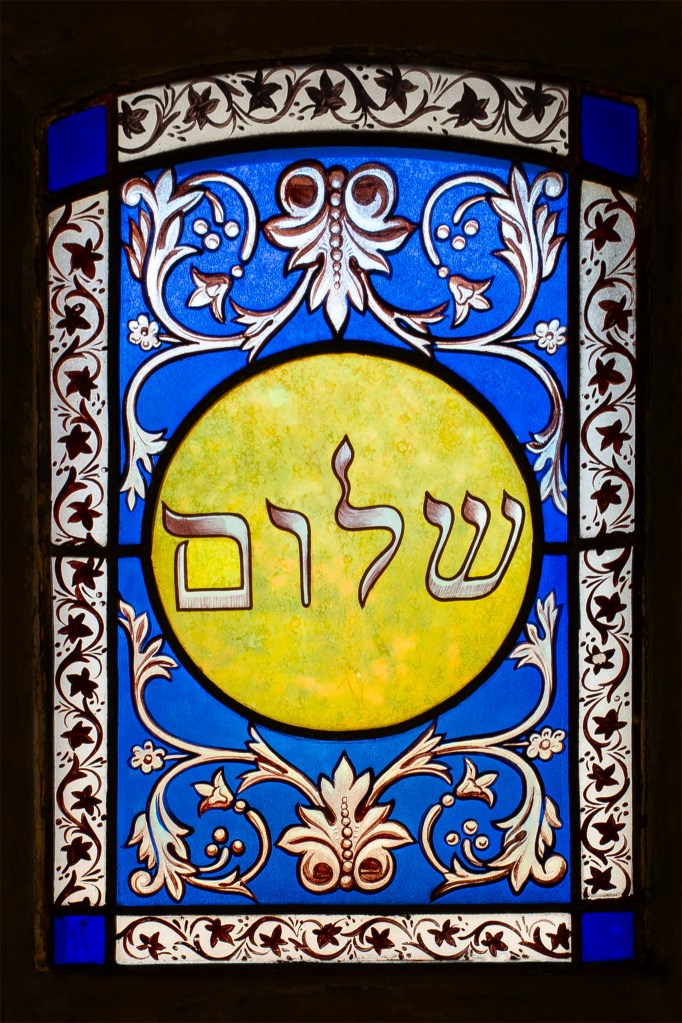
Shabbat Shalom
Freedom and Passing of the Candlelight ©2026 Charles van Heck
Image: Photograph by Salvatore Favata on Unsplash


Leave a Reply