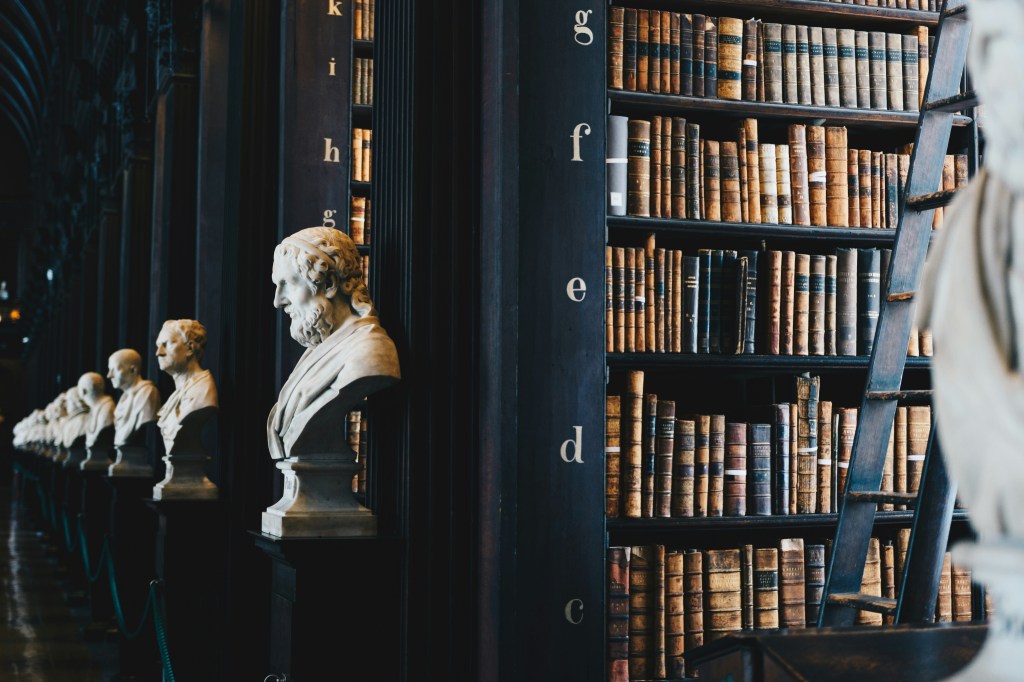
“One’s life is more formed, I sometimes think, by books than by human beings; it is out of books one learns about love and pain at second hand,” Graham Greene once remarked. There is an element of truth to this if we understand Greene to mean that reading prepares us for the shared involvement of life. We discover our commonality of emotions and experiences. Reading allows us to engage with others we are unlikely to meet.
To read is to be engaged in a conversation. Authors provoke thought, asking us, “What do you think?” We are compelled to respond.
I say there is an element of truth to Greene’s observation because I believe there are other activities that complement and enrich reading. A book or an essay on wildflowers, for example, will ready me to appreciate seeing those flowers, their complexity, but it is the actual experience of walking through a meadow and observing them that allows me to fully appreciate their beauty and their contribution to the balance of nature and the environment.
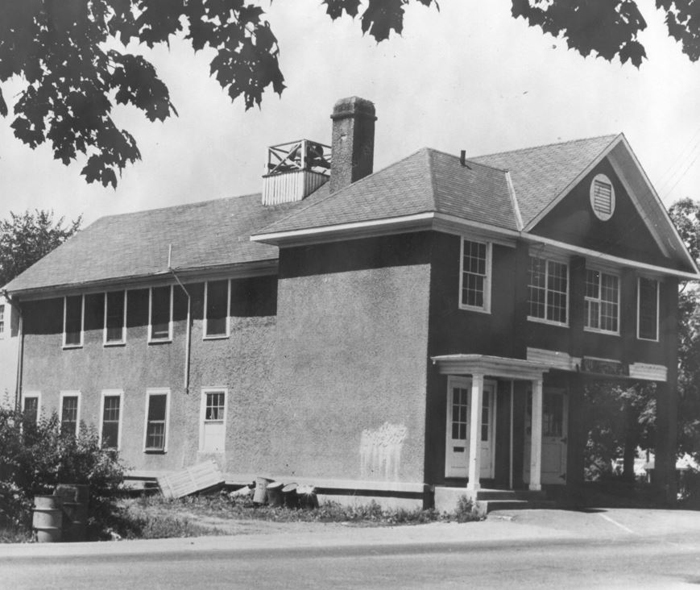
Memory plays tricks on us, but I have no recollections of being read to as a child. I recall trips to the library. My earliest recollection is the library on the second floor of a firehouse in my hometown of Oakland, New Jersey. The building served every function of the municipal government. I recall climbing the wooden stairs, the crowded shelves, and checking out at least five books on each visit. In 1962, the library relocated to the former Ponds Church after the congregation moved into a new building.
My reading habits were formed in both buildings. However, it was in the new library where I first became interested in archeology, history, and biography. We had books in our home, though not an abundance. Some of these I still have, while others were donated. The donations aren’t regretted as much as the books themselves being missed.
I take pleasure in the silence reading affords. I learned this silence through long periods of illness. I was and continue to be a slow reader due to dyslexia. My hearing was impaired by severe infections that left me deaf for periods of time. To this day, there are sounds that are difficult for me to hear, which makes the pronunciation of some words difficult. I prefer to express myself through writing rather than speaking.
A habit I have is to binge on a subject. One book leads to another, then veers off to follow an author’s textual reference or footnote, only to return to the text that I began with. I prefer the physical property of a book to online or eBooks. “Some books are”, in the words of Francis Bacon, ‘to be tasted, others to be swallowed, and some few to be chewed and digested.” In the book of Ezekiel, we read of the angel visiting the prophet and commanding him,
“Son of man, eat this scroll I am giving you and fill your stomach with it.” So I ate it, and it tasted as sweet as honey in my mouth.” (Ezekiel 3:3).
In the book of Jeremiah, the prophet addresses God:
When Your words were offered, I devoured them;
Your word brought me the delight and joy
Of knowing that Your name is attached to me,
O ETERNAL One, God of Hosts. (Jeremiah 15:16)
There are books that, like fast food, we gobble up to satisfy our appetite. Other books are snack food to be nibbled on to gratify a craving, and then, there are those books that are served like a three-course meal. We savor each bite, admiring the author’s mastery.
The words of books are not to be given cursory attention. To gloss over words is to ignore the importance of and grapple with language, to have a sense of a text, and to appreciate and fully grasp the ideas being expressed. We are left unrewarded when we depreciate an author’s words. Active reading is required to fully appreciate a book.
Active reading was fundamental in medieval monastic culture. In the Middle Ages, as Dom Jean Leclercq notes:
…the reader usually pronounced the words with his (her) lips, at least in a low tone, and consequently, he (she) hears the sentence seen by the eyes, just as today, in order to learn a language, or a text, we pronounce the words. The results are more than a visual memory of the written words. What results is a muscular memory of the words pronounced and an aural memory of the words heard. The meditatio (meditation) consists in applying oneself with attention to this exercise in total memorization; it is, therefore, inseparable from the lectio (reading). It is what inscribes, so to speak, the sacred text in the body and in the soul.
We have lost this art of active reading—meditatio and lectio reading. We preoccupy ourselves with text messages, games, video clips, and emails. Our short attention spans deprive us of the beauty of words and our ability to masticate them.
In contrast to the Medieval and Renaissance world, our contemporary period, when AI has a dominant role in our educational landscape, we have abandoned the liberal arts. The Greco-Roman authors influenced the Medieval and Renaissance search for knowledge. Antiquity was comprehensible and useful in an environment that would have been incomprehensible to the classical authors. Today, our emphasis is on productivity. Brevity, speed, and utility are emphasized over comprehension.
Ideas come wrapped in words. Books introduce us to extraordinary people and the all-but-forgotten individuals. Reading takes us on journeys, and introduces us to cultures other than our own. The written word can fill us with wonder. Our eyes can become open to the exploitation, physical and psychological violence of slavery, antisemitism, and the discrimination women, Blacks, Latinos, Indigenous peoples, and other minorities have endured. Books teach us the value of resistance against tyranny. They instruct us in our shared humanity, social and cultural ties, and enrich our souls. Reading connects us to our past, informs us of our present, and allows us to gaze into the future.
I have sometimes dreamt that when the Day of Judgment dawns and the great conquerors and lawyers and statesmen come to receive their rewards—their crowns, their laurels, their names carved indelibly upon imperishable marble—the Almighty will turn to Peter and will say, not without certain envy when he sees us coming with our books under our arms, “Look, these need no reward. We have nothing to give them. They have loved reading” (“How Should One Read a Book,” Virginia Woolf, The Common Reader).
Images
1 Photograph by Giammarco Boscaro on Unsplash
2 The Original Firehouse, Oakland, New Jersey


Leave a Reply