Part Two: Chrissy Mount (Kapp) in Her Own Words
The following is a continuation of my interview with Chrissy Mount Kapp, the Vintage Painter. Chrissy’s paintings are vintage and historical Americana themed. She is also a practical businesswoman. In this portion of our interview, Chrissy shares her experience in marketing and selling. There have been tremendous changes in how art fairs and galleries operate since our conversation fourteen years ago. Artists are more challenged to be resourceful in finding ways to market their work due to the decline in galleries and shows, and how they operate. Despite the changes , Chrissy’s observations provide insight into navigating the course.
CVH: Painting is what you do and what you love. It is your business to which you devote fifty to sixty hours per week. The business and creative processes are often thought of as mutually exclusive. The reality is one aspect cannot exist without the other. How do you personally integrate the creative work with the managing, marketing, &c? As a self-employed artist, what is your average day like?
CMK: Yes, it is true you need to integrate work while managing your business. On top of my business, I also have eight-year-old twin boys. Once I had children, I knew and recognized it all had to be a balancing act. You can’t have it all and do it all without burning out. I do sacrifice many things for my passion, but would not change a thing. I really do not watch TV or have too much spare time. I try to limit my social networking but sometimes that is my only connection to the outside world. I do live in a pretty rural part of WI. I do treat my painting as a business and schedule days in which I have slots to get things done. Having a regular routine can be tricky. As a creative person, I find I have times when the creativity comes pouring, flowing right out of me. That is when I create my best. When I feel it coming on, I prefer to put myself in lockdown mode and disappear inside my own head. Creativity does not come on a schedule. Other times I can’t work and have blocks. Then I just need to organize and do other business related duties such as accounting or matting and framing.
I am fortunate to have found a partner who shares my passions and fascination with the American Dream. When I travel and do shows, he enthusiastically and willingly comes with a keen and honest interest. He has helped me in the past year with my social networking, marketing, and promoting, and is a great salesman. His gift is writing, and together as a team, we come up with the stories for my blog. I often write a two or three-paragraph kernel for the story, and he takes that, applies some creative heat, and out pops the story. In other words, I provide the picture and he paints the story.
Here is a breakdown of my artistic life.
My show season is from March to November. I usually do two shows a month in the Midwest and throughout the US. I do a lot of traveling. My painting season is mostly from November to March and I try to paint as much as I can during the show season as well. During my painting season my typical day would be to get up early. Check on my social networking pages, spend an hour of so on books, phone calls and other business matters and then get painting. My boys get home in the late afternoon and we have some family time and then more business after they are in bed. I do know that my best painting hours are in the morning and during natural sunlight.
CVH: In light of those comments, what is your response to those who consider being an artist nothing more than a pipedream and not real or valid employment?
CMK: Someone put me on a witness stand last year and, in an attempt to intimidate me, said my art business was “nothing but a pipe dream” and that I might as well be selling “pink fuzzy bunnies.” I was angry and a bit confused but as my partner pointed out – Amazon and Vermont Bear Company make a fortune selling fuzzy animals. Including bunnies. Some even pink. In reality artists are not the only people that hear those kinds of dismissive words. Most people hear that kind of talk their whole lives – from parents, coaches, teachers, bosses, friends and family. That is life. What matters is how you respond.
Someone said, “What separates successful people from unsuccessful is that successful people do what others will not.” There is nothing unique about being an artist. Successful artists are also successful business people – or are at least smart enough to surround themselves with smart business people. I can’t do it all and I need help. I think what is hard is asking for help and then accepting it. Anyone that knows me understands I am a painter. I was born to be a painter. And as long as my Vision tells me to I will continue to paint.
I think some people are afraid or don’t want to work hard enough to follow their Vision and therefore feel threatened by my freedom and faith. As a result, they will call out names and lash out at those who do follow their dreams. To them I say, “Bah!”
CVH: You devote a great deal of time to attending art fairs. That market place has become more commercial in recent years. As an artist, what inspiration do you take from art fairs? As a businesswoman, what are some of the things you have observed that fair organizers and artists can do to improve their businesses?
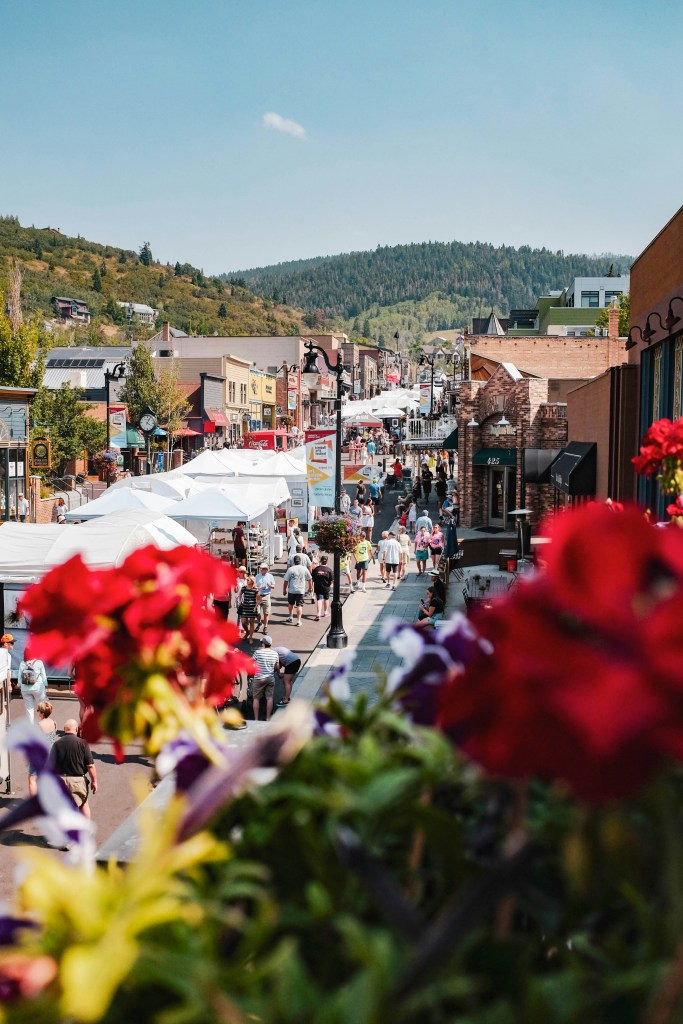
CMK: Yes, I thoroughly enjoy doing art fairs. People have no idea how much work that requires. My booth takes a minimum of 4 hours to set up and tear down. My tent is extra high and as I am a small build I need help getting it up and down. This doesn’t count the hours of the actual show, loading and unloading the van, travel time, insurance costs, hotels, food and transportation costs. Here is a rough breakdown:
A regional show may be five hours or within 350 miles. My van, fully loaded, gets 15 mpg at $3.50 per gallon. Show fees range from $400 to $800 dollars. Plus, there is a minimum of three nights in a $60/night hotel. And of course, food. So a rainy weekend or a bad show location has a significant impact on the bottom line. However, that is no different from running a ski resort, a car dealership, a mall, or a car wash. This is why, in some respects, it is a numbers game. If I do only three shows a year and the weather is bad for two of those, I’m in trouble for the year.
Of course, living in Wisconsin, there are no art shows from October to April. For some artists, that means trips to California, Texas, and Florida. That is not an option for me at this point in my life. So the solution is to branch out and do some different things. My partner and I are opening a seasonal gallery in downtown Minneapolis from 11/25 to 01/04. I’m doing some indoor consumer shows this winter. We have targeted specific galleries and retailers to work with. Whatever we have to do, so I can spend more time painting while keeping a roof over my head. That is the difference between having a hobby and running a business.
From an art lover’s perspective, attending an art show is the best way to see the new, up-and-coming talents. Talents you may never find in a gallery. The irony is, I talk to gallery owners all the time, and they don’t make time to go to shows. Even shows in their own communities.
Which, as my partner points out, is the reason so many galleries look the same on the inside. He calls it “The Birch Tree Cliché”. He determines the quality of a gallery by counting the number of paintings, pictures or crafts that are birch tree related. The more trees the lower the progressiveness of the gallery. Art shows are also a great place for a date.
Because of my painting style, I take inspiration from my audience, other artists and the traveling experience. This is one of the great things about fairs: you get the opportunity to find your audience.
The other advantage is that art fairs are a wonderful way to get your artwork to the masses, people who may not necessarily find you on the web or in a gallery. In truth, you can be working with a great gallery, but you don’t always get feedback from the audience. I believe artists can improve their businesses by connecting with their collectors. Most people, when they buy art, want to have that personal connection. They want the art to have meaning in their lives. Meeting other artists and talking with them about their experiences will also help your business immensely. When I talk to other traveling artists, I learn what shows and markets are hot and which are not. Plus, there are only so many ways to set up a booth in 100 square feet, so I get to see how other people deal with the same issues of booth layout and storage.
Lastly, traveling to the shows has helped grow my business and painting experience. My partner and I always try to make at least one stop to meet someone or visit someplace new and unique to learn about their story. This has been a source for new painting material as I not only paint using vintage photography as a reference, but also use still lifes, and places of historical reference waiting to be rediscovered.
CVH. As a businesswoman, what are some of the things you have observed that fair organizers and artists can do to improve their business?
CMK: As far as advice for other artists to improve their business? For newer artists or crafters, I would start with the basics: Is this your business or is this your hobby? And then act accordingly based on your answer. The danger is pretending your “art” is something it is not. My partner literally made me sit down and write out my Vision. Once it was on paper, he asked me what I was willing to do to make it happen. He asked me if I was a hobbyist or a business owner. Today I know what I am.
What fair organizers can do to improve their businesses is a bit harder to answer. It is difficult to answer partially because each fair has a different set of priorities, communities, and types of artists, and partially because I want to be diplomatic and tactful.
The history of art fairs goes back to the late 60’s early 70’s. It was the hippie artists that started the shows by placing their work on blankets on the ground and selling their work. It has evolved over time and has become much more commercialized. Unfortunately, it is no longer a group of hippies taking over a park to sell their wares and as such it isn’t about the art as much as I’d like it to be in some places.
I really appreciate the community shows. For example, at a show in Wisconsin, the food and beverage vendors are all community organizations – Lions, churches, scouting organizations, and libraries. We can buy water for $1.50 and a hamburger for $3.50. I think that is very appealing for artists. Shows are expensive to travel too and food is a big expense…Plus, I would prefer people spend their money on art and not on an $8.00 turkey drumstick and $10 beer tickets.
CVH: As an educator, you nurture the talent of others. But as a businesswoman, is there anything that the business schools at colleges and universities can and should be doing to assist artists to develop an understanding of the business aspects of the arts and help them to improve their marketing skills?
CMK: I do enjoy teaching. I especially enjoy working with children. To watch them learn, grow, and discover all they are capable of is so satisfying. I am really out of the loop as far as what universities are teaching, and I have been out of school for more than 20 years. My background is also in graphic design. A field I never worked in after I graduated. They didn’t really have any of the business side tied in. They mostly prepared you for working for a company. It did help to go to a college, not just an art school, because I did get a full background in learning, including math and technical writing. As I’ve learned by doing my own accounting and trying to maintain my social media accounts, these are two very important skills.
Image
Photo by Olivia Hutcherson on Unsplash

 Charles van Heck's Woodhull Journal
Leave a comment