Painting from nature is not copying the object; it is realizing one’s sensations.— Paul Cézanne
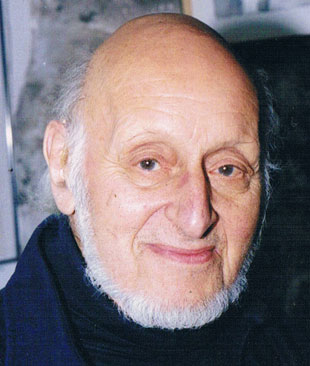
Success as an artist is difficult to achieve. The interest and desire to draw exists in each of us as children. Then the life we are expected to live ushers us away from the crayons, sketch pad, and watercolors. The artist Frederick Franck gives an account that explains this. As he was preparing a lecture:
I asked myself the rhetorical question, Who is Man the Artist? And answered it by saying: He is the unspoiled core of Everyman, Before He is Choked By Schooling, Training, Conditioning Until The Artist-Within Shrivels Up And Is Forgotten. Even the artist who is professionally trained to be consciously “creative” this unspoiled core shrivels up in the rush toward a personal style in the heat of competition to be “in.”
The “artist-within” remains alive, Franck continues, despite the effort, intentional or otherwise, to root it out. There are moments when we observe nature that stir our creativity. Our eyes are opened to the beauty beyond our understanding, a mystery that reveals life to us. Take a moment to pause, to examine a leaf, a blade of grass, a flower, or the bark of a tree. Give it more than a passing glance. Allow yourself to closely examine it. Or if you prefer, watch a sunrise or sunset, the shades of colors, the weaving of shadows across the lawn.
One of my pleasures as a student was leaving our apartment early in the morning for the campus. I took the bus downtown, then walked across the campus to a bodega for a cup of coffee. In those moments, the sunrise, the light reflecting off the buildings, and the way it spread over the street captivated me, as did the colors of the sky. Each day was different with its array of colors. How to portray that moment —its richness and diversity, the reality of the unfolding mystery—intrigued me. This was a moment of awe. Though I prefer the natural environment of a rural scene, a city landscape also offers us moments of wonder when we pause to open our eyes to see.
When we allow ourselves to awaken to the wealth of diversity around us, we transcend the ordinariness of life to the extraordinariness that is constantly being revealed. The “artist-within” is awakened.
Art is our response to life. The artist is a person who perceives and desires to transmit to others what they have experienced—to open the eyes of others to what is present and awaiting their (our) awareness. The artist shares with us their perplexity of standing before a mystery and their desire to understand it. In actuality, the artist is conveying to us a moment that a smartphone, or any camera, cannot truly capture. A photograph freezes what the eye has seen. This is not to say photography isn’t, or cannot be an art form; often it is, as such photographers as Eve Arnold, Walker Evans, Dorothea Lange, and Robert Adams, among others, have demonstrated. Artists photograph scenes for reference. But sketching and painting involve a different response, a distinct sense of involvement with a subject that requires both possession and relinquishing by the artist.
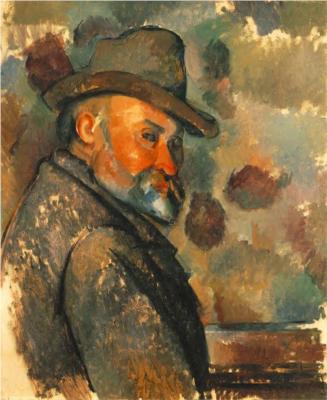
What the artist captures is about a present moment that doesn’t belong to them. The artist is allowing the scene, or person in portrait work, to express itself, or herself, to find expression while speaking truthfully about their experience of reality through the brush or pencil strokes of their technique. The artist is simultaneously turning her eye outward and inward. Truth speaks to truth. Franck writes, “Cézanne pretended—in theory—that the essence of an apple is a ball shape. But since his hand and his heart knew better, he painted apples that were all applishness…”
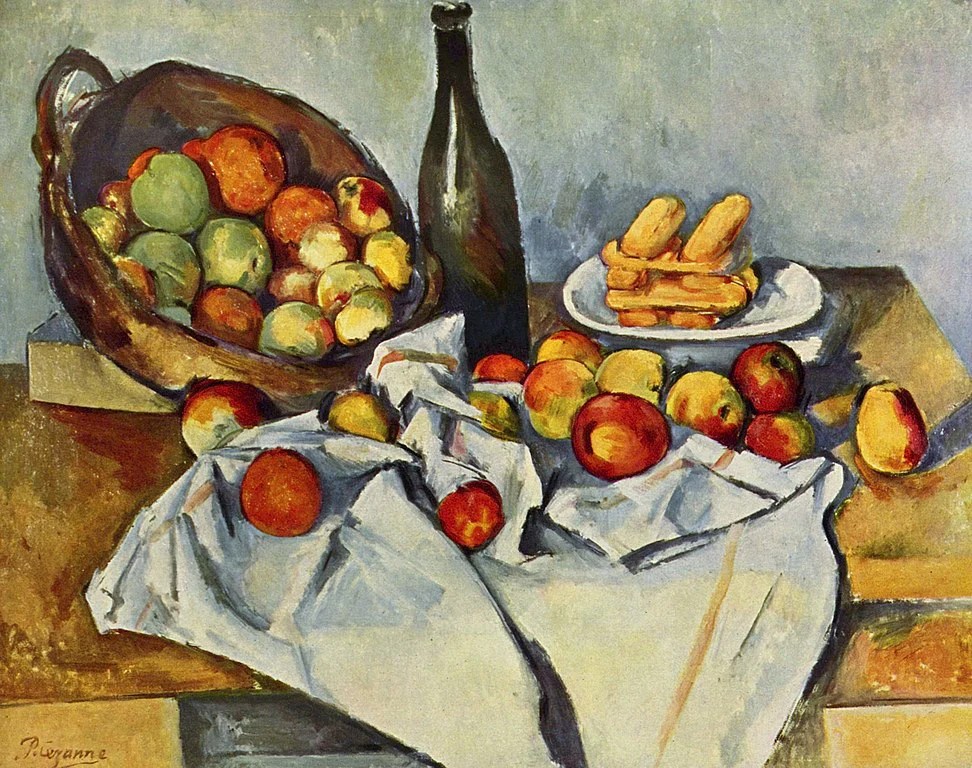
The importance of art education should neither be underestimated nor undermined. Neither should the role of visual fidelity to what the eye perceives. However, art, as we have learned since Paul Cézanne, is about more than superficial replication, but neither is it, nor should it be about exalting one’s ego. To be an artist requires instruction. Art schools and mentors teach us about color theory, composition, visual literacy, and critical thinking. Over time, the artist finds her own technique or voice— the unspoiled core— this a lifetime of learning to see the “applishness.”
“Seeing/Drawing is, beyond words and beyond silence, the artist’s response to being alive. Insofar as it has anything to transmit, it transmits a quality of awareness,” Franck writes.
But not all of us are artists laboring at easels or drawing in sketch pads. How does any of this apply to our lives?
The unspoiled core exists within each person. This is the ability to experience life more fully, to experience the ever-present mystery, the inexpressible before which we stand. We are all artists by the very fact of our humanity, our humanness. To be alive, to take the time to see the applishness of the apple, to inhale the fragrance, to touch it, and to allow it to increase our life, then share that moment to increase the life of others. Therein lies our success as artists that each person is capable of achieving.
In the history of everyone in whom the artist-within has survived conditioning, schooling, training, there are persons, influences that have kept him alive, awake, who have encouraged him without even trying—just by being. They have been one’s real teachers. — Frederick Franck
Images
1) Frederick Franck
2) Self-Portrait in a Felt Hat – Paul Cezanne, 1894
3) The Basket of Apples—Paul Cezanne, 1893

 Charles van Heck's Woodhull Journal
Leave a comment