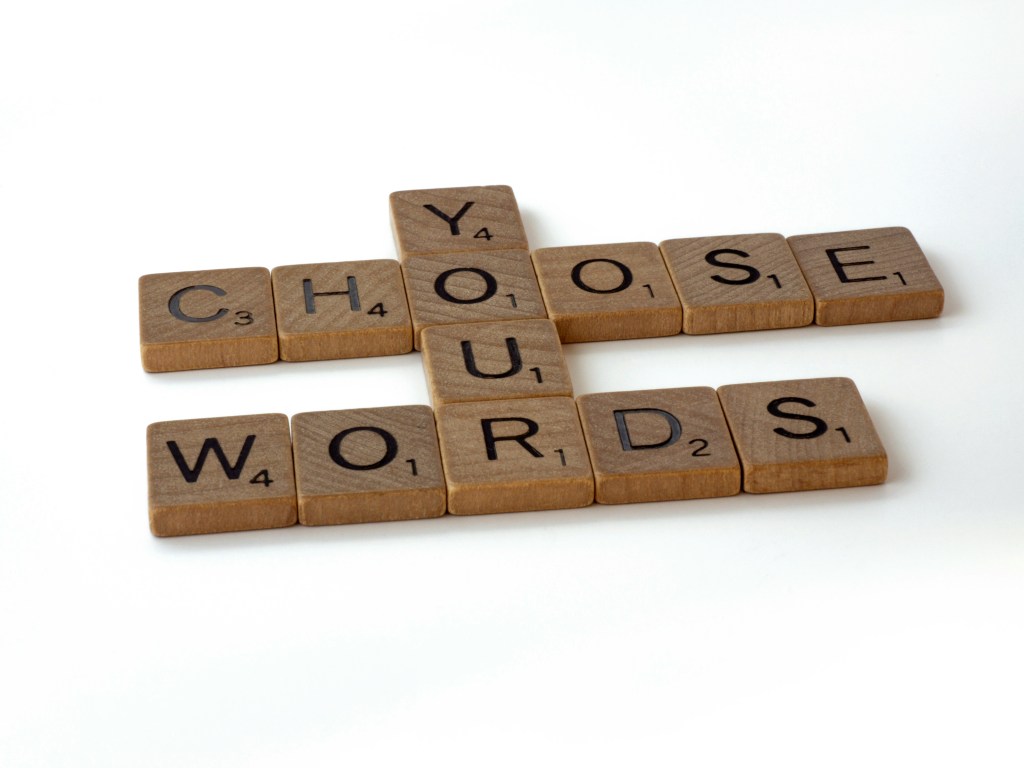
We sprinkle salt on our communal and personal dialogue. Salt is scattered in everyday conversation with little thought.
Salt? Dialogue? Salty language is not how we commonly refer to profanity and vulgarities. We use profanity with less attention today than in 1939 when Rhett Butler profoundly and candidly expressed himself to Scarlett O’Hara in the film Gone with the Wind, “Frankly my dear, I don’t give a damn.”
Prior to the release, the Motion Pictures Producers and Distributors Association (MPPDA) code (the Hays Code) prohibited profanity. Such terms as God, Lord, Jesus, Christ could be used only if spoken reverently. Other expressions such as Hell, S.O.B., damn, Gawd were disallowed according to Section Five of the code. In November, before the December release of Gone with the Wind,the Hays Code was modified. Terms such as damn and hell could be used if they “shall be essential and required for portrayal, in proper historical context, of any scene or dialogue based upon historical fact or folklore … or a quotation from a literary work, provided that no such use shall be permitted which is intrinsically objectionable or offends good taste.”
Audiences found Rhett Butler’s use of “damn” scandalous. Today, we pay scant attention to profanity and vulgarity, though we seem to have conflicting attitudes toward their use. For example, how did you respond to statements made by Donald Trump:
“I don’t need this, I got elected, what the hell do I have to be here for? I’m doing this because I like the farmer. I could be home right now in the beautiful White House, enjoying watching somebody else on television talking.” (Donald Trump in a Wisconsin speech on 4 June).
And then there is his Easter post on Truth Social:
“Tuesday will be Power Plant Day, and Bridge Day, all wrapped up in one, in Iran. There will be nothing like it!!! Open the F—-n’ Strait, you crazy bastards, or you’ll be living in Hell – JUST WATCH! Praise be to Allah.”
What is your response to Trump’s use of profanity and obscenities? Or is your reaction to Trump himself? In fairness to Trump, presidents before him used profanity and vulgarities, as anyone who has worked in the White House will testify, to express anger and frustration. However, Trump has taken this to a new low, if this were possible. Obscenities are commonly used to degrade and elicit disgust to be directed towards others when framed in political, racial, ethnic, and gender slurs while addressing the public. Hate speech is often laced with obscenities, regardless of the speaker’s political views or social status.
In a CNN article, culture writer Hameet Kaur cited lexicographer and linguist Jesse Sheidlower. She succinctly observes that in his book The F-Word, Sheidlower “notes that the English word is related to Dutch, German and Swedish words meaning ‘to copulate’ or ‘to move back and forth’. In the 14th century, it appeared for the first time in court records about a man named Roger Fuckebythenavele. A subsequent, non-name appearance in the 15th century is obscured by a cipher, Sheidlower writes, suggesting that it was strongly taboo.” Below is a link to Sheidlower’s book that can be read online.
Shakespeare, never one to miss the opportunity for a pun, uses different words to make his point (e.g., The Merry Wives of Windsor, Act IV, scene i). Since then, the word has appeared in print, has been expunged, apologies issued— one of the most notable appears in the London Times 17 January 1882. Over the years, our use of the F-word and other obscenities has proliferated like bindweed and chickweed. Profane and obscene language are found in comedy, mass media, social media, and advertising. We hear it in our schools, at sporting events, in the parking lots of the houses of worship, places of employment, restaurants, and elsewhere. Our ability to feel shocked by vulgarities has ceased.
Mark Edmundson a professor at the University of Virginia and the author of The Age of Guilt: The Super-Ego in the Online World writes of the F-word, “When you use everyone’s favorite vulgar word to denote the sexual act, you reduce the act. You gut the spirit life out of it. With profanity, you denigrate what you feel is overvalued. You try to cut it down to size. Granted, some things do need to be cut down. Some people could use a dose of vulgar chastening. But not everyone and not everything and (most important) not all the time.”
What does our use of profane and obscene language say about us as individual persons? What does their proliferation and acceptance say about our society? Does it, as some would argue, mean that we are being more honest? Or, as others understand, does it suggest lower moral standards and an increase in negative emotions, to bully others? There exists a growing body of research on the subject, which began in 1901 with G.T. W. Patrick (“The psychology of profanity,” Psychological Review, 8, 113–127), but does the research bring us any closer to common decency?
I am no prude. Yet, the compulsive use of vulgarity and profanity, particularly the F-word, reading or seeing the diatribes (both of which I either skip over from reading or viewing) causes me to think the person has a dark, malicious worldview. That their habitual use of vulgarity is intended to be divisive, and intended to deny others their human dignity. As Edmundson observes and asks, “Compulsive vulgarity can be an exercise in the reductive fallacy. That’s the view that the worst you can say about anyone, or anything, is the most significantly true. Have we all become proponents of cruel reduction?”
Our choice of language either denigrates or ennobles ourselves and others.
The question is, how does it make you feel when you hear or use swear words? You fill in the _________________.
Photo by Brett Jordan on Unsplash
The F-Word, edited by Jesse Sheidlower, Oxford University Press
This is a comprehensive study of the f-word, its etymology from the 15th century to the late 20th century. By tracing the history of the word, Sheidlower also presents us with insight into our changing moral standards.

 Charles van Heck's Woodhull Journal
Leave a comment