The following is an edited and revised letter sent in response to correspondence from Terrill Welch discussing life changes and art. Terrill is a Canadian artist living in British Columbia. To learn more about her and to view Terrill’s art, a link is provided at the end of this essay.
These have been peculiar days, somehow both quiet and yet unsettling. The opening paragraph in your 15 May letter struck a nerve that spoke both to and for me. “Change can be slow and go almost unnoticed. At other times, it vigorously tumbles and breaks bits away as it reorganizes everything within its path. What change teaches me is to release attachments with grace before gazing around to see what is available and what is possible to navigate a path forward. Infinite impermanence is a condition of our existence.”
We are seldom consciously aware of our approach to what I refer to it as let-go points. Then, that moment breaks into our consciousness. Something feels different. We notice the subtle changes. Then we reach a break point. How to respond? Do we take the risk of stepping forward, or do we attempt to hold on, cling to what is slipping away?
I have been asking myself those questions lately. My priorities and motivating passions have been undergoing re-evaluation. I suppose it is comparable to standing before canvases of self-portraits painted at various stages of one’s life, seeing the changes in technique and influence, while at the same time recognizing one’s essential self.
This can become rather confusing until taking the step forward. Then what? Who knows? We wait. Waiting isn’t passive. Waiting is active as it requires the willingness to observe with our senses, to give our full attention to our surroundings, and to ask questions about what we observe. There are new people who enter our lives while others step away, and what is said and left unsaid. There is seeing our natural environment, allowing it to speak to us, and interacting with it to discover a freshness of being. And there are the books we choose to read.
A few weeks ago, I watched a documentary on the subject of and titled Henry David Thoreau. I read Henry David Thoreau: A Life. a biography written by Laura Dassow Walls when it was first released. Lately, as I find myself at a transition point, I have been returning to Thoreau’s writings with new, and definitely older eyes. This isn’t an introspective glance back to avoid stepping forward, but rather a walk to observe with fresh eyes, much like your exploration of the bottom of the sea.
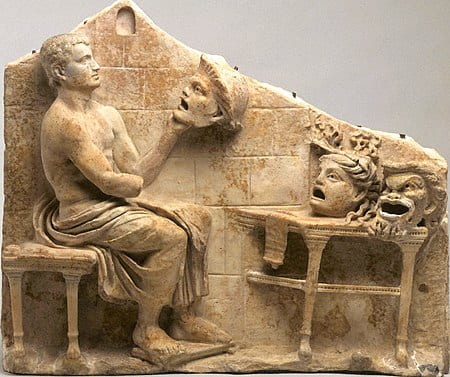
Thoreau asked the question, “What is life?” What does it mean to be alive? In my opinion, your recent posts, reference photographs, and paintings ask the same questions. Too often, we rush through life. We live on schedules that are responses to what others impose on us. The peculiar aspect of this is that we do this wearing different personas, masking ourselves as if in Greek plays, alternating between comedy and drama. People judge us based on first impressions, seldom taking the time to look beneath the veneer. And too often we become lost in the mask. We fail to discover, rediscover or allow ourselves to be who we are. I was moved by your comments about being engaged in a dialogue with nature in a “language (that) sings to my bones and balances my well being.” What matters in life is what sings to our bones. Discovering that, then living it is the answer to Thoreau’s question because it entails our ability to experience life.
I find myself wanting to and taking measured steps away from those things that have cluttered my life, the unnecessary demands. There is the stillness, with its quiet whispering voice to hear. The too maddeningly scripted voices of our times drown out and distract. There are times when I feel as if I am seated in the audience, watching a ribald comic play by Aristophanes. As with contemporary comedy, the question is how funny is it? There are other times when I feel as if I am watching Sophocles’ Oedipus Cycle (Oedipus Rex, Oedipus at Colonus, Antigone). Tragedy works when it instructs, as Sophocles observed, that, “suffering is the lot of man, but not inevitable failure or worthless despair which is without end— suffering, the mark of (humanity), which bears within its pain a hope of felicity like a jewel set in iron.…”
Our lives are about more than our capacity to bear pain; that suffering is our lot. Pope Leo XIV’s encyclical Magnifica Humanitas is asking us, just as Thoreau, What is life? What does it mean to live as a human being?
To answer those questions, we need to step back, to walk a shoreline, hear the cries of sea gulls gliding on the salty sea breeze we inhale as we listen to waves breaking on the sand and rocks, or walk a meadow path inhaling the rich aromas, and allow ourselves to be taken by the array of colors, or enter a woodland to experience sunlight weaving through the canopy to glitter on a mossy and fern covered floor, to hear the woodpecker, and breath the dampness of decaying leaves, and hear the murmuring creek.
We enslave ourselves to the unreasonableness of activities and call it reasonable demands. The irrational tears at the fabric of our families, our neighborhoods, our communities, our country, and most importantly, our souls. We each come to the place, often at numerous times in our lives, of making transitions, the let go point for a change of direction, to feel the music singing to our bones that give us balance to be our true, essential self.
Image: Roman, Republican or Early Imperial, Relief of a seated poet (Menander) with masks of New Comedy, 1st century B.C. – early 1st century A.D., Princeton University Art Museum.
Terrill Welch is a contemporary Canadian landscape artist. Her paintings are in collections that also include such renowned Canadian landscape painters as Emily Carr, A.Y. Jackson, and Lawren Harris. To learn more about Terrill and view her work, please go to https://terrillwelchartist.com/about/


 Charles van Heck's Woodhull Journal
Leave a comment