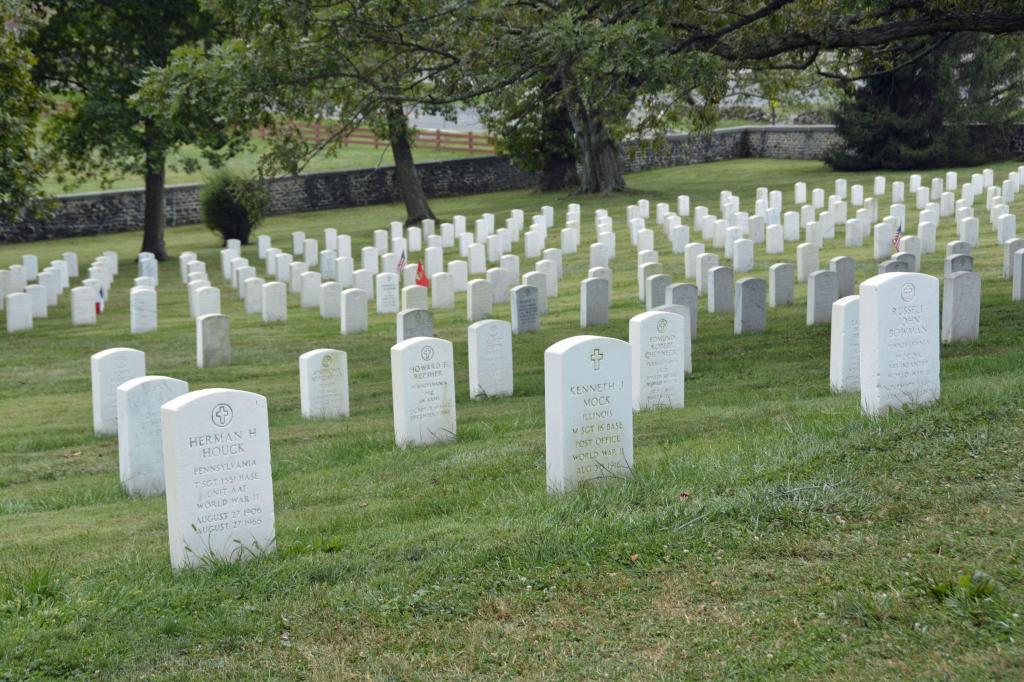
On 1 May 1865, a congregation gathered at an abandoned race track in Charleston, South Carolina. During the Civil War, the race track was used as a prisoner of war camp to house thousands of Union soldiers. Poor conditions, inadequate food, exposure, and disease resulted in the deaths of 250 of the incarcerated soldiers. Those who died were interred in a mass grave behind a grandstand.
The men, women, and children who arrived at the race track came with shovels and picks. They came to pay tribute to the dead POW soldiers by giving them proper burials. The names of the dead were unknown to those who assembled. What was known were their deeds, the Cause they had given their lives for.
Unknown to us are the names of the men, women, and children who labored to honor the fallen. What is known is that each person in the assembly on that 1st of May 1865 was a Black person and a former slave.
This was the first memorial service held for military personnel in the United States.
Three years later, on May 30, 1868, over 5,000 citizens gathered in Arlington National Cemetery to honor the 20,000 Union and Confederate soldiers buried in Arlington. Graves were decorated with flags, wreaths, and flowers. One of the speakers was Congressman James Garfield, who had served as a general during the war and would go on to become the nation’s president. Garfield said:
“We do not know one promise these men made, one pledge they gave, one word they spoke, but we do know they summed up and perfected, by one supreme act, the highest virtues of men and citizens. For the love of country, they accepted death, and thus resolved all doubts and made immortal their patriotism and their virtue.”
These words echo down from that day, which was then known as Decoration Day, through the generations to our own. On Monday, Memorial Day, we pause, in the example of freed slaves―for we too were once slaves― to remember the men and women who gave their lives in all too many wars for freedom and democratic principles of our republic.
Humanity often pursues the futile and worthless. This becomes particularly true during times of war when we deny our common humanity―the value of human life. In these times, we become enslaved to the false gods of power, nationalism carried to an extreme, bigotry with its false sense of superiority over others, technology perceived as our strength, and what we allege to be our right over the liberties of others. But in truth, our worship of these gods, as Jeremiah’s metaphor warns, makes us “like a bush in the desert…set in the scorched places of the wilderness” (Jeremiah 17:6).
But when we retain our humanity and pursue peace, trust, and have hope in God, we live the covenantal life. It is when we pursue peace, trusting and hope in God, that we are ”… like a tree planted by streams of water that yields its fruit in its season, and its leaf does not wither. In all that he does, he prospers” (Psalm 1:3).
Image: Gettysburg National Cemetery, General View, post-Civil War graves
Creator: Unknown Photographer: Dell Upton
Source: Part of SAHARA Public Collection


Leave a Reply