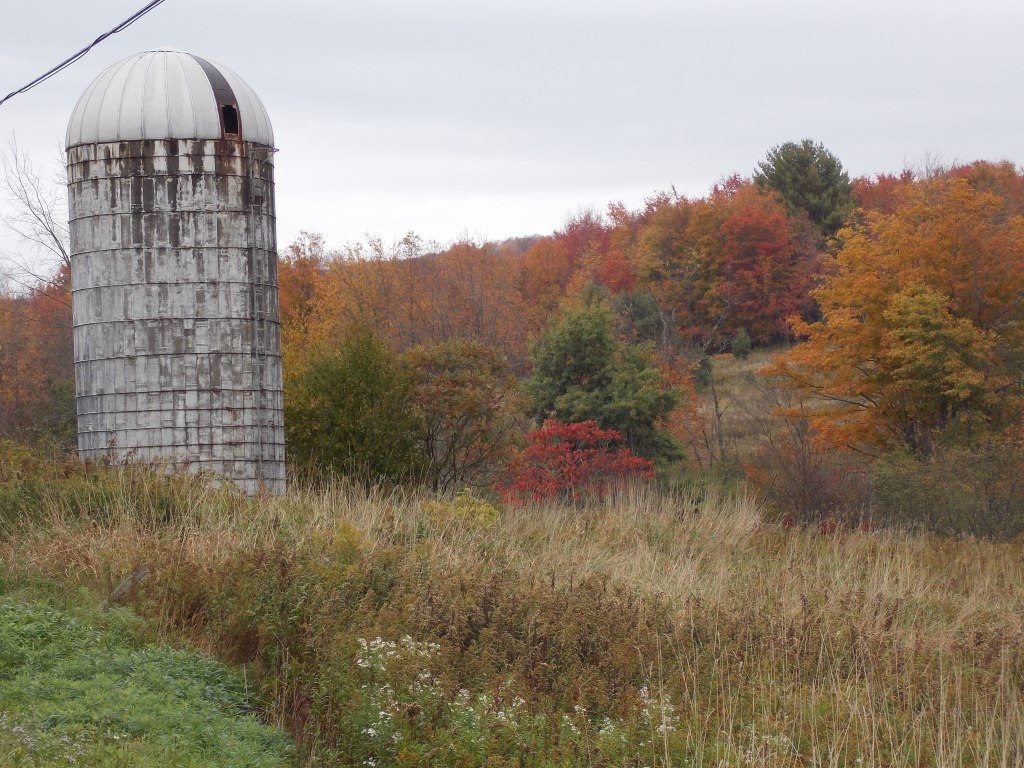
Fred Haisch glanced out the window. A lean man, his face tan, sun-wrinkled, with calloused hands. He sighed. My father followed his gaze towards the barn. Our evening meal was finished. His chair scraped the floor as he pushed himself away from the table. There were chores to do before the day’s work was done.
There were evenings when I walked with him from the barn after milking his herd of Holsteins. Cows need to be spoken to as you approach, patted on their flanks, soothed, and at times spoken firmly to, as they are guided into the parlor for milking. A machine did the pumping, but I learned to use udder balm to prevent chapping and irritation of the cow’s udder when hand milking. The mooing, the aroma of straw and feed. A stench of urine and cow “pies.” Cleaning out the stalls and washing down the equipment. These were part of the daily routine, in addition to milking the herd twice a day. Those were only a few of the farm chores. There was mowing, tending to the kitchen garden, and planting alfalfa or red clover. Red clover varieties have a higher forage yield than alfalfa. Fred, like all farmers, was a mechanic, maintaining the equipment, and a handyman. Farming is labor-intensive. Seven days a week. Louise, Fred’s wife, was busy assisting, running the household, and doing the accounting, which was a shared responsibility.
There was time for other activities. His daughters, Barbara, Louise, and I, would go berry-picking and fishing. But I also had things to do on our farm. The days passed quickly. You lose track of time. The girls, the young women, were older than I was. Besides helping around the farm, they were students at the New York Agricultural and Technical College at Delhi, New York.
Fred and Louise had made a decision. I didn’t fully understand what had been said at the table that evening. Time passed. Then on a summer afternoon, I was standing on the dirt road, watching trailers arrive at their barnyard. Cows were being loaded in the late morning. The Haischs were retiring. The farm they had tended for thirty years, where they raised their daughters, was sold. I never met the new owner, and never saw a cow grazing in the pastures. The barn stood empty.
There is a peculiar, empty feeling one gets watching a farm close. The loss of a family tradition, a way of life, and, too often today, a community’s resource for economic survival. Corporations have largely taken over dairy farming. AI companies purchase farmland for Data Centers. I am witnessing this now where I live. Ironically, the data center closest to me is named “The Barn.”
The cost of operating a family farm has risen by approximately 500 percent since the 1970s. At that time, there were 700,000 dairy farms in the United States. Today, there are 25,000. Bankruptcies have risen from 55 percent in 2024 to 70 percent thus far in 2026. To put this in a financial perspective, on average, 100 pounds of milk costs $30 to produce. A dairy farmer earns $20 per 100 pounds of milk. A 500-acre farm has an additional $4,500 in fuel costs, while a 1,200-acre farm could face $6,000 to $10,000 in costs. High-profit corn silage can cost around $487 per acre, and alfalfa haylage can exceed $510 per acre. High-test alfalfa prices often stay in the $275 to $290 per ton range. Feed, fuel, and fertilizer have nearly doubled in recent months due to the war in Iran. The impact of Trump’s closure of USAID and tariffs, which have closed the markets to farmers for their soy, corn, and other products, also contributes to bankruptcies.
Canadian farmers are dealing with the same problems as their counterparts in the States.
The American Farm Bureau Federation conducted a survey, April 3-11, of 5,700 farmers from every state. According to the data, 70 percent of the respondents stated that the high cost of fertilizer will prevent them from obtaining what they require. The report reads, in part:
“Spring planting decisions depend heavily on access to fertilizer and diesel fuel, both of which have been impacted by geopolitical risks that have disrupted global markets,” the Market Intel states. “Since the escalation of tensions in the Middle East, nitrogen fertilizer prices have risen more than 30%, while combined fuel and fertilizer costs have increased roughly 20% to 40%. Urea prices have increased by 47% since the end of February, marking the largest month-to-month percentage increase in the price of urea. These increases are occurring when many producers were already facing tight margins for many consecutive years.”
A dairy farmer not far from my home recently sold off his cows. The land he planted corn and alfalfa on lies fallow. Other farmers have either sold their land or have for-sale signs. Within the next couple of years, subdivisions of oversized houses clustered in stamp-sized lots will sprout where crops grew, and cattle grazed. I agree with those who argue for affordable housing. I can, however, make a case against the type of housing developers and builders are constructing, as well as against data centers and the tax breaks states like Michigan are giving AI companies to build these centers that residents don’t want. Those who argue that milk has been overproduced are correct. The problem isn’t the small, family run dairy farms. The problem is with the large corporate farms and the agricultural policies of the state and federal governments.
There are solutions to the farming crisis that can address environmental issues, as well as employment, immigration, and housing affordability. This requires a commitment from academic institutions, local, state, and federal officials. The $1 billion for the White House East Wing and the $70 billion financial package Republicans are rushing through Congress to bolster Immigration and Customs Enforcement and Border Patrol are a waste of taxpayer money. The $70 billion could and should be reduced and redirected towards other issues. Congress repeatedly fails to rewrite our immigration laws, but is willing to throw money at the problem created by both political parties. The funding should be directed towards agricultural research, farmland protection, and assistance to farmers for sustainable and environmentally friendly agriculture. The problems farmers and rural communities contend with are complex, but not insurmountable.
Over sixty years have passed since Fred Haisch retired and sold off his dairy herd. Many farmers today don’t have that option. The question is: are we, as a nation, willing to recognize that food production is a national security issue with ramifications for both domestic and foreign policy?
A NOTE TO READERS
I have two essays dealing with agriculture and the farm crisis. These are in the Woodhull Journal on WordPress and on Substack.
DISCUSSING THE UNDISCUSSED, published 30 May 2025. The essay deals with the mental health issues farmers contend with, and contains both Canadian and U.S. resources for mental health services, including Suicide and Crisis Lifeline telephone numbers.
The Ties That Bind: The Earthly Gifts and the Stories We Need to Hear, published 8 July 2025. The focus is on the economic impact of Trump’s policies.
Images: 1) Fate Rearranged ©2026 Charles van Heck
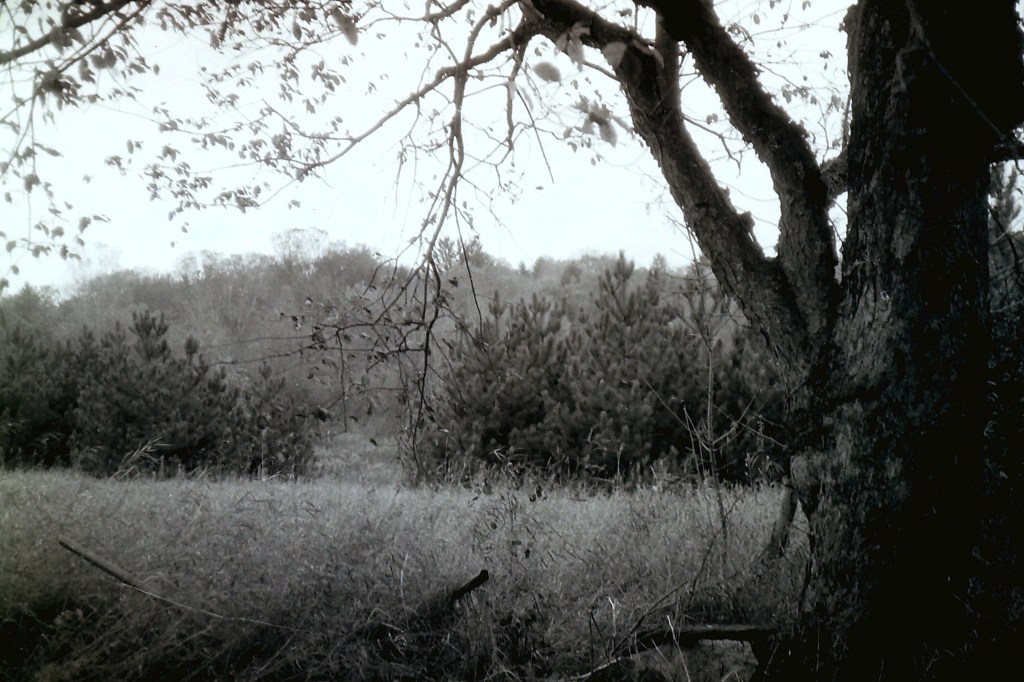
2) Abandoned ©2026 C. J. van Heck


Leave a Reply