Writing a novel is akin to doing a theatrical hat trick. This is particularly true when a work is historical fiction. An author depends on both primary and secondary resources, as well as their imagination, to enter the past. Then he or she stands with one foot in a bygone time, and the other in the present. The hat trick is in the writing, making the past and the characters’ lives visible and believable to the contemporary reading audience.
When performing a magic trick like pulling a rabbit out of a hat, the performer relies on distraction. The audience must be focused solely on you, while thinking they are watching the hat. When writing a novel, an author wants the audience (I should say, the hoped-for audience) to be immersed in the story (the hat). The novel has to be seamless— everything flowing together. You, the author, are invisible until the end of the performance.
Language changes over time, but it is language that determines how the past speaks to the present. We may think a figure from the 19th century can be understood if she entered your local Tim Horton’s, but chances are she would be confused when asking for a cup of coffee. “Do you mean a double-double?” And the person taking the order would be confused if our visitor replied, “Don’t be nettling me.” There are, of course, other differences that would leave both parties bewildered despite their shared language. Putting aside Tim Horton’s, language was one problem I had to contend with while writing my novel Mister Lincoln’s Elephant Boys.
There are two R words that I had to be mindful of when writing the novel. Research and revision. In a post titled “Grocery Shopping with Mister Lincoln’s Elephant Boys,” I wrote about the numerous drafts and their fate. “Creativity and My Adventure with Sarah Edmonds” briefly recounts what led to the research and writing of Mister Lincoln’s Elephant Boys.
I, and those who have read Mister Lincoln’s Elephant Boys, firmly believe the novel is relevant to our current political and racial crisis— our lost collective vision. History can and does speak to the present. The following paragraphs are an edited version of the Author’s Note to the Reader from the novel, which will be released in September of this year.
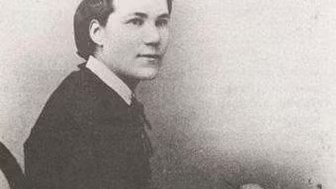
Sarah Emma Edmonds Seelye was the focus of my research when I began work on this novel. Historians, biographers, and novelists have not neglected Emma, known to her comrades as Frank Thompson. Her life is sometimes described as the spirited adventure of a young Canadian farm woman who disguised herself to gain the freedom to enjoy the benefits afforded to 19th-century men. Equality for herself and other women was one of the guiding moral principles in Emma’s life—her desire for equitable treatment extended to the enslaved and freed Black people.
Emma’s journey from New Brunswick took her along the New England backroads as a traveling book “salesman” to Michigan farm country. It was here that she enlisted in the Flint Union Grays under the name of Frank Thompson. The Grays became Company F in the Second Michigan Volunteer Infantry; as a soldier, Emma served in combat as a mail carrier, nurse, and spy. Affected by a recurrence of malarial fever, Emma deserted. When her health recovered, she resumed her nursing duties as a civilian in a military hospital. After the war, Emma and her husband, Linus Seelye, ran an orphanage for Black children, among other occupations, in addition to being a mother.
As Emma’s health further declined, she sought the assistance of a few of her army comrades to obtain a military pension. Their support culminated in Congressional legislation for both a pension, signed by President Chester Arthur, and a pardon for desertion, signed by President Grover Cleveland.
Early in the research, I encountered two incidents that changed the novel’s direction. The first was found in Jerome Robbins’ journal. After learning the truth, Robbins recorded Emma’s identity and glued the pages together to prevent others from reading those notations. The other incident took place during the Second Battle of Bull Run. Emma carried dispatches when she fell off her horse while jumping a ditch. She was seriously injured. The men caring for Emma were aware of her true identity. These few men protected Emma and did not report her. The simple answer for their actions was friendship.
These incidents, the soldiers’ letters, and diaries made me conclude that I was obligated to tell a broader story. I needed a cast of characters to tell Emma’s tale and to demonstrate the complexity of the historical period of national division mirrored in contemporary American society.
The diaries and correspondence of the Union soldiers reveal that many either viewed Black people and slavery with indifference or little sympathy. Other Union soldiers were more blatant racists. Many viewed the Abolitionists with contempt, seeing them as nothing more than troublemakers. Soldiers of the North and South believed liberty was their heritage, as the historian Reid Mitchell observed. Both regarded the other as threatening the freedom the Nation’s Founders bestowed. Among the Abolitionists, there were defined lines of disagreement on the issue of slavery and what was to become of the slaves at the war’s end. But what did these conflicting attitudes mean for the enslaved Black men and women?
The Declaration of Independence states―”We hold these truths to be self-evident, that all men are created equal, that they are endowed by their Creator with certain unalienable Rights, that among these are Life, Liberty and the Pursuit of Happiness.”
A few lines in Dr. Martin Luther King’s “I Have A Dream Speech” are ignored. “…we’ve come to our nation’s capital to cash a check. When the architects of our republic wrote the magnificent words of the Constitution and the Declaration of Independence, they were signing a promissory note to which every American was to fall heir. This note was a promise that all men―yes Black men as well as White men―would be guaranteed the unalienable rights of life, liberty and the pursuit of happiness…. America has given the Negro people a bad check, a check which has come back marked ‘insufficient funds.’”
That check continues to bounce because of the failed policies of the Reconstructionist Period. In the war’s aftermath, emphasis was placed on reconciliation between the states rather than the union of the people, regardless of race and, one should add, gender.
Reconstruction should have brought about social justice, economic progress, and political equality for those enslaved. In an 1863 address to the Philadelphia Anti-Slavery Society, Frederick Douglas argued that the Civil War was “an Abolition War instead of…a Union War.” Douglas continued, “Our work will not be done until the colored man is admitted a full member in good and regular standing in the American body politic.”
The fact that racism, gender discrimination and a Constitutional crisis remain prevalent in contemporary society raises numerous questions. The fundamental question is, what lessons did the nation learn from the period leading up to the Civil War and its aftermath?
Image: Civil War Hero Sarah Emma Edmonds (American Battlefield Trust)
The Hat Trick and the Crisis We Still Face ©2026 Charles van Heck
Mister Lincoln’s Elephant Boys ©2025 Charles van Heck


 Charles van Heck's Woodhull Journal
Leave a comment