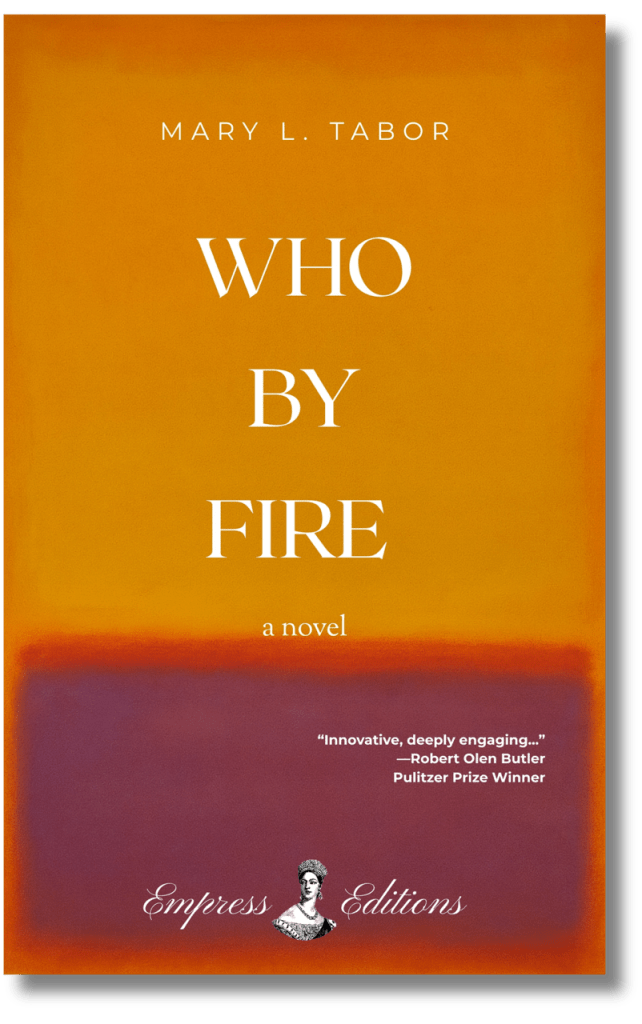
A novel by Mary L. Tabor
Novels, particularly well written ones, create an atmosphere that readers can breathe as they walk through a landscape in which they encounter strangers. We question who the characters are as we listen to their unfolding stories. The threads of their personalities, as shaped by their life experiences― what binds one life to another― their loves, interests, passions, hopes, and disappointments unfold gradually. When we allow ourselves to think of reading as a dialogue between the author and her characters, and they with the reader, we learn something new about ourselves.
“Fiction,” the author Wallace Stegner tells us, “always moves between one or another of its poles, towards drama on one end, or philosophy at the other.”
Writing is often thought of as self-expression. As such, the art of using words and constructing sentences is lost in self-indulgence. Good writing, the development of characters and plot requires observation: listening to the voices of others — their speech patterns and body language — and paying attention to the details of their physical environment, to understand their life experiences. To better comprehend and re-create the time and space an author wants their character to inhabit requires research. Writing demands the patience to ask questions of the material and the willingness to labor to make revisions. The material doesn’t drive the story. The author does. They take charge to assert their characters’ personalities rather than their own.
Mary L. Tabor has done precisely all of this in her lyrical novel Who By Fire. She brings a freshness to the age old theme of adultery with the assurance of a writer in complete control of her craft.
Who By Fire is an engaging, beautifully written novel. The narrator, Robert, tells the account of his attempt to understand his wife’s affair that he became aware of after her death. His recounting is through memory and imagination. Robert is endeavoring to understand his role in his wife’s betrayal and to come to terms with grief. He desires to forgive and discover forgiveness. In this process, he is challenged to know himself.
The novel’s narrative structure is not linear. Instead, the story follows life’s more truthful patterns. The unforeseen unfolds in retrospect as the reader comes to understand Robert’s inner changes. We live linear lives outwardly. Our interior life is varying, lived through disjointed compositions of elements selected, joined, erased, and recomposed by willfulness, regret, doubt, confusion, confidence, arbitrariness, and subjectivity. Within this inner reality, we discover the truth of ourselves.
There are carefully balanced elements in Who By Fire that set it apart from other stories of marital love and infidelity. Mary Tabor delicately weaves her story with accounts of heroes, music, art, and history that provide nuance to her characters and enrich scenes of shifting perspectives as the plot unfolds. Her portrayal of the characters is marked by sensitivity to their complexities and perplexities within the flow of reality.
Mary Tabor has written a sensual, tender, poignant, and intelligent love story about family, friendship, faithfulness, betrayal, and healing, told in lyrical prose. This compelling and innovative novel will be one you remember and want to return to for its richly layered perceptions of how human beings navigate their complex relationships.
Who By Fire ‖ by Mary L. Tabor ‖ Empress Editions Print length pages 300 ‖ $$21.99 for the paperback and $15.99 for the ebook.


 Charles van Heck's Woodhull Journal
Leave a reply to automaticdaeb44aad7 Cancel reply