There are ghosts that haunt me.
On a warm spring afternoon, I was in New York City’s Washington Square Park listening to Country Joe and the Fish. I was in the City, having spent the morning on Wall Street with a high school business class. As I listened, a young woman, a teenager like myself, whom I did not know, stood next to me. I recall she had dark hair and was nicely dressed. An older man, probably in his late 30s, approached us. He leaned into her. He spoke the typical, trite pickup lines, then added a twist. He wanted her to come with him to smoke weed. Pressing himself against the woman, he said he would show her a good time. She looked afraid. He leaned closer. She glanced nervously at me, then back at him. Country Joe finished his song. The man pressed closer to the woman, blocking her when someone told me it was time to leave. I left with one last glance at the woman. She was hesitant, tempted, and then turned away towards him.
The memory of that brief encounter came to mind sharply while reading Nicholas Kristof’s New York Times opinion piece “What Trafficked Girls Think of Jeffrey Epstein and His Pals” (February 21, 2026). Over the years, I have thought of her. I saw her fear. I saw the man’s “seductive” and intimidating behavior, but I was silent. Why didn’t I simply say, “She’s with me. We have to go”? Would it have made a difference? I have often wondered what happened to her.
Other memories returned as I listened to Nicholas Kristof, Michelle Cottle, and David French’s discussion on the Times’ Opinion page under the title “A Cocked Pistol Aimed at Iran: Three Opinion writers on Iran, Epstein, and what power really looks like.”
While we were in 7th and 8th grade, a friend told me a priest was sexually abusing him and others. The same priest attempted to sexually abuse me in the parish rectory. This incident took place on a Sunday evening shortly after my father’s death. He wanted to play strip poker. “Other boys play strip poker with me,” he boasted. I told him no and left. A few weeks later, the same priest physically beat me. He also fired my mother from her parish job, employment we were dependent on for income. Years later, other boys, now men, told me of what this predator had done to them. As a boy, I didn’t report him. Instead, I withdrew into silence and lashed out in anger. Silence has a price.
Who would have listened to us? Young boys taking on priestly and institutional authority? At the time, and to this day, I remain convinced that others in authority, including the principal, knew of his abuse and were complicit— guilty bystanders. The priest, like so many, was eventually quietly transferred. In his wake, more damaged lives.
Damaged lives are the ghosts moving through our daily landscapes. There are other shadows. These are the women who have been sexually harassed and abused physically and emotionally. Most men look away, give little or no thought to their conduct and attitudes towards women. I believe women and men are equal. Women are not objects. They have the same rights as men in governing their bodies and minds.
Respect for others and an understanding of equality, whether a man or a woman, are fundamental to my thinking and relationships. Because of my belief, I am repulsed by those who believe that masculinity gives them privileges over others and use their assumed privileges to abuse women.
We speak about the Epstein Class, those privileged elites who believe and act as if they are invulnerable. They are shadows in a darkness most people ignore. Generally, sexual abuse of minors and human trafficking elicit indifference and silence rather than revulsion. For the most part, people are intrigued by the sensationalism of the Epstein case, the cover-up, and the resignations of world leaders in politics and business. Those acquainted with Epstein proclaim their innocence of crimes. The elite believe their disappearance from public attention is a sufficient “mea culpa” for crimes disguised as financial abuses. They are more than corrupt executives and politicians. They are pimps and predators.
I saw similar men while working in business. My female colleagues and I dreaded the annual Christmas parties. A few women would gather in my office, considered a safe haven, with their meals from the buffet. One woman referred to the executives as “drunken wolves.” While the wolves prowled, we ate together, then hurriedly left the building to avoid them.
Women often complained to me about the sexual harassment they were subjected to on a regular basis. Some of the executives and others retaliated against me for my friendships and support of these women.
I witnessed the same conduct in academia. Professors having affairs with their students. One woman was in tears as she confided that she was pregnant. The professor wanted her to get an abortion. One dean, a priest, was known “to be preparing the women he counseled for marriage.” Again, the usual cover-up by higher authorities. I paid a high price for speaking up on the matter. I regret not taking legal action against him, against others in authority, against the institution, and against the diocese.
The predatory abuse of power extends to all religious denominations. In one case, I was asked to speak with a man removed from his pastorate for having an affair, but who was seeking a new position with a different denomination. I was sickened by this man and his self-justification to the point where I refused to deal with him. Others in authority didn’t want to hear about it.
Kristof writes: “Last year the National Center for Missing & Exploited Children received more than 113,000 reports of child sex trafficking. Yiota Souras, the center’s chief legal officer, says that while no one knows the actual number of children trafficked annually in the United States alone, “the real number is absolutely higher” than that. Most of the victims reported to her organization are 15, 16 or 17, she said, but some are as young as 11 or 12.” The pimps find runaways before the police. According to a 2023 report by the National Conference of State Legislatures, approximately 1.5 million children run away from home annually. I encourage you to read Kristof’s article.
A recent article in the Wellsville Sun reports that Assistant U.S. Attorney Evan K. Glaberson recently prosecuted a case of a man found guilty of using “Snapchat and WhatsApp to receive, view, and upload visual depictions of minors engaged in sexually explicit conduct on his cellular telephone. Between June 2022, and March 2023, … used WhatsApp to communicate with an individual located in Phoenix, Arizona. During these communications, he discussed sexually abusing minor children, and distributed files containing child pornography to (another) individual.” This person had on his laptop and computer 2,000 images of child pornography.
The attorney general’s recent congressional testimony, her handling of the Epstein files, her indifference, and that of others, speak volumes to the national attitude towards victims, and to this moral crisis we cannot be inured to. There isn’t a community unaffected by these crimes. The darkness is deep. Our silence makes us guilty bystanders.
Those who have suffered sexual abuse and exploitation can find help at the June Coalition. Contact them to learn more at https://www.believemeproject.org/
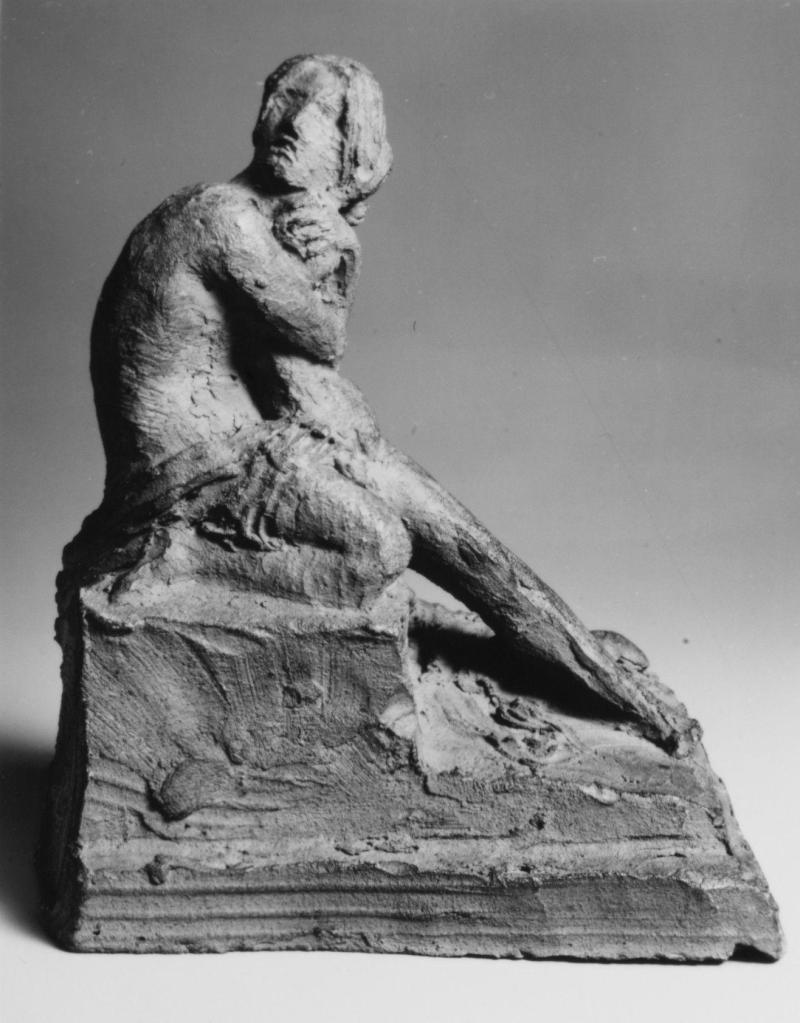
Image
Title: Woman with two children
Artist: Pierre Jean David d’Angers (French, Angers 1788–1856 Paris)
Credit Line: The Metropolitan Museum of Art, European Sculpture and Decorative Arts
Gift of David and Constance Yates, in honor of Alexander Johnson and Roberta Olson, 2001 2001.773.3
Source: https://www.jstor.org/stable/community.18564718
Artstor


 Charles van Heck's Woodhull Journal
Leave a reply to Maynestay Cancel reply