The Dutch poet and playwright Judith Herzberg has presented the world with a body of work that reveals her sensitivity to fine details of a moment, those details she observes, and to the language required to express the subject. She discerns in the mundane what is elusive to others.
Pieter Vandermeer writes of Ms. Herzberg:
Herzberg masters the art of making things in which others do not find anything poignant – a car, cutlery, a mouse, a postcode – perform a heart-rending dance in her words. She prefers to start with something every day, a cliché, to which she gives a harrowing twist. The casual, sprightly, melodious tone in which the gaping abyss is packaged is Herzberg’s speciality. “The verse-like, the gentle, that I strive for/ and that I hate.” The loved and despised song; singing although there is nothing to sing – that is important for Herzberg. Anguish is not named but what it has shaped around itself, and in that way it becomes tangible.
Her diversity and attention to detail—whether she is writing love poems, narratives, word studies, or dialogues—attract me to her work. Ms. Herzberg’s poetry, like that of other writers and artists of her generation, was shaped by the Nazi occupation during the Second World War. The darkness of those years shapes my own worldview as I carry the stories passed on to me by family and friends who suffered during the reign of fascist oppression and terror.
The poet and writer Arie (Al) Staal has been encouraging me over the years to learn my ancestral language. He was rather surprised recently when I told him I was translating a poem by Ms. Herzberg. Arie noted that she is among the most celebrated poets in the Netherlands. I was jumping into the deep end of the pool, where others have already swam translating this master poet’s work. I am unable to say if it was so much a pool as the sea, but I was determined to jump in.
Below is a poem by Ms. Herzberg, followed by my translation. For the record, neither AI was used, nor other translations were consulted in writing my version of her poem. I will leave it to others to determine how well I captured both her observation and her detail of language that invites the reader to share a fleeting moment.
Judith Herzberg’s Poem
STRIJKLICHT

over de sloomte en snelheid van meeuwen

Ze hebben het peinzende arctische glijden
hahaha uit de hoogte in langzaam
voorbijgaan maar ook wel het snelle
bemoeiziek gemekker van geiten

Ze kunnen zo lang op een plek blijven hangen
dat hun schaduwen op de rotsen plakken.

In het donkerend uur, als de grond nog wel warm,
alleen zee nog belicht is, spetteren zij
om de lichtende klip als vonken uit een vuur.
My translation
Grazing Light

About the sluggishness and swiftness of seagulls

They have the pensive arctic glide
ahaha from above in slow
passing, but also the rapid
meddlesome bleating of goats.

They can linger in one spot for so long
that their shadows stick to the rocks.

In the darkening hour when the ground is still warm,
only the sea is still lit, splashing
around the glowing reef as sparks from a fire.
Note: The Dutch word klip can be translated either as rock or reef. The word klif means “cliff” or “bluff.” In the Netherlands, one finds the Rode Klif (Red Cliff) by Warns, the Oudemirdumer Klif, and the Mirnserklif. These are located in the northern province of Friesland. Since Ms. Herzberg used “klip,” I went with a literal translation, though some translators may disagree with my choice.
Photographs
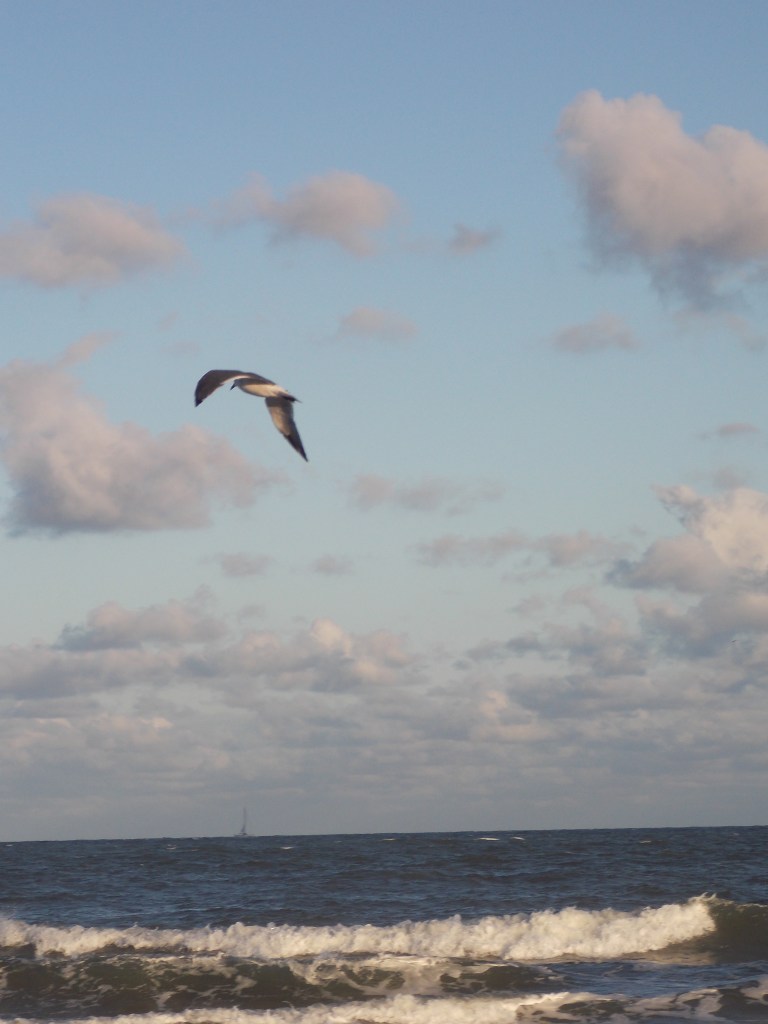
1 Flight © 2026 Charles van Heck
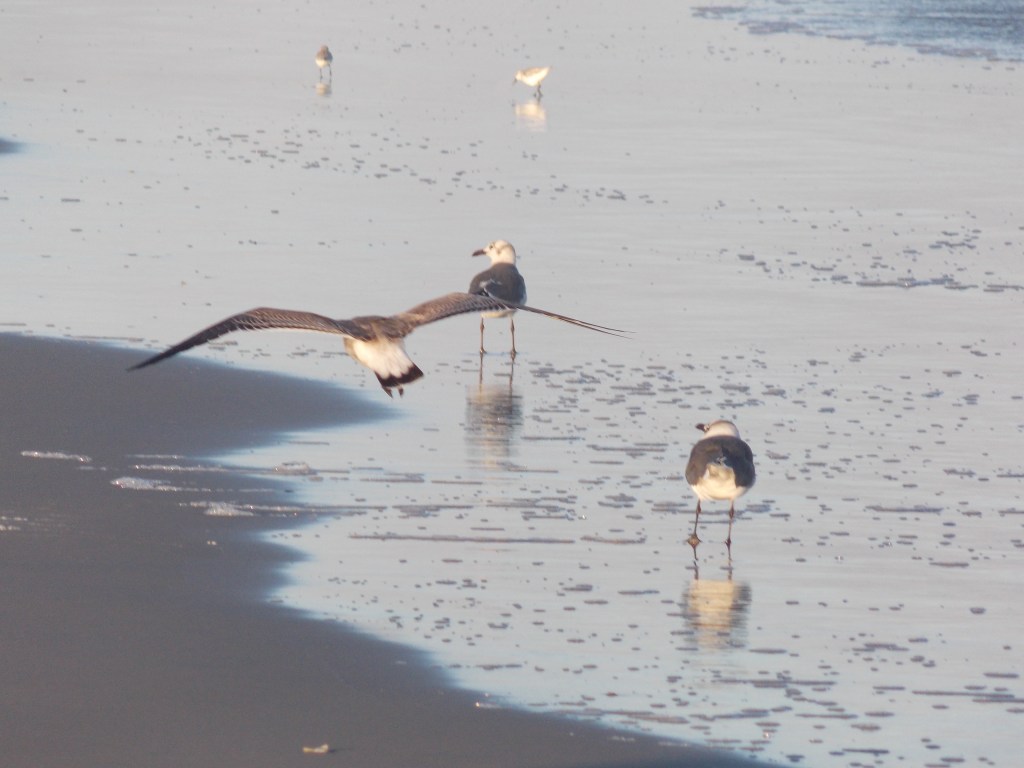
2 Sea Gulls In Repose © 2026 Charles van Heck
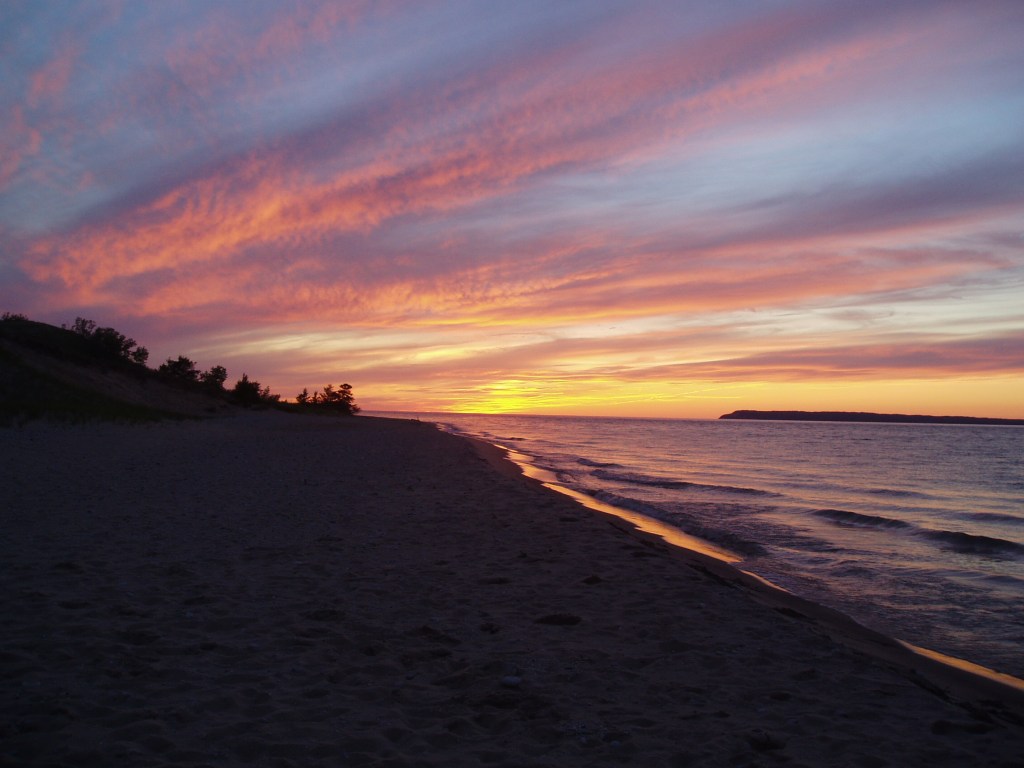
3 Sunset © 2026 Therese M. van Heck


Leave a Reply