The other evening, my wife arrived home with bags of groceries from the market that we will donate to a food bank for distribution. An act of kindness. A moral imperative. More importantly, an expression of love and faith. And for my wife and I, it is also an act of remembrance of both those who are in need and a time of need in our lives.
At one period in our marriage, we literally lost everything. Our three young children were sent to live with relatives temporarily. The only place we could afford was a ramshackle house that the chief of police described as a firetrap. To get by, I worked for food. Fortunately, my wife found employment while I searched for another job. Though subjects of derision by some, we became invisible to others. Rebuilding our lives was a slow and challenging process.
Those bags of groceries contained the memories of our struggle, the hope we clung to, and the reminder of how easy it is to fall into poverty, to become invisible.
Who are the poor among us? They have many faces. Their stories and circumstances vary.
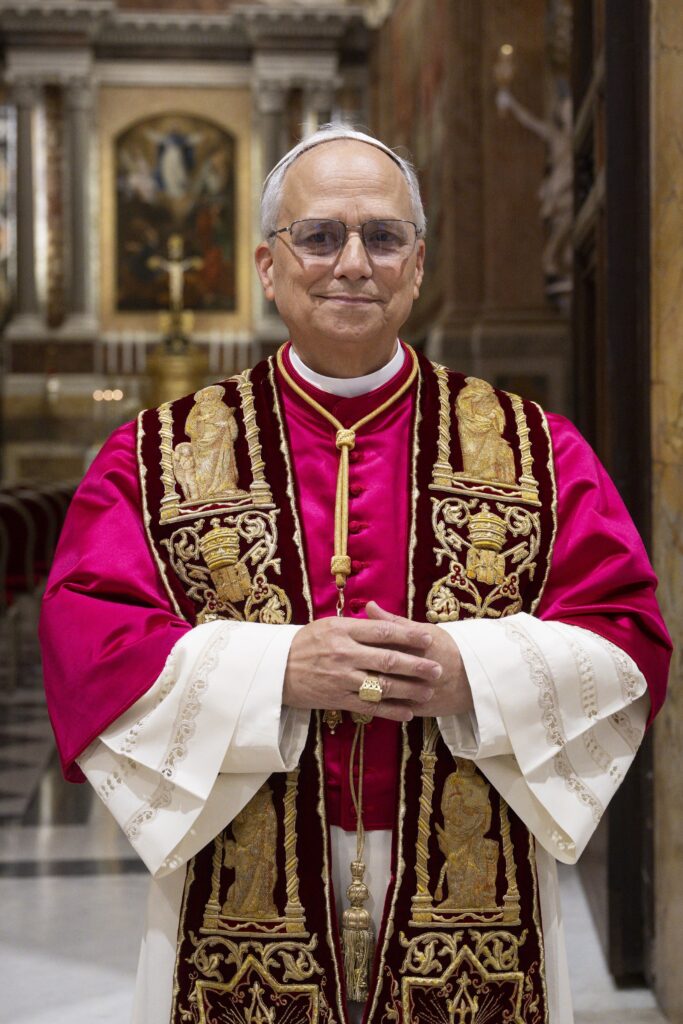
I am deeply moved by the Apostolic Exhortation “Dilexi te” of the Holy Father Leo XIV to all Christians on Love for the Poor, 09.10.2025. I would add that his message is also addressed to Jews, and those of other faith traditions, and nonbelievers.
He writes: “The condition of the poor is a cry that, throughout human history, constantly challenges our lives, societies, political and economic systems, and, not least, the Church. On the wounded faces of the poor, we see the suffering of the innocent and, therefore, the suffering of Christ himself. At the same time, we should perhaps speak more correctly of the many faces of the poor and of poverty, since it is a multifaceted phenomenon. In fact, there are many forms of poverty: the poverty of those who lack material means of subsistence, the poverty of those who are socially marginalized and lack the means to give voice to their dignity and abilities, moral and spiritual poverty, cultural poverty, the poverty of those who find themselves in a condition of personal or social weakness or fragility, the poverty of those who have no rights, no space, no freedom.”
And he goes on to say:
“The poor are not there by chance or by blind and cruel fate. Nor, for most of them, is poverty a choice. Yet, there are those who still presume to make this claim, thus revealing their own blindness and cruelty. Of course, among the poor there are also those who do not want to work, perhaps because their ancestors, who worked all their lives, died poor. However, there are so many others — men and women — who nonetheless work from dawn to dusk, perhaps collecting scraps or the like, even though they know that their hard work will only help them to scrape by, but never really improve their lives. Nor can it be said that most of the poor are such because they do not “deserve” otherwise, as maintained by that specious view of meritocracy that sees only the successful as ‘deserving’.”
The Pope’s words reminded me of a story my grandmother told. After the family lost their farm during the Great Depression, they moved into a house near the railroad tracks. My grandfather found employment in the oil fields. When returning to the house, he encountered hobos (homeless and unemployed men and women) living along the railroad. He would invite them home for a meal.
There are numerous expressions of God’s compassion for the poor, and our responsibility in both the Tanakh and the New Testament. The list of references includes the following duties of the heart:
To make provisions for the poor (Leviticus 19:9-10), to assist the poor (Leviticus 25:35-36), to uphold the cause of the poor (Psalm 82:3-4), to be caring/kind to those in need (Proverbs 14:21), not to oppress the poor (Proverbs 14:31), to hear the cries of the poor (Proverbs 21:13), to serve those who cannot repay (Luke 14:12-14), to avoid discriminating against the poor (James 2:2-4), to respond to the needs of others (1 John 3:17-18).
Each of us is vulnerable to poverty. Loss of employment, illness, aging, accidents, death of a spouse, addiction to drugs and gambling (be it our own or a family member), spousal abuse, divorce, and natural disasters. How then should we respond to the needs of others? How then should we share the abundance we have been blessed with? Do we live a life of consumerism, accumulating things for ourselves, or do we make provisions for those in need?
Our unresponsiveness to poverty is a disease of the heart. It is a societal cancer of the soul. The policies and attitudes of the Trump Administration towards government workers, the unemployed and under-employed, those dependent upon government-funded health care and food programs, both nationally and internationally, child care, the struggle of farmers, homelessness, and the need for educational programs and assistance, speak to the Administration’s indifference. They and many of Trump’s supporters have, in Pope Leo’s words, “…succumbed to attitudes shaped by secular ideologies or political and economic approaches that lead to gross generalizations and mistaken conclusions.”
We, as individuals and congregations, have a moral and ethical responsibility to open our eyes to see the needs of others. Faith without action is empty. Our actions to address the needs must be done with respect for their human dignity.
Pope Leo reminds us, Christians and Jews alike, that “Religion … cannot be limited to the private sphere, as if believers had no business making their voice heard with regard to problems affecting civil society and issues of concern to its members.”
The full text of Apostolic Exhortation “Dilexi te” of the Holy Father Leo XIV to all Christians on Love for the Poor, 09.10.2025 can be found by clicking the link https://www.vatican.va/content/leo-xiv/en/apost_exhortations/documents/20251004-dilexi-te.html
Photograph: Pope Leo XIV
Source: Press Office of the Holy See


 Charles van Heck's Woodhull Journal
Leave a comment