On Sunday, following dinner, I settled in the living room. My wife and I were undecided whether to watch a film or a television show. We recently became hooked on a French detective program, “Le détective de la montagne” (The Mountain Detective).
The Mountain Detective is a series about Alex Hugo, a policeman who leaves Marseilles in search of a new life, but ends up confronting violence in the mountains of the Hautes-Alpes. The series is from Walter Presents and is available on PBS and Prime Video. Thankfully, it is in French with English subtitles, rather than dubbed. The script writers are concerned with more than homicides. There is a depth to their storytelling, light and compassion, friendship, and darkness. Their stories tell of the human struggle between two impulses, yetzer ha-tov and the yetzer ha-ra― the inclinations to do good or bad.
I have a confession to make. In my opinion, my wife enjoys the show too much. Samuel Le Bihan, the lead actor portraying Alex Hugho, is ruggedly handsome and a good person. She assures me that her enjoyment is found in the storytelling and the beautifully filmed scenery. And the scenery is breathtaking. Still, I have to wonder what scenery she is looking at. For myself, the historian in me questions how Hannibal managed to advance a force of 70,000 men, 20,000 horses, and 37 elephants through the Alps during the Second Punic War in 218 B.C.E. Spoiler alert: only one elephant survived. Okay, a whispered confession, J’aimerais que Marilyne Canto, qui joue le rôle du commissaire Doval, apparaisse dans davantage de scènes. Did you really think I would admit this in English?
I have, as usual, digressed.
Yesterday, Sunday, 21 September, was International Peace Day. This was also the day of Charlie Kirk’s Memorial Service. Violence and peace exclude one another in our world. They stand in sharp contrast. The difference was brought into focus by the remarks made by Erika Kirk and Donald Trump.
“I forgive him because it is what Christ did,” Ms. Kirk said about her husband’s murderer. “The answer to hate is not hate.”
“I hate my opponent and I don’t want the best for them,” Donald Trump said of those who oppose him.
The dissimilarity between these highlights our national and personal struggles between yetzer ha-tov and the yetzer ha-ra. Charlie Kirk’s murder, the murder of Minnesota state representative Melissa Hortman, the 2011 shooting of Representative Gabby Gifford, the attack on Pennsylvanian governor Josh Shapiro, the attempted assassinations of Donald Trump, the storming of the nation’s Capitol, the daily threats both Democratic and Republican politicians receive, the list is too long. However, we should not forget the hate and violence committed against immigrants, Jews, and other minorities.
The Great Seal of the United States reads, “E Pluribus Unum.” Out of many, one.” What does this mean to citizens today? Do hate and violence create unity? Is the American Dream merely about personal socio-economic advancement? The Great Seal answers that question.
The poet Carl Sandburg’s voice echoes across the stormy landscape of our time. “When a nation goes down, or a society perishes, one condition may always be found: they forgot where they came from. They lost sight of what had brought them along.”
A nurse I had the privilege to work with during Hurricane Wilma remarked to me, “No good deed goes unpunished.” Are we willing to step forward to take the punishment to do the good deeds? God isn’t issuing the punishments; those who blindly hate do the punishing. They follow the path of Cain (Genesis 4: 3-16). There are, as the mystery shows reveal, numerous ways to kill another physically. There are even more ways to destroy another’s spirit. The same rules of destruction apply to nations.
Theologically, I disagree with Charlie and Erika Kirk’s fusion of politics and religious faith. However, for those who follow a religious tradition and enter the political arena, I believe personal faith should be their moral compass for the decision-making process. Still, their faith should not be imposed on others. Let their light shine to unite, to fulfill the promise of “E Pluribus Unum.”
This evening at sunset marks the beginning of a new year, Rosh Hashanah. We enter a period of reflection on our deeds over the past year. Individually, we examine our conscience to ask how to improve, to be better human beings. The strengthening of the inclination to do good requires an acknowledgement of our capacity to do bad. A wrestling match takes place daily within us.
The High Holy Days are a time of hope. These days are a period of the Eternal Now, when the past and future merge in the present.
My hope is that the nation and I will accept and have the fortitude to wrestle with our two impulses, yetzer ha-tov and the yetzer ha-ra . Let this be a time of forgiveness, both of ourselves and others.
Let us move forward, working towards unity and peace, not just on one day, but on all days.
Shanah Tovah.
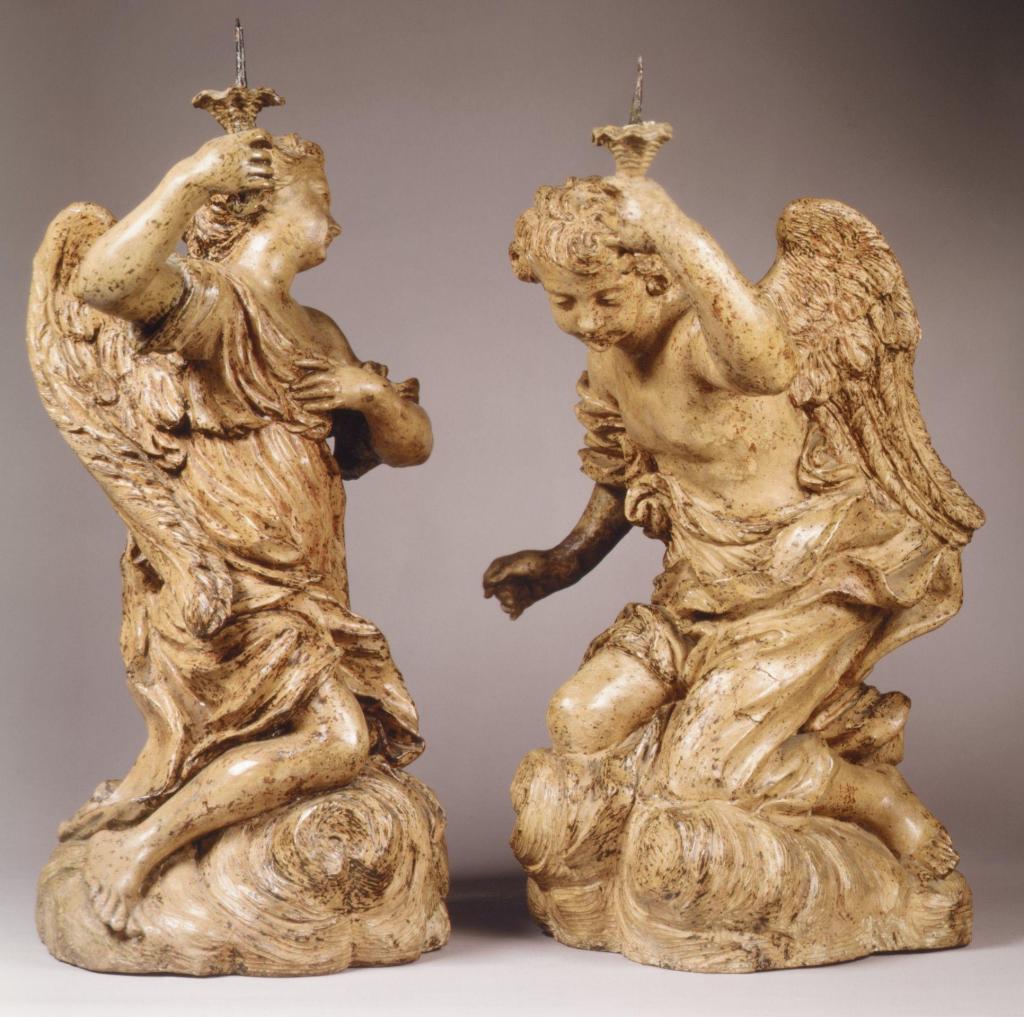
Image: Candle-bearing angel (one of a pair)
Artist: Workshop of Giuseppe Mazzuoli (Italian, Siena 1644–1725 Siena)
Source: The Metropolitan Museum of Art
The Metropolitan Museum of Art
European Sculpture and Decorative Arts
Gift of Ruth Blumka, in memory of her daughter, Victoria Blumka-Goldberg, 1991 1991.37b


 Charles van Heck's Woodhull Journal
Leave a reply to JAM Cancel reply