PART ONE: DEFINING FASCISM
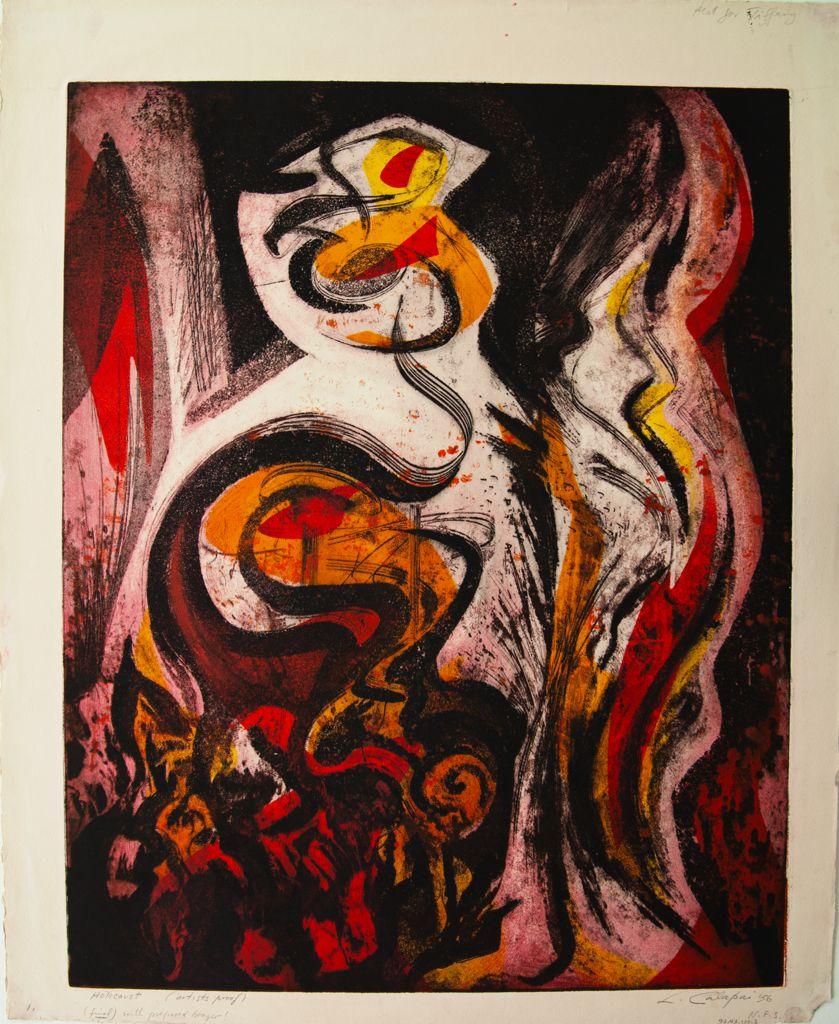
Today, as I begin this essay that I envision to be written in three parts, is 24 April, Yom HaShoah. This is Jewish Holocaust Memorial Day. We pause to remember The Night of state-sponsored persecution and mass murder of European Jews, political dissidents, homosexuals, the Romani people, intellectuals, and the disabled. In The Night, we find the collapse of what President Franklin Roosevelt termed the “four freedoms”: the freedom of speech, the freedom of worship, the freedom from want, and the freedom from fear.”
We use the words authoritarian and fascism to describe the movement that culminated in the attack on the fundamental principles of liberal democratic government. Over the course of the early years of the 21st century, we have witnessed the reemergence of governments that disregard the four freedoms. Today, unlike any period since the Civil War, many Americans have forgotten what binds us. Our national security through international commitments is being abandoned. A wall is being constructed around peaceful commerce. Our independence, the democratic way of life, is challenged from within by those with little or no regard for the Constitution.
We loosely banter about the words fascism and authoritarianism. But what do they mean? How do we conduct a value analysis of these terms? What is the correlation between them and the word conservative? It is essential to answer these questions in the gathering darkness of our national (and international) history. I say this for two reasons. First, it is crucial to understand the forces of the winds sweeping over us. Second, I believe it is essential that, as individuals, we evaluate ourselves to determine our values. Those will shape our response to the crisis.
Fascism means different things to different people. Likewise, it attracted various people for a variety of reasons. It existed well before the rise of Benito Mussolini and Adolf Hitler. Elements of fascist “philosophy” could be found in every nation throughout history. The broad spectrum of meanings and motives doesn’t allow for a clear definition. However, when carefully examined, we see a common soil that nourishes the seeds for the manifestation of fascism. The nutrients are a moral and cultural crisis. Fascism emerges when humanist, religious, and traditional values are no longer the guiding principles, and political and economic insecurity grips a society. Healthy nationalism gives way to extreme nationalism, corporatism, and racism.
We are in an age of insecurity since the early days of the 21st century. The American age of insecurity begins with 9/11, the Iraq and Afghanistan Wars, the 2008 financial crisis, the Covid pandemic, the churches’ sex abuse scandals, immigration issues, and the environmental crisis are but a few of the major contributing factors. A growing sense of living in a technofeudalistic society, the rules pertaining to gender roles, particularly for women and LGBTQ people (both of which are for the better), are too often viewed as threatening. There has been a marked increase in the people’s mistrust of government. We can trace this mistrust back to the credibility gap of the 1960s. Our moral certainties gave way to doubt, fear, and anti-liberalism as cultural and political malaise, a dissatisfaction settled over us. Materialism filled the void.
The response to this insecurity has been evident in voting patterns. We hear it in the expressions of nationalism. We perceive it in the elitist and antiliberal rhetoric and sentiments directed at the educational system. We hear about the expansionist interest in acquiring new territories for minerals and raw materials. This is evident in the political unrest that we witnessed on 6 January. And we perceive it in the increase in racism targeted at Latino, Black, Chinese, Japanese, and Jewish Americans, as well as violence against women. Americans have traditionally prided themselves as a classless society. This is no longer the case. The poor and middle class find themselves contending with an indifferent oligarchy.
Fascism, unlike conservatism, is about radical government change. It emphasizes cultural decline and the superiority of one race over another. It plays upon people’s insecurity and fragments society by pitting one group against another with the promise of returning to traditional values and restoring the national community. To accomplish this, the power of the state is leadership-based. Unconditional power resides in leadership. A leader’s legitimacy rests in the willingness of people to follow him.
Fascism is antiliberal, antidemocratic and antihumanism. It seeks strong state power. The interests of the state take precedence over the rights of the individual. State leadership values greatness. To sustain themselves, fascist leaders create myths that are used for propagandist purposes. The leadership does not genuinely believe these myths it creates, but hopes its followers will think the myths are real and achievable.
In Part Two, I will complete the definition of fascism and contrast it to conservatism.
Illustration: Holocaust, by Letterio Calapai, Wriston Art Center Galleries, Lawrence University, Appleton, Wisconsin (JSTOR Digital Library).


 Charles van Heck's Woodhull Journal
Leave a reply to automaticdaeb44aad7 Cancel reply