“As President John F. Kennedy said many years ago, “geography has made us neighbours, history has made us friends, economics has made us partners, and necessity has made us allies.”
That rang true for many decades prior to President Kennedy’s time in office and in the decades since. From the beaches of Normandy, to the mountains of the Korean Peninsula, from the fields of Flanders, to the streets of Kandahar, we have fought and died alongside you.
During your darkest hours, during the Iranian hostage crisis, those 444 days we worked around the clock from our embassy to get your innocent compatriots home; during the summer of 2005 when Hurricane Katrina ravaged your great city of New Orleans or mere weeks ago when we sent water bombers to tackle the wildfires in California; during the day the world stood still on September 11th, 2001, when we provided refuge to stranded passengers and planes, we were always there standing with you, grieving with you, the American people.
Together we’ve built the most successful economic, military and security partnership the world has ever seen, a relationship that has been the envy of the world.
Yes, we’ve had our differences in the past, but we’ve always found a way to get past them. As I’ve said before, if President Trump wants to usher in a new golden age for the United States, the better path is to partner with Canada, not to punish us.”
Prime Minister Justin Trudeau Address to Americans, March 4, 2025
This morning, I received an email from a dear friend in British Columbia, Canada. Included with the email was the full text of Prime Minister Justin Trudeau’s emotional speech addressed to American citizens. I doubt that many Americans have heard this speech. Readers will find a link to the full text at the end of this blog. After reading the prime minister’s words, I thought of my time in Canada and the people I had met over the years.
I have been privileged to experience the vast wealth of Canadian culture, and the kindness and generosity of its people. Artist and writers from the various provinces. Fisherman from Nova Scotia, craftsmen and craftswomen from Prince Edward Island, factory and shop workers in New Brunswick, scholars in Toronto, government employees in Ottawa. My wife’s ancestors are from Quebec, where many still reside. I have walked the rugged shores of Nova Scotia, and listened to the wind whisper through the fir and western red cedars, and watched killer whales in the Salish Sea in British Columbia. And it was in British Columbia that I met and learned from the Indigenous people of Canada. My wife and I were married in a ceremony performed by a priest from Windsor after the scheduled American priest was involved in an automobile accident. Another Canadian priest conducted the ceremony when we renewed our vows in a Japanese garden on Mayne Island. I have worked with Canadians during national disasters, and met those who served with our military during the Vietnam War.
The Canadian author Robertson Davies observed that Toronto is a big city “composed of a number of neighborhoods or ‘villages’” of diverse ethnicities and cultures. “Never neglect the soft, persistent influence of the Middle Ages in the Modern world in the many wards, streets, and districts in Toronto.” This is how I think of Canada, a composite of neighborhoods – villages with a rich heritage and history that has contributed to American culture.
It is delusional to think Canada can or will be the 51st state just as it is to believe that tariffs are not a form of taxation of citizens. In A Man of Iron: The Turbulent Life and Improbable Presidency of Grover Cleveland, Tony Senik writes:
“For all the protectionist homilies about how trade barriers were essential to protecting American jobs and increasing wages, the rates tended to be set at the behest of corporations looking to minimize competition.… Moreover, Cleveland noted, whatever increase the tariffs generated in wages tended to be offset by the higher prices workers would have to pay for goods subjected to the duties.” President Cleveland concluded that reducing tariffs rather than increasing them was “the true populist position.” The Congressionally appointed Special Commissioner of Revenue, David Wells, who had advocated for tariffs, changed his mind on protectionism and tariffs.
Americans would do well to think of the long term implications of tariffs. The report in Forbes, March 4, 2025, states, “Economic And Market Data Signal A Recession Is Coming,”
“A slew of economic data is signaling that a recession is around the corner. The impending economic contraction, and possibly a recession, is primarily being caused by President Donald Trump’s tariffs imposed on Canada, China, and Mexico and the wave of retaliation which has now followed. Moreover, the chaotic layoff of federal workers will likely lead to a rise in unemployment and tightening of spending by those losing their jobs. Additionally, deportations of undocumented immigrants, as well as the fear thereof, is causing significant uncertainty in several important economic sectors such as construction, farming, hospitality, poultry, and small businesses.”
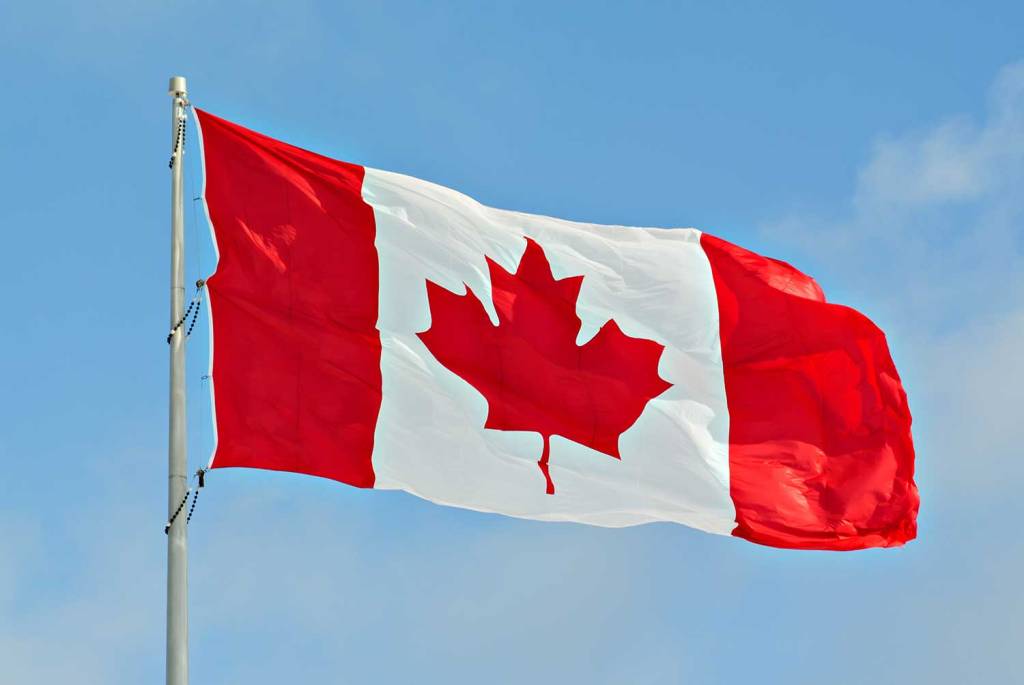
I stand with Canada. The Canadian flag will continue to fly from my front porch next to the American Flag. Canadians and their government have been generous in their loyalty and friendship. Our longstanding alliance, our shared liberal democratic principles, our economic partnership cannot and should not be abandoned on the whim of one man who is intent on destroying the Canadian economy but may very well destroy the U.S. economy in the process.
Prime Minister Trudeau’s Address to Americans
https://www.theglobeandmail.com/politics/article-trudeau-trump-tariff-speech-transcript/
Forbes Article: Economic and Market Data Signal a Recession is Coming
Statement by the Prime Minister on unjustified U.S. tariffs against Canada


 Charles van Heck's Woodhull Journal
Leave a comment