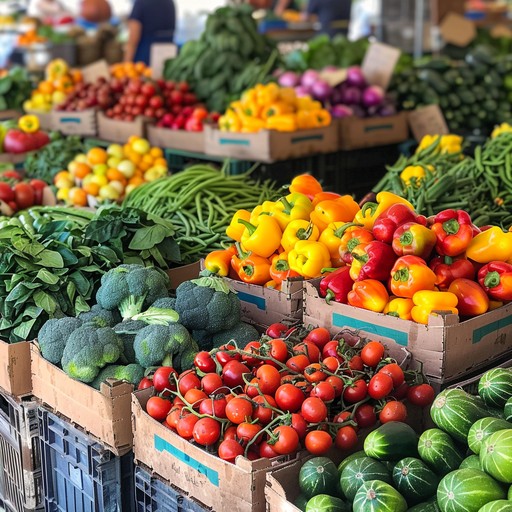
Grocery shopping in our home is usually done on Thursday or Friday. The upcoming week’s menu and the supermarket list are written concurrently. This saves time and money in the market. The problem with this is that we each prefer shopping in different stores. My preference is for a small grocery market. The large stores, with their aisles of shelves and racks stuffed with food, toys, clothing, garden supplies, and other items, tend to overwhelm me even in the grocery aisles. There is too much, and I have to hunt endlessly for what I need. Terri knows how to navigate these stores, sticking to the list, though she acknowledges there is too much wait time at the checkout.
The small grocery stores offer the convenience of organization and focus. I also find the staff friendly and more helpful. There is, in Terri’s opinion, one problem with these stores. Me. I enter the store with a list and a menu in mind, only to discover, all too frequently, at the front before the produce section, sales that catch my eye. Then the bargain hunting begins. The list and plans go by the wayside. Terri is patient, removing things from the cart either when I am not looking or with a cheerful reminder that we already have an excess of the item from the last time we went shopping together. “But it’s on sale,” is my reply. There are times when she will find meat of higher quality than the piece I selected. We negotiate while navigating the aisles.
My interest in shopping, even for books, has waned over the years, though I always manage to find a book to purchase. Terri was surprised when I decided it was time to get a public library card (I would prefer access to an academic library) rather than purchasing more books. My publisher may be somewhat displeased with my acknowledging that.
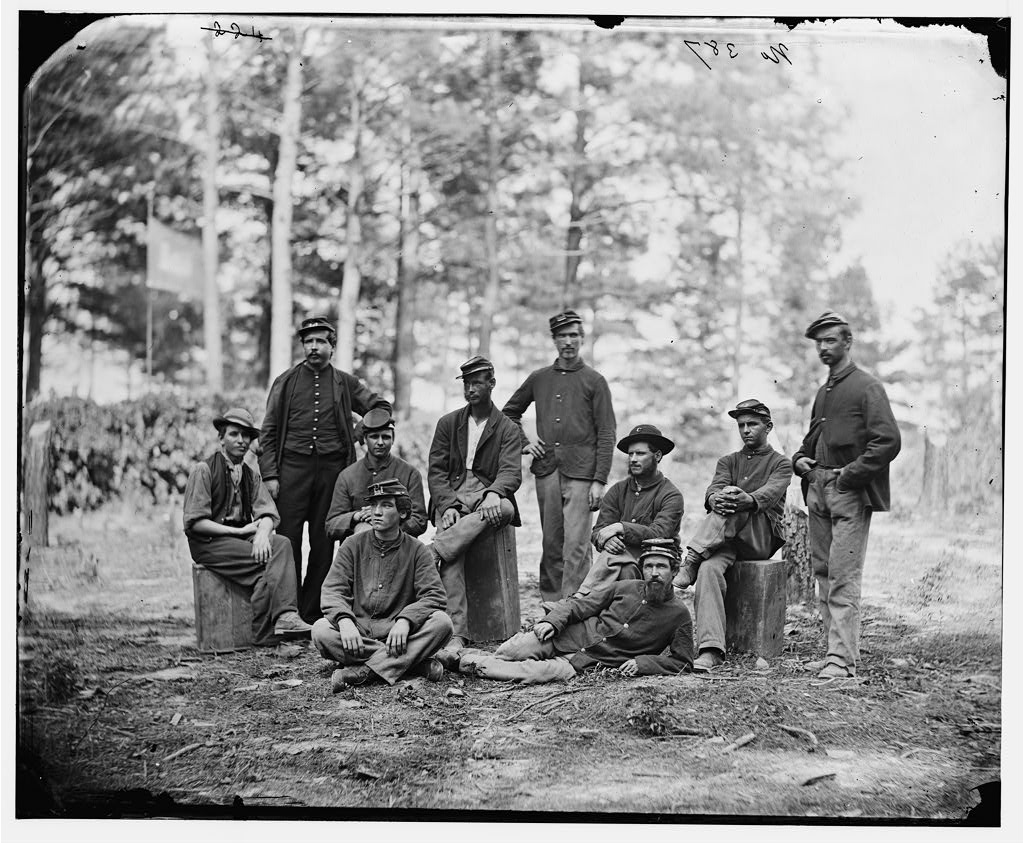
This past year, I signed a contract for my historical novel, Mister Lincoln’s Elephant Boys. The book, a story about the American Civil War, is scheduled for release in September. The editor, Becky H. Hilliker, is currently going through the manuscript. She assures me there is little for her to do. The novel has undergone numerous revisions over the past twenty-five years of research and writing. At one point, I had so many drafts that I filled three Xerox paper boxes and loaded them into the trunk of my car, then drove to my friend George Lewis’ home. The boxes were lugged to a burn pile of branches and leaves, then set afire. George was somewhat bewildered by my decision. His yard looked well-groomed after our raking and cutting. The file cabinet definitely had more space.
The research for Mister Lincoln’s Elephant Boys was extensive, involving reading history books, diaries, correspondence, newspaper accounts, battlefield reports, medical procedures, church and political records relevant to the issue of slavery. I listened to the recorded interviews with Black people who lived the harsh reality of their enslavement, and visited the sites mentioned in the story. I met with veterans who served in Korea and Vietnam to hear how they told their stories. There were conversations with published authors and editors for their opinions.
There are probably a few writers who cringe at the thought of burning drafts of their works. I can hear someone asking, “Did you store it on a USB flash drive, or another external data storage system?” Yes and no. When I write, the first rough draft, and others that follow are handwritten with either a pen or a pencil. Then typed into the computer, then printed. Revisions are made. Edits are extensive. These involve both the removal of scenes and characters and the inclusion of previously unused material. Terri was displeased when I removed one of her favorite characters, though I eventually gave him a cameo. The paper copies stack up.
Becky advises that I have to attend to the inevitable, and as Robert Reich said, unenviable task of marketing. For me, the business end of writing is as pleasurable as grocery shopping in a large, crowded store. I would prefer to return to Mayne Island, British Columbia, to write a new story and poetry or to paint. For now, I have my office and studio at home, and a twenty-minute drive to Tim Horton’s for a taste of Canada, and farmland to wander through. There is also a request to teach a class, possibly in the autumn, that requires attention. For this course, I want to stretch into new material, avoid what I previously taught.
In the coming months, I will write more about Mister Lincoln’s Elephant Boys, the story behind writing the novel, and the true-life people on whom the characters are based. The story has both a U.S. and Canadian angle.
Writing, like any art form, involves a learning curve, requiring solitude and patience. There is always more to learn. What most artists and writers prefer to avoid is the word “business.” This is a necessity, a necessary “evil,” if you will, unavoidable as the checkout line in a large grocery store. Personally, I am looking forward to the farmers’ stands with their fresh produce.
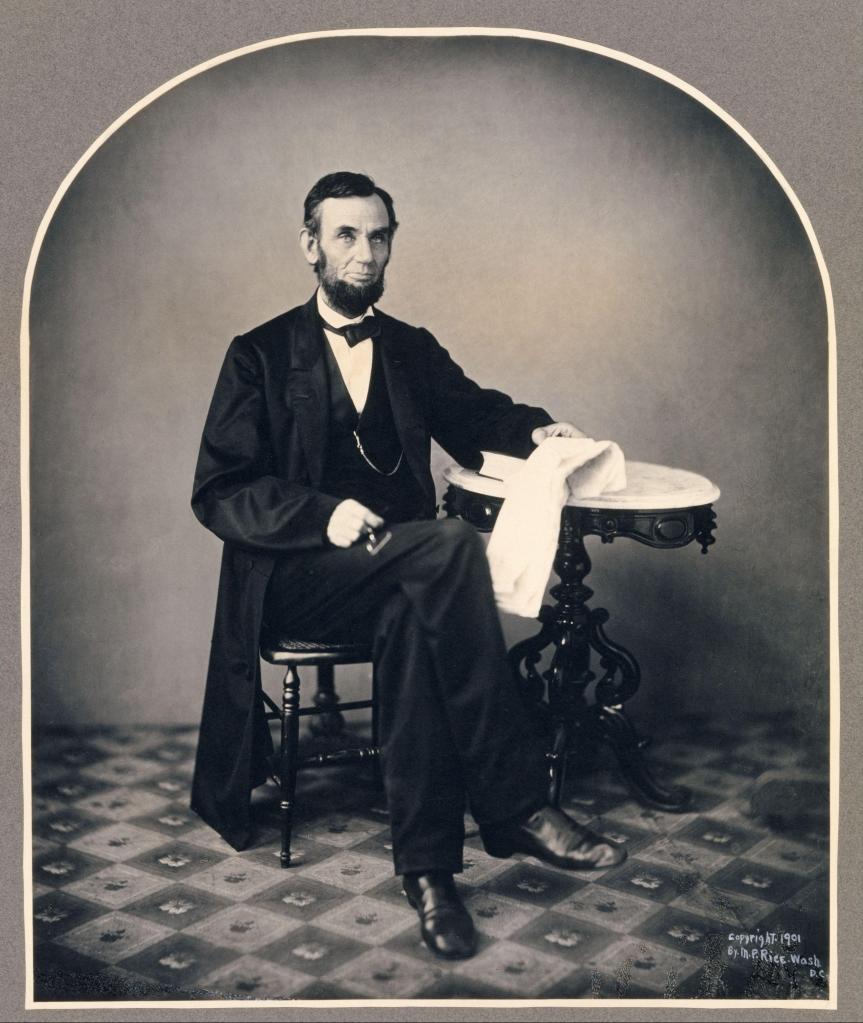
Portrait of Abraham Lincoln
Artist: Alexander Gardner (American, Glasgow, Scotland 1821–1882 Washington, D.C.)Person in Photograph: Abraham Lincoln (American, Hardin County, Kentucky 1809–1865 Washington, D.C.)
Source and Credit Line: The Metropolitan Museum of Art, Photographs, Warner Communications Inc. Purchase Fun
https://www.jstor.org/stable/community.18413757
Artstor

 Charles van Heck's Woodhull Journal
Leave a comment