A friend commented the other day that he noticed I was shifting my attention. “You’re posting poetry. Are you writing more poems?” Actually, yes. I took a hiatus from poetry to write two novels, travel, paint, garden, and begin the descent into dizzying depths of health issues. The latter comes with aging and other contributing factors.
The poet Donald Hall once remarked that writing poetry had become more difficult when he was older. Eventually, he stopped composing poems, turning his attention to prose. Poets and physicists are similar in that, after a certain age, we are unable to bring freshness to our questions and insights. We remain inquisitive, doing our work, but there is a bit of rust.
After years of avoidance, I felt the need to scrape off the rust to resume writing poetry. I found it a bit like going into an old barn to discover the tractor is draped in cobwebs. The engine is rusted, and mice have chewed up the wires. I needed to review the rules of poetic forms.
There are rules to writing poetry. The rules vary depending on the form. The editors of the Poetry Foundation have an educational resource on the forms. The article includes examples of the various styles. Rules matter. They can be bent, stretched, but failure is guaranteed when ignored, completely ignored.
Which brings me to French President Emmanuel Macron’s address to the World Economic Forum on Tuesday, 20 January. In his remarks, he warned of the “shift toward a world without rules,” the growing neglect of international law.
Throughout his first term, Trump expressed disregard for the limits of presidential power. Fortunately, there were men and women who restrained his darker impulses. In the second term, as we are all aware, the clear-minded have been banished and replaced by enablers. Trump runs the government with intimidation and threats. He operates with an id gone wild. His path to the White House is similar to following the trail of destruction left by a rampaging child.
New York Times columnist Jamelle Bouie writes, “The uncomfortable truth is that the president of the United States is a man with the mind of a spoiled child.”
There are critics, and I am among them, who have compared Trump to Caligula, King George III, and Richard Nixon’s mental state in the final days of his administration. In these examples, we see the mad king syndrome. I am now more inclined to have a slightly different perspective. Lyndon Johnson.
Friends and acquaintances cringe when I express my opinion that Johnson was both a great leader (e.g., Civil Rights) and a tragic one (e.g., Vietnam). James Reston captured this contradiction when he wrote at the time of Johnson’s death in 1973:
“…he was a symbol of this confusing time in America a little nearer to the old spirit of Frederick Jackson Turner’s American frontier than most of his fellow countrymen, but also a little nearer to the folks who had been left behind when the frontier and battle moved to the cities.”
John Connally, the governor of Texas, who served as the U.S. Secretary of the Treasury, once compared Lyndon Johnson’s character to an “untied bale of hay.”
Contradictory as he was, and vain and self-pitying as he could be, Johnson was motivated by a conviction of FDR’s New Deal liberalism and a belief in the nation’s ability to overcome its prejudices and myths by managing the legislative agenda for the benefit of all the people. And like FDR, Johnson bent the rules to accomplish his goals.
There are two types of people in politics, according to the economist and ambassador John Kenneth Galbraith. He makes the distinction “…between the man or woman who holds public office in order to enjoy the personal pleasure it provides and the one who sees such a position as an opportunity to effect public action or change.” For Galbraith, Johnson exemplified the latter type. Galbraith also observed that “(President) Kennedy always used less power in pursuit of his goals than his position and personality provided. Lyndon Johnson always used more.”
Robert L. Hardesty, a Johnson speech writer, noted that Johnson had a hunger for information. Regardless of its variety and source, he used information to evaluate political obstacles, increase his leverage, and to persuade others to build a working consensus. Johnson paid attention to the individual, their personalities, interests, philosophy, and ideology. Hardesty notes that Johnson’s favorite biblical verse was Isaiah 1:18, “Come let us reason together.” Because of this approach to governing, Hardesty reminds us, “He sold civil rights to southerners, wage restraint to union leaders, price responsibility to corporation presidents, Medicare to doctors, safety requirements to auto moguls, and the blessing of job training for the unemployed to the U.S. Chamber of Commerce.”
The law, both Constitutional and international, mattered to Johnson. I understand there are those who hate Johnson and will disagree with me. However, Johnson took advantage of presidential power and expanded it, as Roosevelt did, to affect public policy for society’s betterment. Nixon dismantled the Great Society. Others continued the process of deconstruction as they expanded presidential power.
The Trumpian policies, tangents, and the constant laying out of political grievances establish a third category of person in Galbraith’s distinction. In a dark, negative way, Trump fits into and overlaps the first two groups. In his piece for The New York Times, Thomas B. Edsall quotes the Columbia University professor of leadership and ethics, Adam Galonsky, who observes that Trump:
represents what researchers call the dark triad of three interconnected, malevolent personality traits: narcissism (grandiosity, self-centeredness), Machiavellianism (manipulation, cynicism) and psychopathy (impulsivity, lack of empathy/remorse).
Trump wants to be seen as the greatest president of all time and makes everything about himself (narcissism), he views the world as only functioning through manipulation and exertion of power (Machiavellianism), and he is impulsive and shows no empathy (psychopathy).
There are established rules for governing, just as there are in writing. Trump is driven by instinct. He hunts his prey for self-gratification. As Tobore Onojighofia Tobore, an Independent Scholar at Yardley, writes, Trump dehumanizes others. “Power promotes dehumanization, which is the process of rejecting essential components of ‘humanness’ in others and seeing them as animals or objects.”
Trump, with his false sense of moral superiority, is taking us into a world without rules, governed by the darker instincts of human nature. We, regardless of our race, gender, gender identity, religion, and creed, are human beings and must stand up against the Trumpian dehumanization.
Trump and his sycophants’ inability to grasp the rules of governance makes them failures. History will judge them harshly. Our situation is fragile. The Trumpian failure is our failure. His failure will continue to have catastrophic political, economic, and military ramifications, and our silence makes us complicit in his failures. The question each of us, as individuals and as members of both a national and an international community, faces is whether we have the courage to demand and act to remove Trump and his enablers.
Referenced Links
Poetry Foundation
https://www.poetryfoundation.org/collections/159875/poetry-and-form
Jamelle Bouie, Trump’s “‘Dear Jonas’ Letter Is No Prize”
https://www.nytimes.com/2026/01/21/opinion/trump-norway-letter.html.
Thomas B. Edsall, “Trump Unmasked”
Tobore Onojighofia Tobore, “On power and its corrupting effects: the effects of power on human behavior and the limits of accountability systems”
https://pmc.ncbi.nlm.nih.gov/articles/PMC10461512/
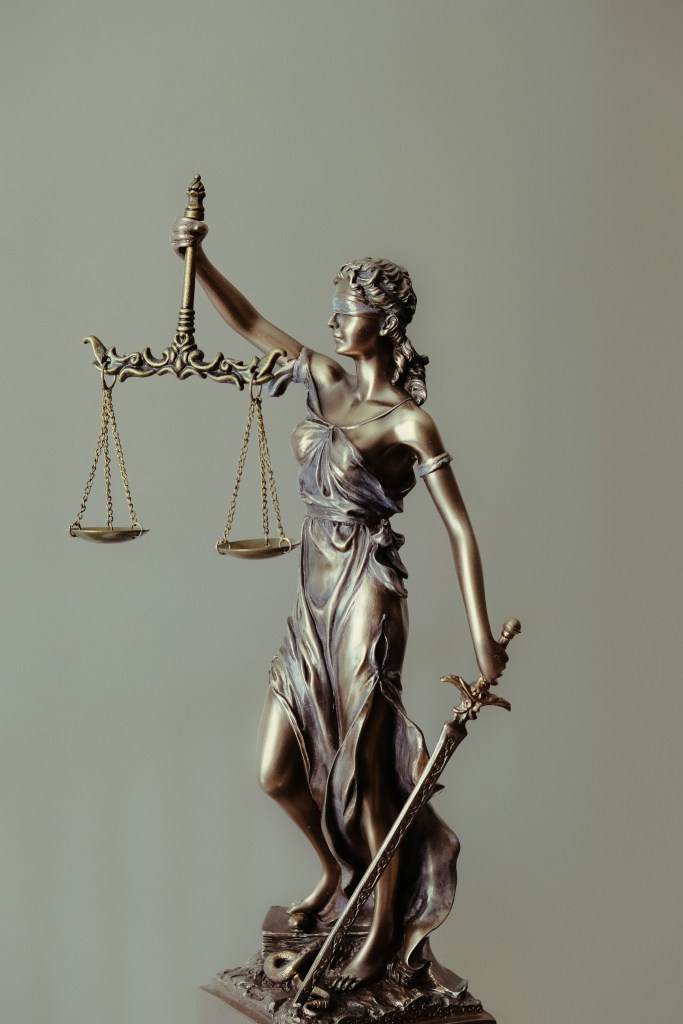
Photograph by Tingey Injury Law Firm on Unsplas

 Charles van Heck's Woodhull Journal
Leave a comment