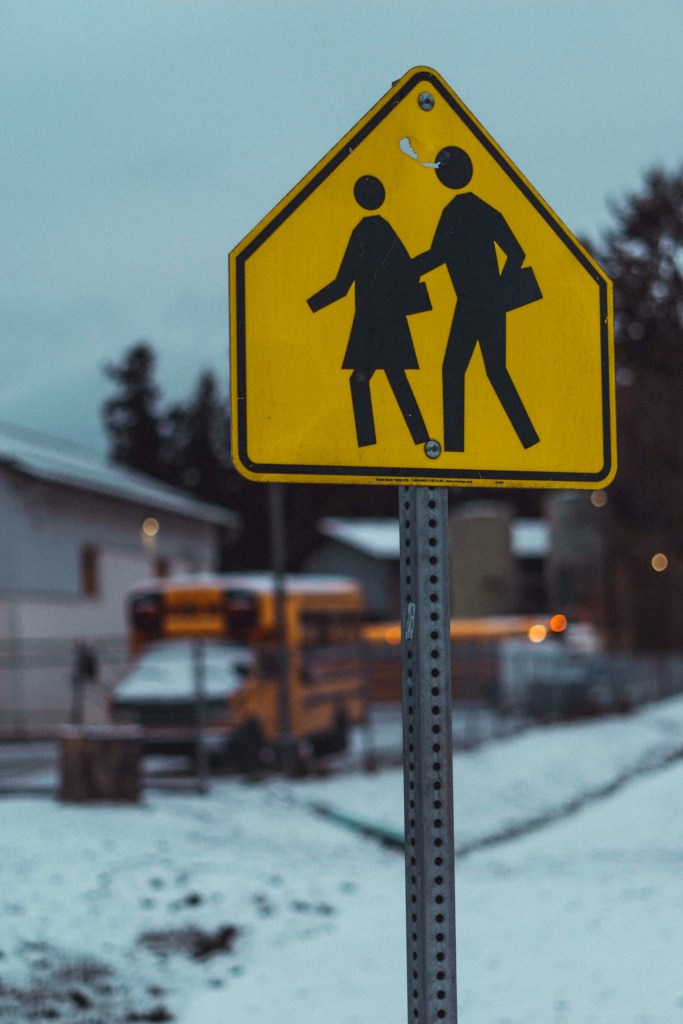
The arrival of autumn brings out the bookish aspect of my nature. The responsibilities for coursework found in freshly printed syllabi, the necessity of meeting a professor’s deadlines, revising lectures, and meeting new students have long passed for me. I do, on occasion, miss wandering a campus, the anticipation of entering a lecture hall for the first time. I rarely speak about my academic experience. The grades K-11 were a dismal period for me. The “classrooms” that satisfied my thirst for knowledge were —and remain — libraries and bookshops. My preference has been alternative learning.
Contemporary life places a heavy demand on the education of young minds. Parents and students deal with personal, social, and vocational issues that will shape their futures. The pressures often undermine the purpose of education. The word purpose should be plural because education serves multiple purposes. However, two essential points are lost in how we discuss education.
The educator John Holt noted the first point when he observed, “Learning is not the product of teaching. Learning is the product of the activity of learners.” The second point is that the purpose of education is to learn how to learn.
Recently, I received a copy of Amber Harvey’s book, Sundance School Tapestry: A Love Affair with Education. Ms. Harvey is a Canadian author and educator. While reading her manuscript, which is both a personal memoir and a history of the school, I found myself reflecting on my time as a student and teacher. A question that I have often asked parents, students, and myself inevitably came to mind. What are the purposes of education? Ms. Harvey’s book addresses this question in her examination of the history of the Sundance School. Sundance was an alternative educational experiment she and others established in Victoria, British Columbia, Canada, during the 1970s. She writes:
“Sundance resulted from parents’ and teachers’ passionate dislike of the conventional schools. We refused to send our children to them and strove to create a school where children’s voices mattered, a school entirely different from the schools of the time. We felt it was crucial to free our children from the restrictions of the old way of thinking about education and to invent a new one if we had to. We wanted to do everything in a new and better way, to create a school that didn’t harm children and met the needs of the whole child —body, mind, emotions, and their inner spark of uniqueness. We were committed to creating a completely different and better educational experience for our children, even if we had to make it up as we went along.”
Many students, parents, and educators were dissatisfied with “… the lock-step expectations, where all children learned the same things at the same time and were expected to have the same learning goals…” The teachers and parents of the Sundance School questioned the philosophy of education, though they focused more on the culture of educational experience and how it shaped students’ lives. I believe the cultural aspect of education is absent today.
What are the goals of conventional education? Should the objective be merely to prepare students to take standardized tests? Is the objective to develop students for careers that enable them to be wage earners and consumers? What role does personal or individual identity development have? How does this contribute to leading a fulfilling, rewarding, and responsible civic life? Do the voices and needs of our children matter? These are but a few of the underlying questions of Sundance School Tapestry.
Ms. Harvey observes that the primary value of education is to develop the power of thinking, to cultivate self-understanding and learning skills, and an appreciation of and respect for others. These skills allow students to participate in civic and community life in an intelligent and healthy manner.
The Sundance School was student-centered. Ms. Harvey explains this to mean that, “children immersed themselves in a subject as though they were actual scientists, artists, or members of a culture or time. Our science, social studies, and art offerings or units were often of this kind and emphasized problem-solving, critical thinking, and student engagement.” This approach provides both an effective and enjoyable classroom experience for students and teachers. More importantly, it instills an understanding of the classroom as a place for learning how to learn. Learning and education are lifetime experiences. The author John Holt, as quoted by Ms. Harvey, summarizes this understanding when he observes:
“Since we can’t know what knowledge will be most needed in the future, it is senseless to try to teach it in advance. Instead, we should try to turn out people who love learning so much and learn so well that they will be able to learn whatever needs to be learned.”
Are we educating students to love to learn and become lifelong learners? Are we allowing students to learn at their own pace and develop their own interests, or are we simply teaching to a government-required curriculum? Can we teach a broad spectrum that allows students to decide their own interests?
Personally, I believe with Ms. Harvey that the answer to these questions is yes. I witnessed this in two homeschool programs where I was asked to teach. These were offered through Christ the King Homeschool Co-op and the Explorers Homeschool Association in Ann Arbor, Michigan. Both offered extensive classes taught by parents and professional educators with knowledge in their fields. Philosophically and culturally, these were different from the Sundance School, but they shared a common goal with it.
The COVID-19 epidemic, Artificial Intelligence, and social media have brought to light problems with our current educational system. As Ms. Harvey observes, “Present-day schools are overcrowded, understaffed, and underfunded.” I would add that they are discriminatory and undermined by government policies. This isn’t to say there are bad teachers and administrators. What is bad is the general culture of contemporary education, both in Canada and the United States. The educational system needs reform. Programs like the Sundance School offer an alternative to the educational needs of our children.
Amber Harvey’s Sundance School Tapestry is a reminder that students —our children—are not extensions of ourselves. They are unique individuals learning to explore their identities and needs and wants for fulfilling lives. Her book includes interviews with parents, teachers, and students and raises questions that K-12 parents and educators should be asking. She points us in a direction for alternatives that improve education and society.
I look forward to the publication of Amber Harvey’s Sundance School Tapestry: A Love Affair with Education. I encourage parents and educators to read her book upon its release, when I will have more to say about this book.
Photograph: Salt Spring Island, BC, Canada
Photograph by Jasper Garratt on Unsplash


 Charles van Heck's Woodhull Journal
Leave a comment