Thirty-seven years ago, on 15 October, Kirk Gibson stepped up to home plate in Dodger Stadium in Game 1 of the World Series between the Dodgers and the Oakland Athletics. He was suffering from a swollen, shredded ligament in his right knee and a strained left hamstring. Tommy Lasorda wasn’t going to play him, but Gibson persisted. He wanted in the game. Lasorda relented. Gibson would pinch-hit. At the bottom of the ninth inning with two outs, the Athletics were leading 4-3, and the tying run was on first base. Gibson was down 3-2. Dennis Eckersley threw a backdoor slider. Gibson swung, slamming the ball over the right field fence for a walk-off home run. Those of us who saw the game were stunned and cheering as he limped around the bases, arms raised, fist clenched.
Fast forward to 2015. Kirk Gibson was diagnosed with Parkinson’s Disease. The disease affects 1.1 million Americans and 10 million internationally. An estimated 90,000 are annually diagnosed with the illness. According to the Parkinson’s Foundation, “Parkinson’s is the second-most common neurodegenerative disease after Alzheimer’s disease.”
Parkinson’s is a disorder of the nervous system affecting movement. Tremors, rigid muscles, loss of automatic movements, changes in speech and writing, anxiety, constipation, sleep difficulties, and thinking and memory problems are among the symptoms. The disease doesn’t result in death. Instead, it saps you of strength; it will and does perforce divert a person’s focus to adapting to physical and behavioral changes as both the patient and their families commit to living with the disease.
Gibson has done precisely that, but took his fight a step further. He established the Kirk Gibson Center for people with the disease. The center offers a wide variety of programs designed to help them manage the illness. The programs offered are free of charge and include exercise, education, the arts, and social connections to slow the disease’s progression. The center is located in Farmington Hills, Michigan.
Below are links to the Kirk Gibson Center, the Mayo Clinic, the Michael J. Fox Foundation for Parkinson’s Research, and the Parkinson’s Foundation, which will provide more information about the disease.

Nicole Mortillaro of CBC News (Canadian Broadcasting Corporation) posted an article about Reflect Orbital, a California company planning to launch EARENDIL-1. Reflect Orbital has submitted a request to the U.S. Federal Communications Commission to use satellites to beam “reflected sunlight on specific locations, such as solar farms, after the sun has set.” In other words, the company wants to launch giant mirrors into space.
The size of these mirrors varies from 10×10 meters to 18×18 meters to 54×54 meters. Such a project would involve launching thousands of satellites, of the largest size, to provide adequate light to solar farms. Michael Brown, an associate professor of astronomy at Monash University in Melbourne, Australia, has observed that producing 20 percent of the midday sun would require 3,000 or more of the largest mirrors. That is many kilometers across. Additionally, the satellites would need to follow a polar, south-to-north orbit. This endeavor will have unintended consequences on biodiversity.
Turning night into day has been considered since the 1920s. The Russians attempted to launch a 25-meter mirror for this purpose in 1993 with the launch of Znamya-2. Mortillaro reports that it created a “five-kilometer bright spot. A few days later, Znamya-2 burned up over Canada.”
Tereza Pultarova writes in Space.com, “The company, which won a $1.25 million Small Business Innovation Research (SBIR) contract from the U.S. Air Force in May, says its future constellation will deliver light on demand after sunset and before sunrise to paying customers on Earth, effectively extending the daytime hours.”
To play on the words used by my friend Chuck Wiser, will writers begin their stories, “It happened one of those bright nights” rather than “It happened on one of those dark nights”?
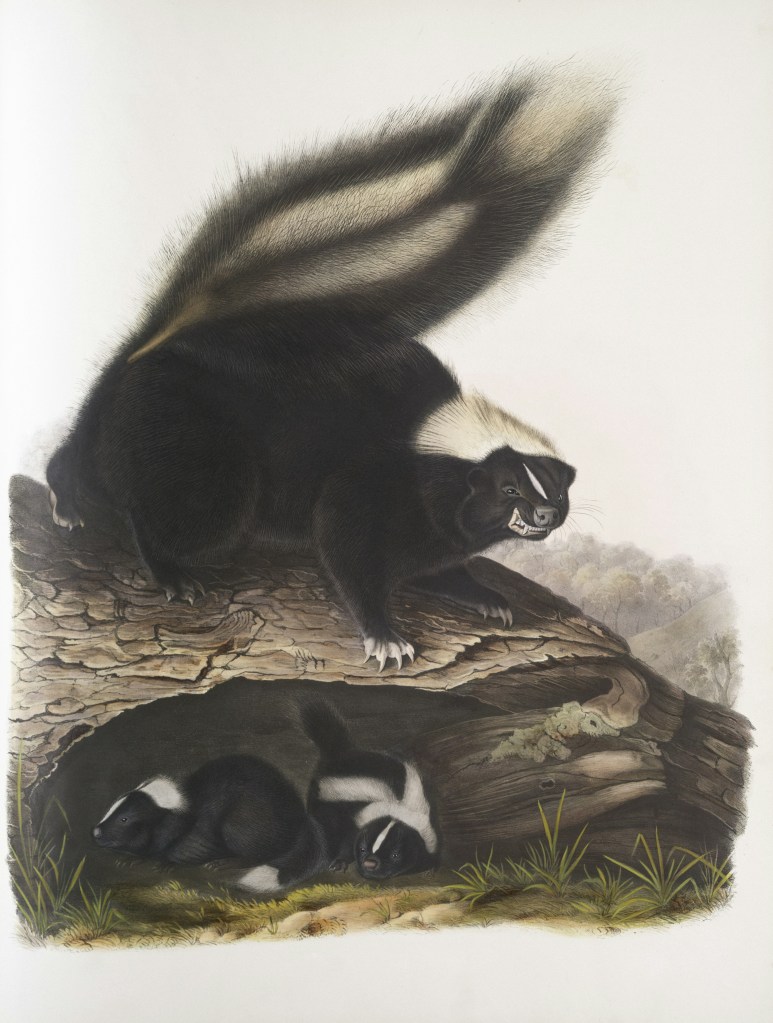
Chuck Wiser’s recent column in The Wellsville Sun mentioned his encounter with a skunk. I could relate. We had a skunk move in below the back porch outside my office. The hole was about the size of a grapefruit. One evening, I was on the porch steps when she emerged with four kits. We were both surprised by our encounter. Fortunately, the doe didn’t hunch up in her spraying posture. Instead, she gathered her kits and wandered off. I then noticed five deer —four does and a young buck — near my neighbor’s barn. The buck and does went out of their way to avoid the approaching skunks. The deer and I shared the same sentiment about skunks.
Due to the proximity of the den to the house, I decided against setting traps to avoid having the house interior “perfumed.” I called the Humane Society for their advice. They suggested placing used cat litter around the den’s entrance. The odor is similar to coyote urine. The doe and her kits moved. Given the farmland and woods that surround our home, skunks still wander through the yard, but since then (I am holding my breath), none have made the porch area their home.
The word doe is used to identify both female skunks and deer, and buck is applied to distinguish male skunks, deer, antelopes, and rabbits. There are two abbreviated usages for doe: “DOE” (Department of Energy) and “depends on experience.” Doe is also an obscure form of dough. Doe-bird is a variant of doughbird. We find doe in does and doesn’t, doer, and doeskin.
The word “buck” is slang for money. As an intransitive verb, horses and mules buck (arch their back, springing into the air), to strive for something (with disregard for ethical conduct or norms). As a transitive verb, buck is to oppose and resist. In the military, the Army and Air Force used the term Buck Private or Buck Sergeant for the newly appointed, lowest ranks.
There are, of course, other definitions and applications for doe and buck. I can think of a sentence using “skunk” and “buck” as applicable to the current resident of the deconstructed White House, but I will leave that to your imagination.
For more information about Parkinson’s see:
The Parkinson’s Foundation: https://www.parkinson.org/understanding-parkinsons/statistics
The Mayo Clinic: https://www.mayoclinic.org/diseases-conditions/parkinsons-disease/symptoms-causes/syc-20376055
The Kirk Gibson Center: https://kirkgibsoncenter.org/
The Michael J. Fox Foundation for Parkinson’s Research: https://www.michaeljfox.org
Photographs:
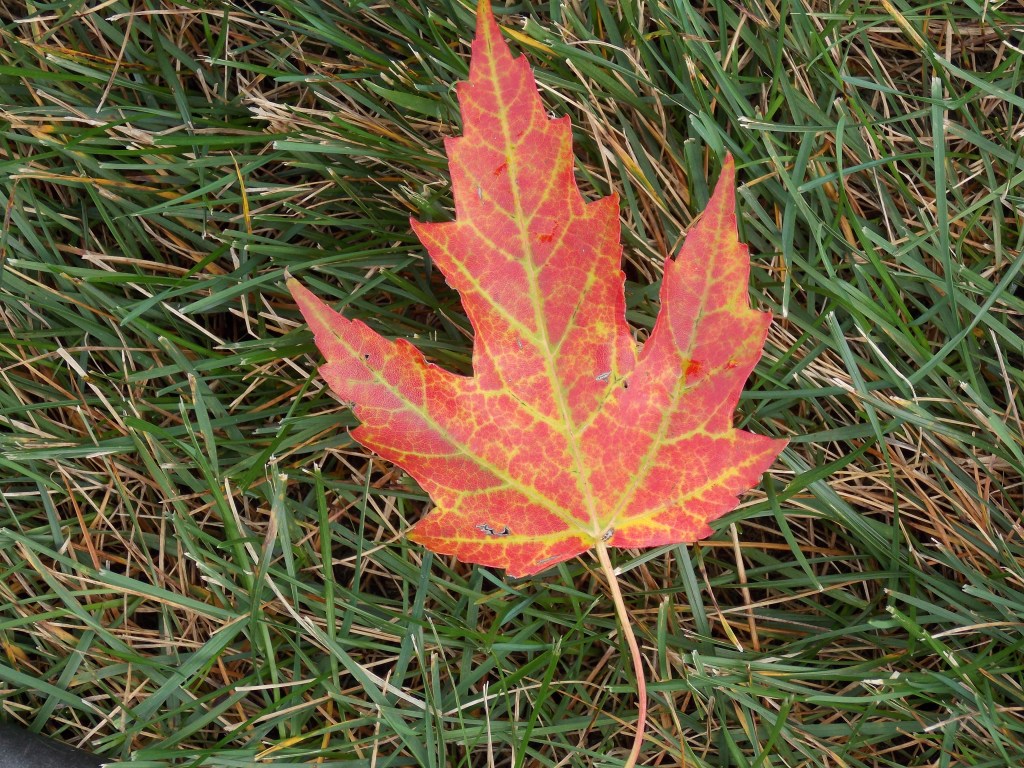
Image1: “Maple Leaf” © 2025 Charles van Heck
Image 2: by Reflect Orbita on https://futurism.com/space/scientists-mirror-orbital
Image 3: “Skunk” by The New York Public Library on unsplash.com
Random Thoughts: Gibson, Parkinson’s, Space Mirrors, Skunks, and Words © 2025 Charles van Heck

 Charles van Heck's Woodhull Journal
Leave a comment