Senators, Congressional representatives, and governors are known to stare in a mirror. “Mirror, Mirror on the wall, who’s the most qualified of all?” in the hope of finding a president looking back at them.
They are an ambitious lot. A few receive a wink and a nod, “You are, my fairest,” from the reflected image. Political spouses, partners, and other relations dread it when a political figure comes home from the office saying, “I can do better than that bum. If I were president…” Anxiety increases when they have that certain glint in the eye. Confidence. Hope. Ambition. Distortion.
Politics is a blood sport. Mao Zedong said, “Politics is war without bloodshed, while war is politics with bloodshed.” For the record, I do not often quote Mao. I do have some of his poetry and his little red book, Quotations From Chairman Mao Tsetung. While others scribbled on their notepads, Mao wrote poetry as he sat through dull meetings.
Note to Homeland Security: I do not ascribe to Mao’s ideological perspective.
Note to the Democratic Party: Mao does have something to say to you. He counseled:
“Wherever our comrades go, they must build good relations with the masses, be concerned for them, and help them overcome their difficulties. We must unite with the masses; the more of the masses we unite with, the better.”
I recall when the Democratic and Republican parties approached my father to run for mayor of our hometown. He told both that he was an independent. Personally, I was approached to run for a vacant seat on a township board of trustees. I declined because, as I listened to the other candidates on the ticket, I realized their policies were out of sync with the needs and wants of the township’s citizens. The candidates weren’t listening to their constituents. I would receive little party support. They were swept out of office.
The chief of staff for a gubernatorial candidate called to ask me to meet with his boss. He wanted my endorsement. I didn’t write poetry during the meeting, but instead I asked three questions on education as it relates to economic development. The candidate assured me that education was a primary concern. Rather than respond directly, the candidate’s answers were vague and evasive. At the end of our meeting, the chief of staff took me aside and asked, “Can we count on your support?” I respectfully declined. I wanted to hear specifics, not a portion of his stump speech, which was like chewing on rubbery chicken at a fundraiser. This candidate lost the election because he failed to connect with voters.
Historians typically avoid speculating on “what if” when it comes to the course of events. That is left to fiction writers. The 2022 and 2024 elections will be debated and analyzed for some time before they are put into perspective. The conclusions drawn will vary based on political ideological leanings, though there will be lines of consensus. However, what is currently apparent to the majority of historians and opinion writers is that the Democratic Party failed to adhere to Mao’s maxim; failed to “build good relations… and help them overcome their difficulties.” They lost touch not only with their base but also with others to build a coalition to defeat Trump and block his agenda.
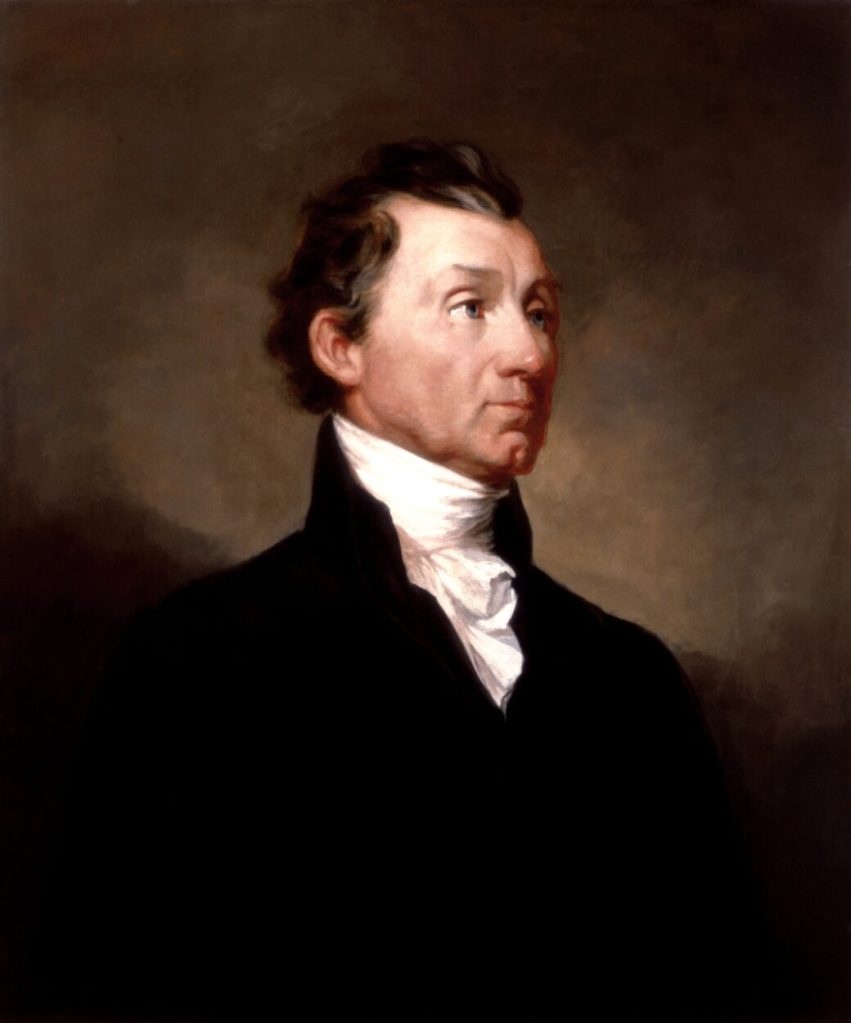
The Democratic Party is a donkey that should be put out to pasture with the Federalist Party of the 1816 presidential candidacy of Rufus King. In that election, James Monroe of the Democratic-Republican Party won 183 electoral college votes to King’s 34. Today’s Democrats, like the Federalists, have lost the confidence of the American public.
The Democratic leadership pins its hopes on the 2026 off-year election, while presenting no clear vision for the nation. The party is in disarray. The leadership acts like amateurs without a clear strategy or tactics. Donors are withholding funds. The working class feels abandoned. Voters are almost evenly divided on the meaning of the American Dream; 51% define this as opportunity, while 49% explain it as stability. What we have today is chaos, confusion, contradictions, and unconstitutional domestic and foreign policies. There is too much crazy business, too many temper tantrums, and a lack of integrity.
A new, inclusive political party is needed at this time. Centrism is the course to follow. American politics works best when a party of moderates, neither strongly aligned with either left-wing or right-wing policies, holds power, and is capable of cutting across the political spectrum. What is required is “brokerage politics” that can appeal to a broad spectrum of voters, Democrats, Independents, and Republicans. A political party that combines cultural moderation, social liberalism, and government fiscal conservatism (budgets that avoid negotiations every few months and reasonably rein in the deficit).
Universal health care, increasing taxes on those earning over $350,000 annually, abortion, L.G.B.T.Q. rights, and the guarantee of federal jobs are key issues of concern among voters. I would add reining in presidential power.
I am not proposing a rebranding of the Democratic Party. The internal conflicts reveal a clinging to and adherence to the status quo, the technocratic machine that focuses on obtaining power for its own sake. I find the same conflict in the Trumpian Republican Party. We need people on the local, state, and federal levels who are willing to reach across the aisle and work hard to earn votes from outside their party.
Franklin Roosevelt and Ronald Reagan demonstrated how to build coalitions. We need women and men who are deliberate, independent thinkers and leaders with integrity. These individuals and their advisors can start by taking pages from the playbooks of Bernie Sanders, Zohran Mamdani, Kristina Marie Gluesenkamp Perez, Dan Osborn, and Donald Trump on how to win elections. Younger candidates need to be the face of this party. Their vision and policies need to be debated and shaped by the will of the majority, while protecting the rights of the minority. It is insufficient in an election to say, “Anyone but Trump or Vance.”
As to the new party’s name, well, I am inclined to think the National Reform Coalition Party.
Politics doesn’t have to be a blood sport, but it does require civility, integrity, open-mindedness, toughness, and a vision that serves the people.
Image:
President James Monroe
Artist: Samuel F. B. Morse
Date of Work: 1819
Credit: White House Historical Association

 Charles van Heck's Woodhull Journal
Leave a comment