The other morning, I found a note in my mailbox from a dear friend. The subject raised for discussion pertained to confession and absolution. This is a timely message as we are in the period of the High Holy Days between Rosh Hashanah and Yom Kippur. These are ten days of reflection, atonement, and absolution. We seek forgiveness for the wrongs we have committed against others, the injuries we have inflicted, and pay the debts we owe. To repent is to look forward. We turn from our past deeds to return to the Divine Law. The Hebrew word t’shuva means returning.
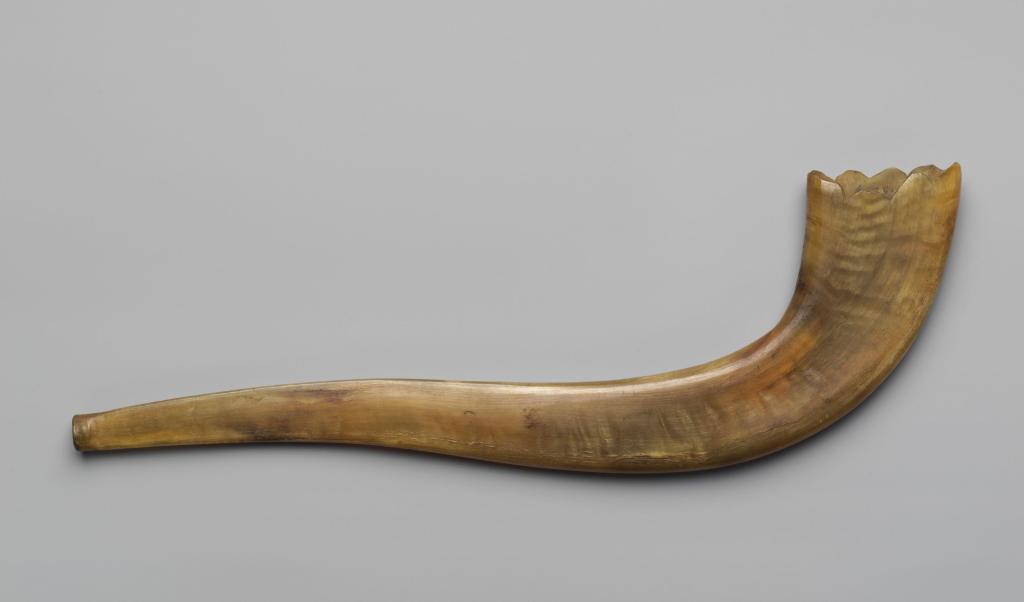
This is a time of canceling the past, not a period of looking at one’s achievements. In these ten days, we are firmly grasping life. There is a moral force to the High Holy Days. The chilling blast of the shofar on Rosh Hashanah and Yom Kippur has multiple meanings.
The shofar is a summons of our conscience to provoke reflection, a reminder of before whom we stand, to be humble before the Divine. It is the voice of the prophets calling us to acknowledge our wrongdoings and summoning us to serve God and humanity.
There are other meanings, but these are the primary understandings of the shofar for the High Holy Days.
In a course given by Don Boyd, a professor of homiletics and liturgy at Asbury Theological Seminary, students were assigned the task of preparing a homily to be preached in class as their final examination. I was designated to give the Easter sermon the second week of December.
Don continuously returned my drafts. “You can do better.” He was one of the few people I have met who intimidated me. Humble, kindhearted, compassionate, and a person of deep faith, when Don preached, I felt as if I were watching an eagle soaring in flight. He was pushing me out of my nest.
One of the numerous lessons I learned from Don was that a pastor, or rabbi, bears the responsibility of the spiritual welfare of their congregants. “You are accountable for not only how you lived, but for your congregants when God judges your life,” he would say. In other words, the example set and the truth spoken by leaders influence how others live their lives. The classroom, the Christian pulpit, and the Jewish bimah carry with them a heavy and terrible burden.
Snow was falling on the day I gave the Easter homily. Questions and doubts remained in my thoughts about whether I had adequately prepared. Don sat in the back of the classroom. My peers wrote their evaluations as I spoke. At the end of my ten-minute sermon, the class was dismissed. Don left. I stood behind the podium, anxious, doubtful. On leaving, I found Don at the end of the hallway. “Come with me,” he said. We walked silently outside until we stood on the sidewalk in front of the campus chapel. Pointing to the building, he turned to me. “That should have been preached in the chapel,” he said.
I don’t tell this story to boast. Over the years, I have taught in the classroom and preached from pulpits on a range of subjects and topics. There are times when I have, for lack of a better word, “bombed.” One Lutheran pastor called me a lightweight.
Words and deeds. How do our words and deeds affect others? A few days after my wife and I lost our son, Don arrived at our home to comfort my wife. This was a gesture of compassion in a time of our most profound grief. In that moment, Don was answering the question Jews (and Christians) ask, or should be asking themselves during the High Holy Days, “How then should I live?”
We puzzle over the questions of atonement and judgment. To paraphrase a Johnny Cash song, if my focus is too much on heaven, am I doing any earthly good? Do I act out of fear of retribution and punishment, or a sense of the duties of the heart― those laws that are instruments for a good life, which allow me to know my place in the world and contribute to humanity?
Dr. K. Kohler, a president of Hebrew Union College, writes, “Modern man knows that he bears heaven and hell within his own bosom. Indeed, so much more difficult is the life of duty which knows no other reward than happiness through harmony with God, the Father of the immortal soul, and no other punishment than the soul’s distress at its discord with the primal Source and the divine Ideal of all morality…. This yearning of the soul finds expression in the Talmudic maxim, ‘The righteous find rest neither in this world nor in the world to come, as it is said, ‘They go from strength to strength, until they appear before God on Zion’” (Berakoth 64a, with reference to Psalm 84:7).
The Orthodox Jewish author Herman Wouk received a letter from an agnostic friend. The letter reads in part: “What is the core of being a Jew: to be different in living habits, or to practice a moral way of life based on behavior toward other people? To imply that in some significant measure the terrible problems of social existence on a crowded planet are solved by refusing to eat lobsters seems irretrievably petty to me.”
As Wouk responds, being Jewish (or Christian, for that matter) entails special commitments and disciplines. “The Jews are not cut off from mankind by their faith, though they are marked different. They have their special disciplines, and― at least in their own minds― their rewards.”
We take in faith what is given us daily. In these waning hours before Yom Kippur, we have the opportunity to ask, “How then should I live?” The days of the new year that lie ahead are filled with mystery. Do I bring the light of mercy, justice, compassion, and forgiveness into the world, or discord and distress? Do I say to myself, “I can do better”, learn from my failures, and move from “strength to strength” in a life of service?
Shanah Tovah.
Image: Shofar
Source: The Metropolitan Museum of Art
Musical Instruments
Gift of The University Museum, University of Pennsylvania, 1953
Museum Image URL

 Charles van Heck's Woodhull Journal
Leave a comment