You could have been on any college campus or any place where students hung out. He generated excitement, an excitement also felt by the middle-aged and the elderly. There was excitement from the streets of Manchester, New Hampshire, to Manhattan, Kansas, to Delano, California. You heard his name at the diners, post offices, high schools, and in your place of employment. His name was spoken in the hills of Da Nang and the bars in Saigon, Vietnam. He was the speaker that college students came to hear. Many of those who came to listen hadn’t previously been politically involved. His hands fidgeted—his mannerism of brushing a wave of his hair with his fingertips. There was little modulation in his voice. You wanted to hear every word. And you hung on to every word with hope.
Then there was an evening in a California ballroom. He spoke of going to Chicago. Maybe, he could pull off winning. A gunshot. Screams. Shouts. Confusion. Tears. Silence.
We silently lined the railroad tracks to pay our respects. We. White, Black, and Latino people. The poor, the middle class, the young and the old, the powerless, and the powerful. We watched as the train slowly made its way from New York to Washington, D.C.
The year was 1968. The husband, father, and politician who touched our lives was Senator Bobby Kennedy. He was 42 years old.
Approximately 3000 people gathered in an amphitheater at Utah Valley University to hear a right-wing Christian activist speak. The man was a husband, father, and son. He was 31 years old. Those in the crowd felt they knew him. The nation had shifted to the right. He was the voice of a new generation, just as Bobby Kennedy was our voice. Charlie Kirk’s speech ended in the same silence.
I did not agree with most of what Charlie Kirk said, but I respected his right to say it. I respected the fact that he was willing to engage those who disagreed with his views. We learn from our opponents. One hopes they learn from us.
Charlie Kirk was civil, respectful, self-deprecating, and friendly towards those he disagreed with. This is the way political and civil discourse should be conducted. The assassin who silenced him was filled with hate not only for Kirk and what he stood for, but also aimed his high-powered bolt-action rifle and pulled the trigger at the American experiment. He aimed his rifle at Charlie Kirk’s wife, children, and other family members. Their lives now shattered by grief.
There are those on social media posting messages of hate, calls for “Civil War.” President Trump has called his opponents “scum” and other derogatory names. He speaks about plans to send the military to occupy Democratic cities, and suspends the rights of immigrants. Trump’s supporters demonize liberals and Democratic socialists, calling for their extinction. The president’s opponents compare him to Hitler. The polarizing, ideological feud between citizens has become a blood feud. This is the pattern of American unrest throughout the nation’s history. The pattern of political discord and unrest culminates in violence. When reason and dialogue are abandoned, fractures of political differences widen and deepen until they cause the collapse of nations.
Almost lost in yesterday’s news was the school shooting at Evergreen High School in Evergreen, Colorado. Two students were critically wounded. The shooter committed suicide. Two weeks ago in Parkland, Washington, a 13-year-old boy was taken into custody for plotting a school attack. Twenty-three weapons were found in his home. On August 27, 2025, 21 people, 18 of whom were students, were wouned by gunfire, and two were killed at the Church of the Annunciation in Minneapolis, Minnesota.
Minnesota House Speaker Melissa Hortman and her husband were killed, and State Senator John Hoffman and his wife were injured by gun fire in June.
I cannot help but wonder if we, as a nation, are approaching a point of no return. Or have we already crossed that line? If we are still approaching it, are we capable of finding our decency to recognize and respect one another as human beings? Can we engage one another as fellow citizens while honoring the right of free speech to express opposing political viewpoints on issues through the ballot box rather than the gun barrel?
Have we come to a moment in American history that is comparable to the suspension of constitutional rights and protections, allowing for the arrest of political opponents and other “undesirables” by the Nazis following the Reichstag fire of the German Parliament building in 1933?
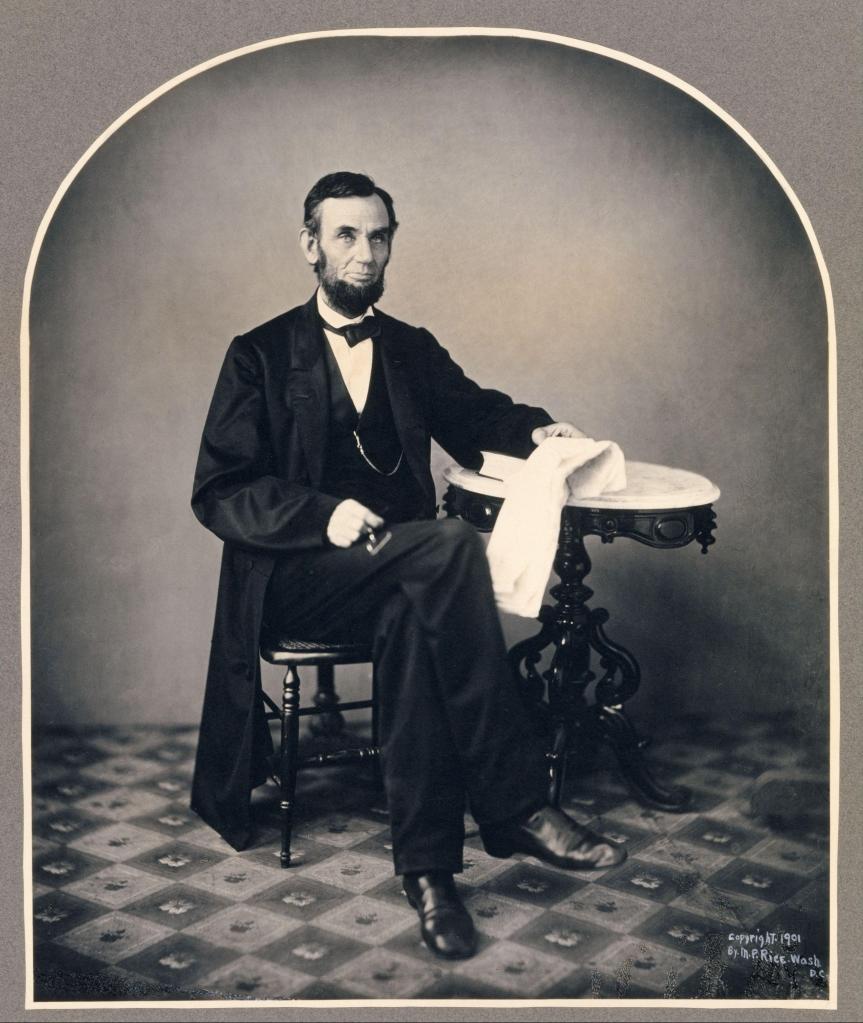
In his first inaugural address, Abraham Lincoln spoke of the dangers facing the nation. He recognized the division, the gathering storm of a civil war. In that moment of crisis, he spoke words we need to heed in our hour of crisis, “I am loath to close,” he said at the conclusion of his speech. “We are not enemies, but friends. We must not be enemies. Though passion may have strained, it must not break our bonds of affection.”
Photograph: Abraham Lincoln
Artist: Alexander Gardner
Credit Line
The Metropolitan Museum of Art
Photographs
Warner Communications Inc. Purchase Fund, 1976

 Charles van Heck's Woodhull Journal
Leave a comment