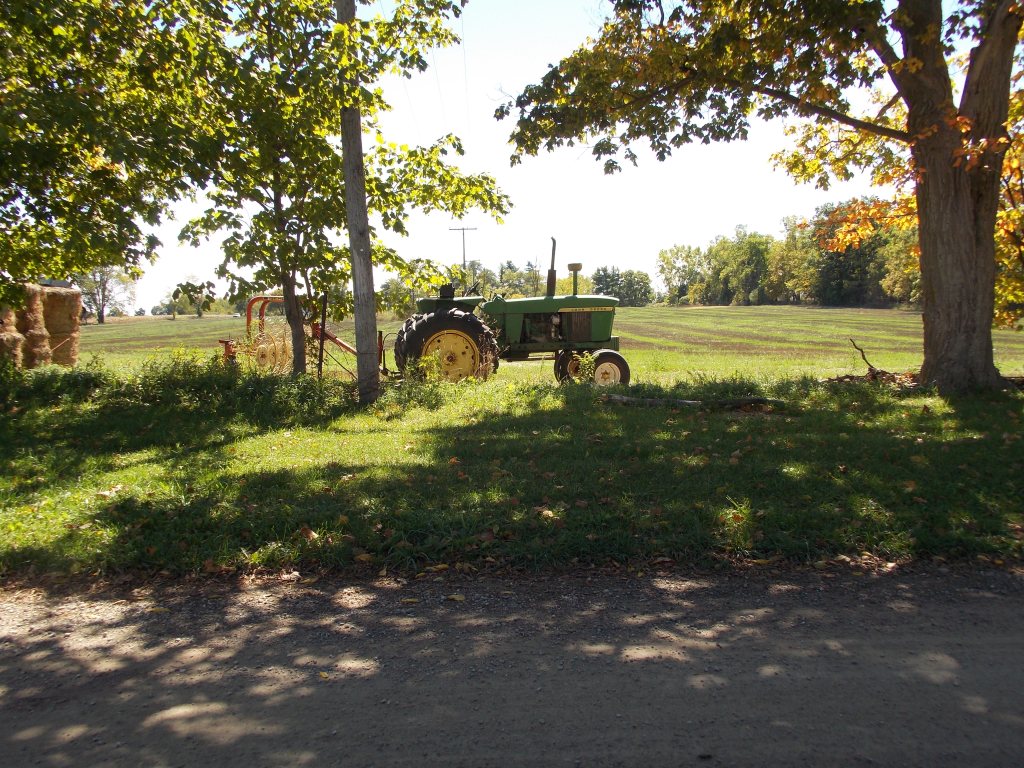
In the American imagination, small town, rural living offers a slower lifestyle in close knit communities, and affordable living. This idealized perception misses the deeper reality of humanities place in creation. Wendell Berry succinctly captures this when he observes:
“Old Chinese landscape paintings reveal, among towering mountains, the frail outline of a roof or a tiny human figure passing along a road on foot or horseback. These landscapes are almost always populated. There is no implication of a dehumanized interest in nature for ‘for its own sake.’ What is represented is a world in which human beings belong, but does not belong to human beings in any tidy economic sense; the Creation provides a place for humans, but it is greater than humanity and within it even great men are small. Such humility is the consequence of an acute insight, ecological in its bearing, not pious deference to ‘spiritual’ value.’”
A similar insight is expressed by the traditionalist Indigenous Peoples. They think of the land as a social relationship between all living and non-living beings. One does not own the land, only what one grows or harvests (crops, fish, animals). The relationship to the land is complex. There are the practical, cultural and spiritual dimensions to consider when discussing the human and earth relationship.
Our contemporary urban relationship to the land primarily focuses on county and state parks. These are places for our gatherings, recreation, and entertainment. The national parks and wilderness lands fill us with wonder and bring us to our sense of smallness in the passage of time. We are spiritually renewed by their mysteries.
Agricultural land offers us an entirely different perspective. Farmland provides us with insight into our dependence on the land and our relationship to and dependence on others for our bodies to live. Those residing in agricultural communities understand their reliance on the soil and one another. Theirs are lives in which nothing can be taken for granted. They have a connection to the seasonal changes, shifts in the weather, the responsible nourishment of the dirt beneath their feet. These persons and their communities, are inextricably bound to the ecology of their environment. They are also bound to the national and international economic trends as Elizabeth Williamson writes in The New York Times article of July 7th “From Food Aid to Dog Chow? How Trump’s Cuts Hurt Kansas Farmers.”
There are 19,502 incorporated localities registered in the United States. A 2019 report from Statista found that 16,410 of these places had populations under 10,000. There were ten cities with populations of more than a million or more. (1) The term rural, as used by the U.S. Bureau of Statistics, is strictly measured by the population density and the number of housing units. To put this in perspective, according to the 2020 U.S. Census Bureau, “66.3 million people, or 20% of the total population, were classified as living in rural areas. This means that the remaining 80% of the population lived in urban areas.
Joseph Mengedoth, writing in a Federal Reserve Bank of Virginia article, noted, “Nationally, farm employment is only a little more than 1 percent of total employment. But in some rural counties, it can account for as much as 20 percent of total employment.” (2)
In a Census of Agriculture in 2024, there were 1.88 million farms in the United States. Productive farmland totaled 876 million acres. The average farm consisted of 466 acres. In New York state, there is 6.5 million acres of farmland. The average farm size is 212 acres. (3) The 2022 Census of Agriculture data released in February 2024 found there were 30,650 productive farms in New York state. The market value of the livestock, poultry, pork, dairy, egg products totaled $4.9 billion in 2022. Add to this a total of $3.1 billion in apples, grapes, and other produce, including greenhouse and nursery crops, provided by the rural communities. (4)

Agriculture is an important business for every state. In Michigan, 53 of the 83 counties are classified as rural. There are 45,581 farms, the average size is 208 acres. There are 9.4 million total acres of farmland. In dollars, $5.2 billion is in livestock, and $7.2 billion is in crops. (5)
The statistics don’t tell the whole story. The story is told by the farmers and those employed in agri-businesses, and the communities they reside in. Ms. Williamson’s gave voice to a few farmers being affected by the Trump Administration’s policies that have only begun to ripple through rural communities. The story is told by the closure of the Community Hospital of McCook in Curtis, Nebraska, a town of 1,000 due to federal cuts to Medicaid. The Nebraska Hospital Association announced that six rural hospitals could close, and possibly an additional six are at risk of being shuttered.
You and I are bound to the men and women who work the land and provide the earthly gifts. We are bound to them when entering the grocery market and eat our meals. As Wendell Berry observes, “our bodies live by agriculture.”
1 https://www.statista.com/statistics/241695/number-of-us-cities-towns-villages-by-population-size/
2 Joseph Mengedoth, “Farming Creates Value and Employment for Rural Areas,” Federal Reserve Bank of Virginia, March 6, 2025, https://www.richmondfed.org/region_communities/regional_data_analysis/regional_matters/2025/farming_creates_value_rural_areas
4 https://www.ers.usda.gov/data-products/chart-gallery/chart-detail?chartId=58268
5 https://farmflavor.com/michigan/michigan-crops-livestock/top-michigan-agriculture-facts-from-the-2024-census-of-agriculture/. An overview of Michigan agriculture production can be found at
https://www.nass.usda.gov/Quick_Stats/Ag_Overview/stateOverview.php?state=MICHIGAN
Photograph: “After the Bailing,” Copyright © 2025 Charles van Heck

 Charles van Heck's Woodhull Journal
Leave a comment