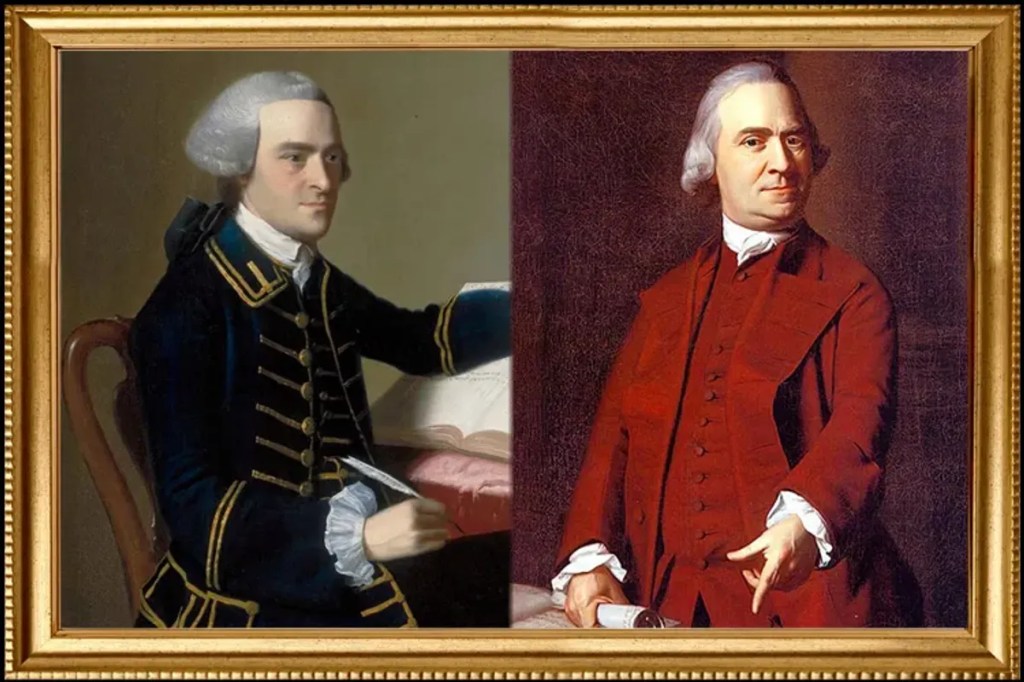
The United States is a nation founded upon dissent. Colonialists often voiced their protests against the British government’s policies. On the 1st of November, 1765, when the Stamp Act was about to be enacted, New Yorkers flew flags at half-staff and rioted, burning effigies of Lieutenant Governor Cadwaller Colden, and the house of an unpopular British Army officer. The Townsend Acts, that imposed repressive taxes, resulted in growing tensions and protests, “No taxation without representation,” led to the Boston Massacre on 5 March, 1770. Three years later, frustration and anger boiled over against the East India Company’s monopoly on tea and the British tax on tea. Americans dumped tea into the Boston Harbor on the 16th of December, 1773. The motivation behind these incidents was the colonialists’ belief that American liberty was dead. The British government believed they had reasonable policies. Apparently, as history has shown, the American colonialist disagreed.
Dissent is the secret of democracy. However, there is neither as much dissent nor discord as there appears. At a meeting I attended with him, the historian Daniel Boorstin noted that confidence (faith) and suspicion (doubt) both indicate involvement in rather than alienation from government. These must be kept in balance. The paradox in a democracy is that both dissent and accord are fragile and must be maintained and guided and influenced by, in Boorstin’s words, “… the character and intelligence of the leaders.”
But what happens to that fragile balance when political leadership that lacks character is more concerned with self-serving and the plutocratic oligarchy?
This morning I found the answer to my question when I opened the Military Daily News, which contained the following disconcerting account:
“A battalion of active-duty Marines — around 700 troops — based out of Twentynine Palms, California, received deployment orders to Los Angeles on Monday after President Donald Trump’s commandeering and deployment of the state’s National Guard troops to the city over the weekend, defense officials confirmed to Military.com on Monday.
The deployment marks a sharp escalation in the military’s role in domestic unrest in the city caused by immigration raids by the Trump administration. It also shows Trump’s willingness to sidestep norms in his immigration crackdown by potentially pitting the military against civilians on American soil. Both California’s governor and the city’s mayor have publicly come out against the deployment of troops.”
The Trump decision to federalize California’s National Guard and deploy Marines is based on 10 U.S.C. § 12406 – U.S. Code – Unannotated Title 10. Armed Forces § 12406. National Guard in Federal service: call. In brief, Article 10 is applicable
“Whenever–
(1) the United States, or any of the Commonwealths or possessions, is invaded or is in danger of invasion by a foreign nation;
(2) there is a rebellion or danger of a rebellion against the authority of the Government of the United States; or
(3) the President is unable with the regular forces to execute the laws of the United States; the President may call into Federal service members and units of the National Guard of any State in such numbers as he considers necessary to repel the invasion, suppress the rebellion, or execute those laws. Orders for these purposes shall be issued through the governors of the States or, in the case of the District of Columbia, through the commanding general of the National Guard of the District of Columbia.”* (emphasis added)
I would ask you to carefully read that again. Governor Gavin Newsom neither made the request for military personnel nor did he issue the order for their deployment. Both Newsom and Los Angeles police chief, Jim McDonnell stated they have sufficient personnel to deal with the demonstrations that have been generally peaceful. This is not to deny some acts of violence and vandalism.
Trump calls his decision to federalize 4,000 National Guard a “great decision.” Apparently, respecting civil liberties, due process for immigrants, and legally applying Article 10 are and would not be “great” decisions. By invoking Article 10, Trump brings himself a step closer to invoking the 1807 Insurrection Act. This would empower Trump to deploy the military to arrest, detain, and imprison those persons the government determines to be insurrectionists.
As protest spreads across the country in support of Los Angeles and immigrants, Trump appears incapable of distinguishing between peaceful demonstrations and violent confrontations. His Federal antagonization of state government officials, including Congressional representatives, and peaceful protestors, and his threats throughout today against those organizing and planning protests on his massive birthday parade are examples of when “great” isn’t necessarily always applicable to ideas or men. His remarks beg the question, “What are you afraid of, Mr. President?”
Lynn Nofzinger, an advisor to President Ronald Reagan, was asked during a panel discussion, “Is dissent justified?” He replied, “Strength is in dissent.”
The American colonialist who protested British policies would certainly agree.
https://uscode.house.gov/view.xhtml?req=granuleid:USC-prelim-title10-chapter1211&edition=prelim
Image: John Hancock, Samuel Adams
Source: Wikimedia/Salon

 Charles van Heck's Woodhull Journal
Leave a comment