PART ONE: ON MONARCHY
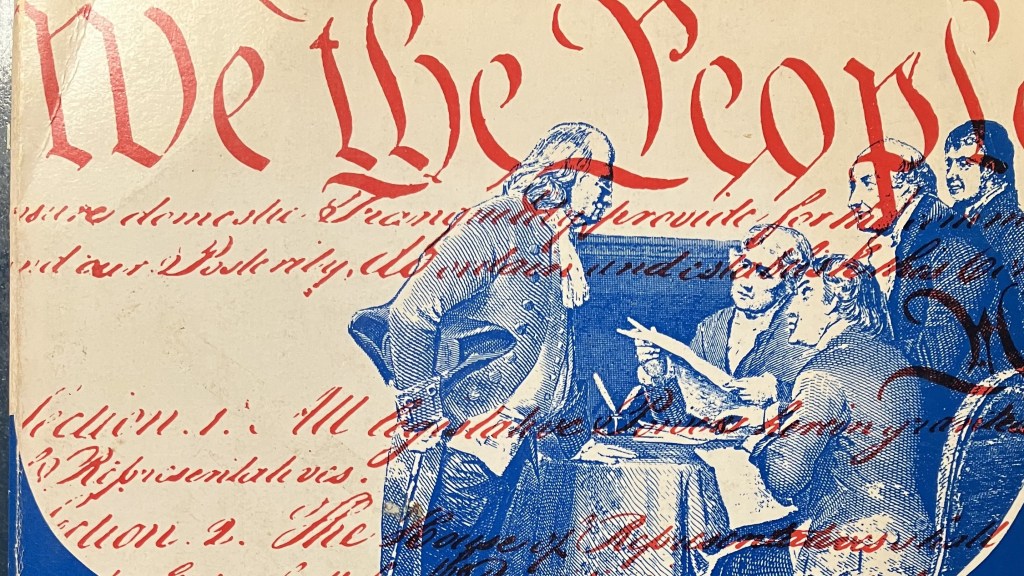
On February 11th, Justice Sonia Sotomayor reminded faculty and students at a Florida college that, “Our founders were hellbent on ensuring that we didn’t have a monarchy, and the first way they thought of doing this was to give Congress the power of the purse.”
Her words brought to mind a remark made by William F. Buckley at Ramapo College of New Jersey in 1983.
During the Q&A, Buckley was asked what he would do if elected president. A mischievous expression came to his face. Clasping the podium, he rocked on his heels and flicked his tongue like a lizard. “Well, of course, the first thing I would do is abolish the Congress, suspend the Constitution, and proclaim myself king,” he replied. Then he smiled.
Forty-two years after Buckley’s jest, we are witnessing a self-coronation that Napoleon would find lacking in pageantry but would envy for the extent of political, economic, and military power being consolidated in the hands of one man whose political career revolves around revenge and retribution. Combining this with the tech-oligarchy’s influence, we have an assault on our political institutions and national culture that moves us towards technofeudalism.
After reading the new Constitution, Thomas Jefferson wrote to John Adams about his reservations concerning establishing a presidency. His concern was that power would be consolidated in the despotic minority corresponding to the European governments. The letter dated November 13, 1787, reads in part:
“Once in office, and possessing the military force of the union, without either the aid or check of a council, he (a president) would not be easily dethroned, even if the people could be induced to withdraw their votes from him. I wish that at the end of the 4 years they had made him for ever ineligible a second time. Indeed I think all the good of this new constitution might have been couched in three or four new articles to be added to the good, old, and venerable fabrick, which should have been preserved even as a religious relique.”
A letter to George Washington dated May 2, 1788, is more candid in Jefferson’s assessment of the despotism and his fear of the loss of civil liberties. He writes:
“I had intended to have written a word to your Excellency on the subject of the new constitution, but I have already spun out my letter to an immoderate length. I will just observe therefore that according to my ideas there is a great deal of good in it. There are two things however which I dislike strongly. 1. The want of a declaration of rights. I am in hopes the opposition of Virginia will remedy this, and produce such a declaration. 2. The perpetual re-eligibility of the President. This I fear will make that an office for life first, and then hereditary. I was much an enemy to monarchy before I came to Europe. I am ten thousand times more so since I have seen what they are. There is scarcely an evil known in these countries which may not be traced to their king as its source, nor a good which is not derived from the small fibres of republicanism existing among them. I can further say with safety there is not a crowned head in Europe whose talents or merit would entitle him to be elected a vestryman by the people of any parish in America. However I shall hope that before there is danger of this change taking place in the office of President, the good sense and free spirit of our countrymen will make the changes necessary to prevent it.”
The mantle of the presidency is heavy. Presidents stretch their power to conform to their personality, will, and the domestic and foreign policy issues confronting the nation. Examine the presidential administrations prior to Abraham Lincoln to the present time and you will find the expansion of executive power. Presidents are driven personalities.
Fundamental to the presidency is respect for the office. I saw this in Gerald Ford. He was uncomplicated, intelligent, at peace with himself, and dignified. His respect for the office, the people around him, including his opponents, and the American people was evident. This is in sharp contrast to Donald Trump.
The current president justifies his actions against independent agencies by appealing to Article II of the Constitution, adding that he is “the democratically elected President.” This is not an appeal to the Constitution as it is to democratic legitimacy. There is a legal difference. Then, on February 15th, the president took this one step further by posting a quote attributed to Napoleon on X: “He who saves his country does not violate the law.” He is telling Congress and the people that we chose him to be president and the national leader, and he can do whatever he wants. His understanding of Article II, democratic legitimacy, his incendiary post, the Executive Orders, and the DOGE sledgehammer to established government institutions are ominous warnings of an autocracy. More is at stake than the price of eggs.
In TRUMP v. UNITED STATES, Chief Justice John Roberts wrote in his opinion that the president is “the only person who alone composes a branch of government.”
Justice Sonia Sotomayor was alarmed by the implications of Roberts’ reasoning. She presaged that, “In every use of official power, the President is now a king above the law.”
William F. Buckley’s joke is now on us.
The quoted correspondence can be found in the National Archives in the Founder’s archival collection. To search online, go to https://founders.archives.gov/
To read the Court’s full decision on TRUMP v. UNITED STATES, go to:

 Charles van Heck's Woodhull Journal
Leave a comment